
Ganga Water Treaty Renewal: Water Security and India–Bangladesh Cooperation
Revise the static topic: UPSC International Relations notes
In short: A Bangladeshi river expert has urged temporary renewal of the Ganga Water Treaty, arguing that a comprehensive revision cannot be completed before its approaching expiry in December 2026. The issue concerns continuity of predictable dry-season water sharing at Farakka, alongside the need to update river-management arrangements through India–Bangladesh cooperation.
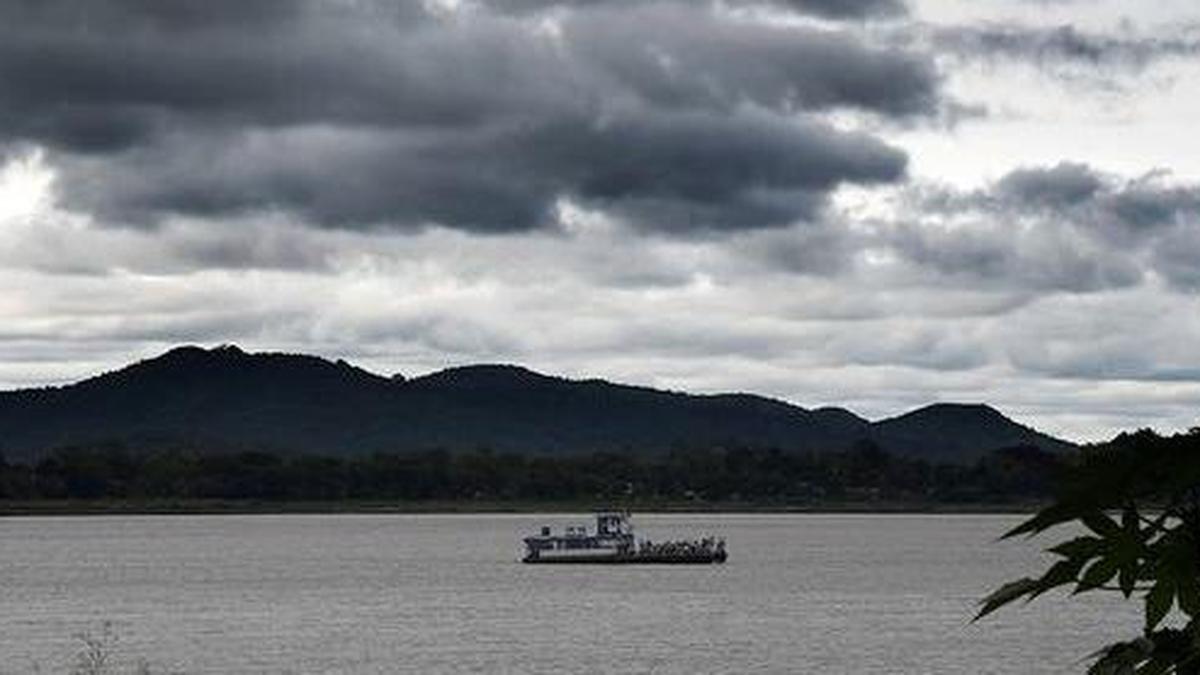
A river expert has urged temporary renewal of the Ganga Water Treaty ahead of its December 2026 expiry to maintain predictable dry-season water sharing between India and Bangladesh at Farakka.
Image: The Hindu
Why in news
On November 15, 2026, Manjur Ahmed Chowdhury, former Chairman of Bangladesh’s National River Conservation Commission, proposed renewing the treaty for three to five years with support from both countries’ political leaderships. The supplied report does not announce an agreed extension or a revised treaty.
30 years
Existing treaty’s duration
3–5 years
Expert’s proposed temporary renewal
January 1–May 31
Annual sharing period
10 days
Water-sharing accounting interval
70,000 cusecs or less
Equal-sharing flow threshold
50% each
Shares at or below that threshold
Background
The Ganga flows from India into Bangladesh, where its main channel is known as the Padma. Farakka Barrage in West Bengal is the reference point for the treaty’s water-sharing arrangements. Signed in December 1996 by Prime Ministers H. D. Deve Gowda and Sheikh Hasina, the treaty established a predictable framework for sharing Ganga waters during the lean season. The bilateral Joint Rivers Commission provides an institutional channel for cooperation on common rivers. The issue links transboundary diplomacy with agriculture, river ecology and domestic water management.
What is being proposed, and what remains undecided?
Chowdhury argues that the approximately four weeks remaining before expiry are insufficient for a comprehensive revision. His proposal is a temporary renewal for three to five years, allowing continuity while the countries negotiate an updated arrangement.
This is an expert recommendation, not an official bilateral decision. He identifies high-level political approval as essential and criticises inadequate meetings and weak institutional performance; these assessments should be attributed to him rather than treated as jointly established findings.
- Temporary renewal would preserve continuity; comprehensive revision would address the adequacy of the framework.
- The immediate diplomatic priority is to avoid a gap in agreed arrangements.
- An interim arrangement should create time for reform rather than become a substitute for it.
Infographic
Continuity
Avoid a gap in mutually agreed lean-season sharing.
Predictability
Preserve dependable allocation intervals for water-use planning.
Evidence
Jointly assess flows, sedimentation and river changes.
Institutions
Sustain political engagement and technical cooperation.
River health
Consider ecological needs alongside livelihood demands.
AI-assisted infographic by Pragnya IAS Academy, based on the cited sources.
How does the water-sharing framework work?
The treaty provides for sharing Ganga waters at Farakka in ten-day periods from January 1 to May 31 each year, according to its annexed formula. The framework therefore concerns the timing and availability of lean-season flows, not merely an annual water total.
The source states that when availability at Farakka is 70,000 cusecs or less, India and Bangladesh receive equal shares. It also identifies separate formula bands for 70,000–75,000 cusecs and above 75,000 cusecs, but does not reproduce their detailed allocations. The equal-sharing rule should therefore not be generalised to every flow condition.
A cusec measures discharge, or water flowing per second; it is not a measure of stored water volume. This distinction is important when interpreting the treaty’s thresholds.
- Predictable release intervals support agricultural and water-use planning.
- Reliable measurement at the sharing point is essential for implementing a flow-dependent formula.
- A sharing formula allocates available water; it does not by itself increase lean-season availability.
Why renewal matters: predictability, livelihoods and legal continuity
Chowdhury recalls uncertainty in Ganga water supply during 1988–1996 and credits the treaty with improving predictability. He warns that Bangladesh’s dependence on Ganga water increases during the agricultural season beginning in February, making continuity particularly important for farming, the economy and ecology.
A lapse would create uncertainty over the continuation of treaty-specific sharing commitments and procedures unless another arrangement were agreed. It should not be presented as eliminating every possible international legal obligation or as making negotiations impossible; the immediate concern is the loss of a clear, mutually agreed operational framework.
- Predictability matters alongside the volume of water received.
- A functioning agreement provides a common reference for assessing implementation and raising concerns.
- Maintaining cooperation on water can support confidence in the wider bilateral relationship.
Why revision requires more than extending the expiry date
The expert identifies sedimentation and changes in the river over the treaty period as reasons for updating the agreement. Sediment movement and channel changes can affect river conveyance, local water levels and the interpretation of flow measurements, making a shared technical assessment important.
Renewal also requires political and institutional coordination. For India, consultation with affected States, especially West Bengal, can strengthen the practicality and legitimacy of negotiating positions while the Union conducts external relations.
The longer-term objective should be cooperative river management: dependable data, credible monitoring, ecological assessment and procedures for responding to exceptional scarcity. These are policy priorities for consideration, not provisions reported as already agreed.
- Joint technical work should distinguish changes in total water availability from problems of distribution and timing.
- Regular institutional engagement can prevent technical concerns from accumulating into diplomatic disputes.
- Ecological needs and livelihood dependence should inform discussions alongside allocation rules.
| Dimension | Position | Analytical implication |
|---|---|---|
| Existing framework | Sharing at Farakka during January–May in ten-day periods | Provides a predictable lean-season allocation schedule |
| Equal-sharing band | At 70,000 cusecs or less, each country receives 50% | Applies to the specified band, not automatically to every flow condition |
| Temporary renewal | Expert proposes three to five years; no agreement is reported | Could bridge the immediate deadline and a fuller negotiation |
| Comprehensive revision | Expert seeks attention to sedimentation and river changes | Requires joint evidence, negotiation and political support |
| Cooperative management | Recommended emphasis on data, monitoring and ecological assessment | Would strengthen implementation and adaptation beyond allocation alone |
- 1. Secure political agreement on avoiding a gap in water-sharing arrangements.
- 2. Mutually agree and clearly document any temporary renewal.
- 3. Conduct a joint assessment of flows, sedimentation, river changes and seasonal needs.
- 4. Consult affected States, water users and relevant technical institutions.
- 5. Negotiate an updated framework with credible monitoring and scarcity-response procedures.
- 6. Implement periodic review supported by transparent data exchange.
1988–1996
According to Chowdhury, Bangladesh experienced unpredictability in Ganga water supply before the treaty.
December 1996
India and Bangladesh signed the Ganga Water Treaty under Prime Ministers H. D. Deve Gowda and Sheikh Hasina.
November 15, 2026
Chowdhury urged temporary renewal, arguing that a comprehensive revision was not feasible before expiry.
December 2026
The existing treaty is due to expire; the supplied report does not establish that a successor arrangement has been agreed.
Significance, challenges & way forward
Significance
- Continuity of agreed lean-season sharing supports agricultural planning and water security.
- A predictable bilateral framework reduces uncertainty for downstream livelihoods and river ecology.
- Successful renewal would demonstrate that India and Bangladesh can manage shared resources through negotiation.
- Joint technical assessment can make water diplomacy more evidence-based and less vulnerable to competing claims.
- Updating the framework offers an opportunity to connect allocation decisions with broader river-health concerns.
Challenges
- The short interval before expiry limits the time available for comprehensive technical and diplomatic revision.
- Sedimentation and changes in river behaviour complicate reliance on historical assumptions.
- Competing seasonal demands make allocation negotiations politically sensitive.
- The expert’s criticism of limited meetings highlights the risk of inadequate institutional follow-through.
- Temporary renewal could defer necessary reform unless accompanied by an agreed work programme.
- A treaty can improve predictability but cannot by itself resolve inadequate lean-season water availability.
Way forward
- Prioritise a mutually agreed interim arrangement if comprehensive revision cannot be completed before expiry.
- Specify the duration, operational continuity and review pathway of any temporary renewal in a clear bilateral instrument.
- Revitalise the Joint Rivers Commission through regular engagement and sustained technical follow-up.
- Establish a shared assessment of discharge, sedimentation and channel changes before revising allocation assumptions.
- Ensure meaningful consultation with affected Indian States and relevant stakeholders in both countries.
- Consider ecological needs, advance notification and exceptional-scarcity consultation procedures during revision.
- Complement diplomatic negotiations with efficient irrigation, demand management and river conservation.
Key terms
- Lean season
- The period of relatively low river flow, when competition among water uses becomes more acute.
- Cusec
- A unit of discharge equal to one cubic foot of water flowing per second.
- Farakka Barrage
- A barrage in West Bengal that serves as the reference point for Ganga water sharing under the treaty.
- Joint Rivers Commission
- A bilateral institutional mechanism for India–Bangladesh cooperation concerning common rivers.
- Sedimentation
- The deposition of transported sediment, which can alter river channels, depths and flow conveyance.
- Environmental flows
- The quantity, timing and quality of water flows needed to sustain aquatic ecosystems and associated livelihoods.
- Temporary renewal
- A mutually agreed continuation for a limited period while a longer-term arrangement is considered.
Link with static syllabus
Prelims practice MCQs
Q1. With reference to the Ganga Water Treaty framework described in the report, consider the following statements: 1. It provides for sharing Ganga waters at Farakka from January 1 to May 31. 2. Sharing is organised in ten-day periods. 3. Equal sharing applies irrespective of water availability at Farakka. Which of the statements given above are correct?
Q2. In discussions on river-water allocation, the term ‘cusec’ denotes:
Q3. Consider the following pairs: 1. Farakka Barrage — West Bengal 2. Padma — Name used for the Ganga’s main channel in Bangladesh 3. Joint Rivers Commission — Constitutional tribunal for disputes among Indian States Which of the pairs given above are correctly matched?
Q4. With reference to the temporary renewal proposal reported in November 2026, consider the following statements: 1. It was proposed by a former Chairman of Bangladesh’s National River Conservation Commission. 2. It envisaged renewal for three to five years. 3. The report confirmed that both governments had approved the extension. Which of the statements given above are correct?
Mains practice questions
GS 2 · 15 marks · 250 words
The approaching expiry of the Ganga Water Treaty requires continuity in water sharing as well as reform in river governance. Discuss in the context of India–Bangladesh relations.
Frequently asked questions
Has the Ganga Water Treaty already been renewed?
The supplied report does not confirm renewal. It reports an expert’s proposal for a three-to-five-year extension requiring political approval from both countries.
Does the treaty divide Ganga water equally throughout the year?
No. The cited framework covers January–May, and the reported equal-sharing rule applies when availability at Farakka is 70,000 cusecs or less; higher flows have separate formula bands.
Why is temporary renewal being suggested?
Chowdhury considers the remaining time insufficient for comprehensive revision. Temporary renewal could preserve predictable sharing while updated arrangements are negotiated.
What should a revised framework address?
The expert specifically highlights sedimentation and changes in the river. Shared data, credible monitoring, ecological assessment and scarcity-response procedures are additional policy priorities for consideration.
Sources
- The Hindu: India, Bangladesh leaderships should support temporary renewal of Ganga Water Treaty, says expert
Analysis prepared by the Pragnya IAS Academy current-affairs desk with AI assistance from the cited reports. Verify figures with the original sources.
Turn current affairs into marks
Join Pragnya IAS Academy's mentorship for daily answer-writing evaluation on stories like this — classroom programmes from a trusted name in IAS coaching in Hyderabad.