
India–ASEAN and East Asia Summits: Act East, Maritime Security and Trade
Revise the static topic: UPSC International Relations notes
In short: Prime Minister Narendra Modi is scheduled to attend the India–ASEAN Summit and the East Asia Summit in Manila on November 17, 2026. The engagements will focus on maritime cooperation, trade and investment, reinforcing ASEAN’s central role in India’s Act East Policy. A possible Quad leaders’ meeting has been reported but has not been officially confirmed by India.
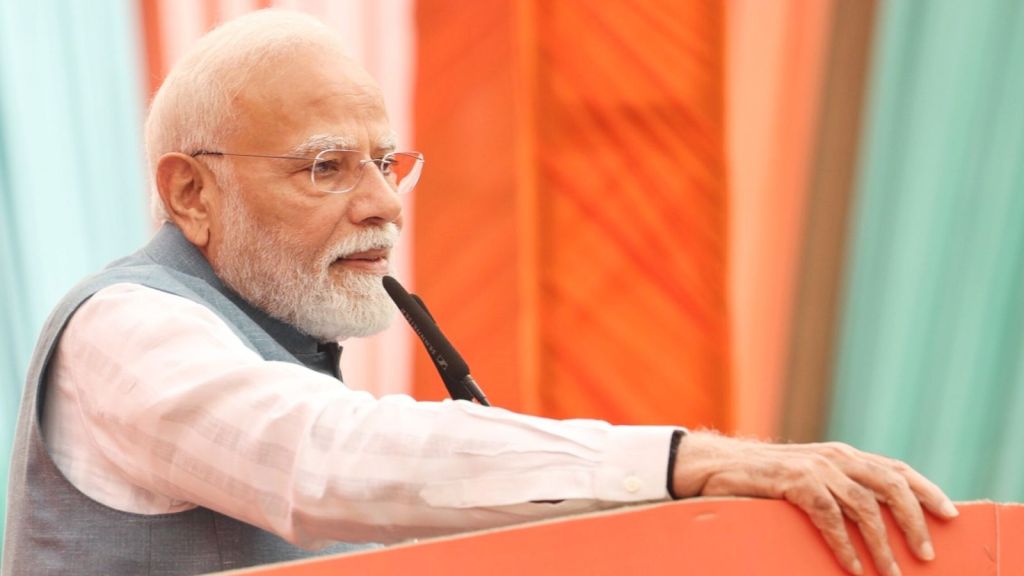
Reference photograph of Prime Minister Narendra Modi, whose scheduled Manila engagements focus on India–ASEAN cooperation, maritime security and trade; not a photograph of the November 2026 summits.
Image: Indian Express
Why in news
The Ministry of External Affairs has announced the Prime Minister’s participation in the Manila summits, hosted by the Philippines as ASEAN Chair. The visit coincides with the ASEAN–India Year of Maritime Cooperation and discussions on reviewing the ASEAN–India Trade in Goods Agreement.
November 17, 2026
Scheduled summit participation
23rd
ASEAN–India Summit
21st
East Asia Summit
11
ASEAN members reported in the source
2026–2030
ASEAN–India Plan of Action
Background
ASEAN is a Southeast Asian regional organisation whose dialogue partnerships and ASEAN-led forums connect the region with major external powers. India’s Act East Policy links engagement with Southeast Asia to economic integration, connectivity and strategic cooperation, including the development of India’s Northeast. India and ASEAN have a Comprehensive Strategic Partnership. The East Asia Summit is an ASEAN-led leaders’ forum for strategic, political and economic dialogue; it is not a collective-defence alliance. The Quad, comprising India, Australia, Japan and the United States, is a separate plurilateral grouping rather than an ASEAN institution.
What is confirmed, and what remains uncertain?
Both reports confirm that the Prime Minister will participate in the ASEAN–India Summit and the East Asia Summit in Manila on November 17. The ASEAN–India meeting is expected to review implementation of the Comprehensive Strategic Partnership, including the Plan of Action 2026–2030. These are scheduled engagements, not completed summits or announced outcomes.
The reports differ on the overall visit duration: The Hindu cites November 16–18, while The Indian Express quotes an MEA announcement specifying November 16–17. The common, clearly supported detail is summit participation on November 17; the departure date should not be presented as settled on the basis of these extracts.
A Quad leaders’ meeting on the sidelines is reported as expected. However, the Indian official briefing did not confirm it. The possibility of bilateral meetings is also being worked out, and no specific bilateral meeting should be treated as final.
- The Philippines is hosting the summits as ASEAN Chair for 2026.
- The reported ASEAN Summit theme is Navigating the Future.
- Maritime security, trade and investment are expected priorities, not evidence of agreements already concluded.
Infographic
ASEAN centrality
Anchor Act East in inclusive, ASEAN-led regional dialogue.
Maritime cooperation
Connect regional security with safe commerce and practical public goods.
Trade and investment
Advance the AITIGA review without assuming its completion.
Implementation
Translate the Plan of Action into accountable delivery.
Quad caution
A possible sidelines meeting remains officially unconfirmed by India.
AI-assisted infographic by Pragnya IAS Academy, based on the cited sources.
ASEAN centrality: the organising principle of Act East
ASEAN centrality means that ASEAN-led institutions remain a principal platform for regional dialogue and agenda-setting. For India, this supports an inclusive Indo-Pacific architecture rather than a regional order organised exclusively around competing major-power blocs.
The ASEAN–India Summit and the East Asia Summit perform complementary functions. The former advances India’s partnership with ASEAN; the latter brings ASEAN together with India and other major powers for wider strategic dialogue. ASEAN’s convening role allows countries with competing interests to remain engaged within a common institutional framework.
Centrality does not mean ASEAN can resolve every regional dispute or that India must abandon other partnerships. India’s task is to ensure that smaller-group initiatives complement ASEAN-led mechanisms and respond to Southeast Asian priorities rather than bypass them.
- Act East connects diplomacy with trade, connectivity, development and security cooperation.
- India’s Northeast provides an important geographical link for overland engagement with Southeast Asia.
- ASEAN’s institutional leadership must be distinguished from uniformity of views among its members.
Maritime cooperation: from strategic language to public goods
The designation of 2026 as the ASEAN–India Year of Maritime Cooperation gives maritime issues particular prominence. Sea routes connecting the Indian Ocean and the western Pacific are important for commerce and regional stability, making maritime security an economic as well as a strategic concern.
India’s engagement can emphasise international law, including the United Nations Convention on the Law of the Sea, peaceful settlement of disputes, and lawful navigation and overflight. Practical cooperation could include maritime domain awareness, search and rescue, humanitarian assistance, disaster relief and action against maritime crime. These are policy opportunities, not confirmed Manila deliverables.
An inclusive approach is essential. ASEAN members have differing security concerns and relationships with major powers. Framing cooperation around shared maritime needs can generate wider acceptance than presenting it solely as a response to any particular country.
- Maritime domain awareness improves understanding of activities and risks at sea.
- Civilian and coastguard cooperation can build trust alongside defence engagement.
- The East Asia Summit offers dialogue on security issues but does not create mutual-defence obligations.
Trade and investment: making strategic convergence economically credible
The sources identify trade and investment as major summit priorities. India has expressed a preference for completing the review of the ASEAN–India Trade in Goods Agreement, or AITIGA, as soon as possible. Neither a completed review nor a binding completion deadline is established by the supplied material.
A substantive review should assess market access, rules of origin, customs procedures and non-tariff barriers. Rules of origin determine whether goods qualify for preferential treatment, while simpler procedures can make negotiated preferences more usable by firms. These are analytical priorities for reform, not provisions announced at the summit.
Trade reform must be accompanied by reliable connectivity, efficient logistics and productive investment. Otherwise, strategic declarations may not translate into commercial opportunities, particularly for smaller businesses and border regions. The Plan of Action provides a framework whose credibility will depend on implementation.
- AITIGA concerns trade in goods and should not be treated as the entire India–ASEAN economic relationship.
- The economic assessment should examine export opportunities and domestic adjustment needs rather than assume uniform gains.
- The sources provide no trade values or deficit figures; quantitative claims about trade performance cannot be drawn from them.
The Quad: complementary platform, unconfirmed engagement
The Quad and ASEAN-led forums have different memberships and institutional roles. The Quad enables cooperation among India, Australia, Japan and the United States; the East Asia Summit includes ASEAN members and a wider set of external partners, including China and Russia.
The Indian Express reports continued Quad foreign-minister engagement despite difficulties in convening a leaders’ summit. This indicates that uncertainty over a leaders’ meeting should not automatically be equated with the cessation of cooperation. Equally, reported expectations cannot substitute for an official announcement.
For India, the appropriate balance is to pursue useful plurilateral cooperation while preserving the inclusiveness and legitimacy of ASEAN-led dialogue. The Manila visit should therefore be assessed primarily through its confirmed ASEAN–India and East Asia Summit engagements, not through an assumed Quad outcome.
| Platform | Institutional purpose | Status in the supplied reports |
|---|---|---|
| ASEAN–India Summit | Review and advance the India–ASEAN partnership | Participation confirmed for November 17 |
| East Asia Summit | ASEAN-led dialogue on regional and global strategic issues | Participation confirmed for November 17 |
| Quad leaders’ meeting | Cooperation among India, Australia, Japan and the United States | Reported as expected; not officially confirmed by India |
| AITIGA review | Review the framework for preferential trade in goods | Early completion favoured by India; conclusion not announced |
- 1. Use ASEAN-led dialogue to identify shared regional priorities.
- 2. Translate priorities into actions under the ASEAN–India Plan of Action.
- 3. Develop practical maritime cooperation and advance trade-related negotiations.
- 4. Assign implementation responsibilities and review progress.
- 5. Assess results through safer maritime activity, usable market access and stronger connectivity.
2005
The East Asia Summit process began.
September 2024
The last Quad leaders’ summit identified in the supplied reports was hosted in Wilmington, Delaware.
2026
India and ASEAN are observing the ASEAN–India Year of Maritime Cooperation.
November 17, 2026
The Prime Minister is scheduled to participate in the ASEAN–India Summit and the East Asia Summit in Manila.
2027
India and ASEAN are due to commemorate 35 years of dialogue relations and five years of their Comprehensive Strategic Partnership.
Significance, challenges & way forward
Significance
- The engagements reinforce ASEAN as a central partner in India’s Act East Policy and Indo-Pacific vision.
- Maritime cooperation can connect strategic engagement with practical benefits such as disaster response and safer commerce.
- A substantive trade review could improve the usability and balance of economic opportunities.
- ASEAN-led dialogue allows India to engage a wider range of powers than the Quad alone.
- Implementation of regional connectivity can strengthen the Northeast’s role in India’s external economic engagement.
Challenges
- Differences among ASEAN members can constrain common positions on sensitive security issues.
- Major-power rivalry risks narrowing the space for inclusive regional cooperation.
- Trade negotiations must reconcile market-opening objectives with concerns about origin verification, barriers and domestic adjustment.
- Connectivity and logistics constraints can weaken the benefits of diplomatic and trade initiatives.
- Unconfirmed meetings and inconsistent itinerary details create a risk of confusing expectations with established facts.
Way forward
- Anchor India’s regional engagement in ASEAN-led institutions while making other partnerships complementary to them.
- Prioritise demand-driven maritime cooperation consistent with international law and partner countries’ needs.
- Pursue an evidence-based AITIGA review with consultation across exporters, importers and affected domestic sectors.
- Link trade facilitation with connectivity, customs efficiency and support for smaller businesses.
- Translate the Plan of Action into clear responsibilities and regular implementation reviews.
- Communicate confirmed engagements, negotiating objectives and completed outcomes as distinct categories.
Key terms
- ASEAN centrality
- The principle that ASEAN-led institutions should play a central role in shaping regional dialogue and cooperation.
- Act East Policy
- India’s policy of deepening strategic, economic and connectivity engagement with Southeast Asia and the wider eastern neighbourhood.
- East Asia Summit
- An ASEAN-led leaders’ forum for dialogue on strategic, political and economic issues of regional importance.
- AITIGA
- The ASEAN–India Trade in Goods Agreement, which governs preferential trade arrangements for goods.
- Rules of origin
- Criteria used to determine a product’s origin and eligibility for preferential tariff treatment.
- Maritime domain awareness
- Understanding activities and developments in the maritime domain that may affect security, safety, commerce or the environment.
- Quad
- A plurilateral grouping comprising India, Australia, Japan and the United States.
- UNCLOS
- The United Nations Convention on the Law of the Sea, which provides the legal framework for ocean uses and maritime rights and duties.
Link with static syllabus
Prelims practice MCQs
Q1. With reference to the Manila engagements described in the supplied reports, consider the following statements: 1. India has confirmed the Prime Minister’s participation in the ASEAN–India Summit and the East Asia Summit. 2. India has officially confirmed a Quad leaders’ summit in Manila. 3. Both reports specify the same end date for the Prime Minister’s visit. Which of the statements given above is/are correct?
Q2. Consider the following statements about the East Asia Summit: 1. It is an ASEAN-led forum. 2. India, China and Russia participate in it. 3. It is a collective-defence alliance with automatic mutual-defence obligations. Which of the statements given above are correct?
Q3. In the context of preferential trade agreements, rules of origin primarily determine:
Q4. Which of the following best describes ASEAN centrality?
Mains practice questions
GS 2 · 15 marks · 250 words
ASEAN centrality is essential to India’s Act East Policy, but diplomatic engagement must be matched by economic and maritime outcomes. Discuss with reference to the forthcoming Manila summits.
Frequently asked questions
Which Manila summit engagements are confirmed?
The Prime Minister’s participation in the ASEAN–India Summit and the East Asia Summit on November 17, 2026, is confirmed in both reports. The reports differ on the overall visit’s end date.
Is the Manila Quad summit confirmed?
No official Indian confirmation is established by the supplied material. Reports describe a possible meeting on the sidelines, but the MEA briefing did not confirm it.
Why does ASEAN centrality matter for India?
It supports an inclusive regional framework in which India can engage Southeast Asian countries and major powers through ASEAN-led institutions. It also anchors Act East in the region’s own priorities.
Has the AITIGA review been completed?
The supplied reports do not establish completion. They state that India favours concluding the review as soon as possible.
Sources
- The Hindu: Modi to visit Manila for ASEAN Summit; maritime security, trade on agenda
- Indian Express: PM Modi will attend India-Asean, East Asia summits
Analysis prepared by the Pragnya IAS Academy current-affairs desk with AI assistance from the cited reports. Verify figures with the original sources.
Turn current affairs into marks
Join Pragnya IAS Academy's mentorship for daily answer-writing evaluation on stories like this — classroom programmes from a trusted name in IAS coaching in Hyderabad.