
India–Bangladesh Consular Dialogue: Balancing the Hasina Issue and Bilateral Ties
Revise the static topic: UPSC International Relations notes
In short: India and Bangladesh have postponed their fifth consular dialogue amid tensions over Sheikh Hasina’s announced plan to return to Bangladesh in December 2026. The setback threatens cooperation on visas, detained citizens and border management, highlighting India’s need to separate the Hasina issue from essential bilateral engagement.
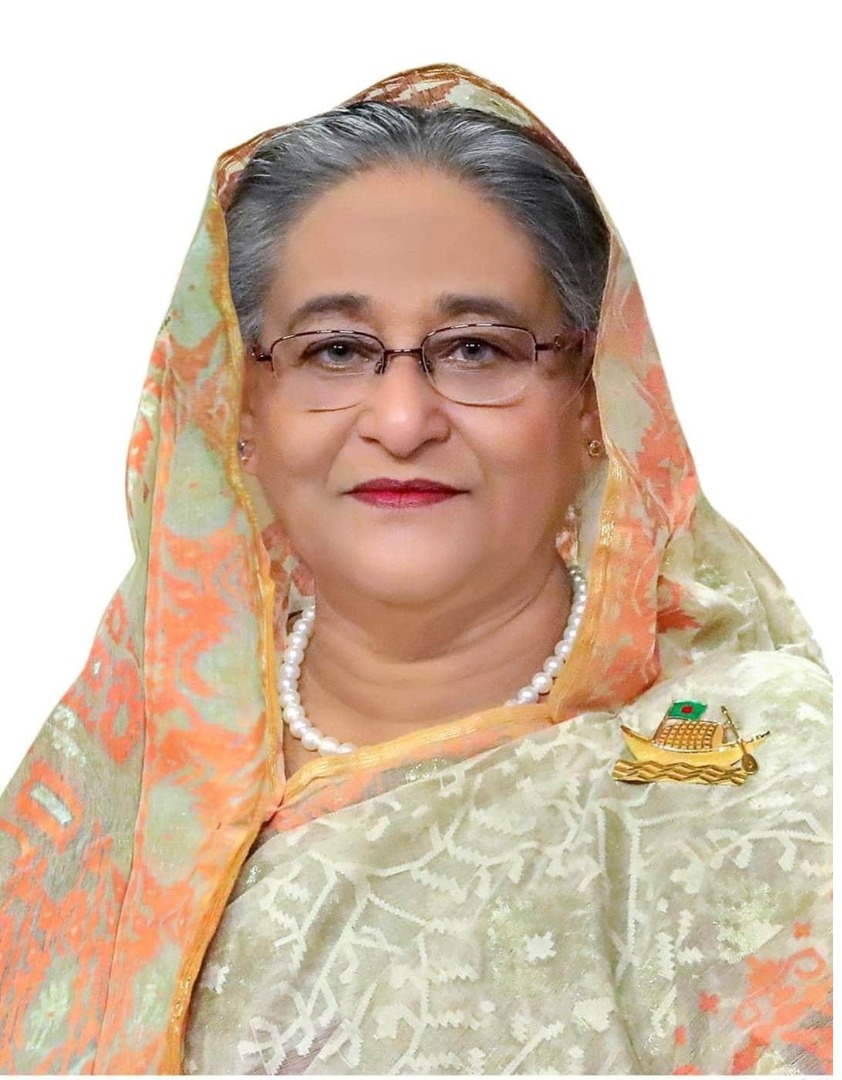
Reference portrait of Sheikh Hasina, whose proposed return to Bangladesh is central to the diplomatic dilemma discussed in the article.
Image: Press Information Department · Public domain
Why in news
The consular dialogue scheduled in Dhaka for November 17–18, 2026, has been postponed, according to a diplomatic source cited by The Hindu. The development follows Hasina’s request for new Bangladeshi identity documents and Dhaka’s stated preference for securing her return through extradition.
5th
Postponed consular dialogue
17–18 November 2026
Scheduled meeting dates
2017
Consular dialogue initiated
29 May 2024
Previous consular dialogue
December 2026
Reported Ganga treaty expiry
Background
India and Bangladesh share a land boundary, transboundary rivers and close social and economic connections. Bangladesh’s location makes it important for connectivity with India’s North-East and for stability in the Bay of Bengal region. Consular cooperation addresses practical concerns such as travel documents, assistance to nationals and the return of detained citizens, while extradition and mutual legal assistance serve distinct criminal-justice purposes. The relationship therefore requires durable institutional channels that can function despite political disagreements.
What has been postponed and what is at stake?
The planned dialogue was to take place in Dhaka at the level of Directors General of the two foreign ministries. It would have been the first consular dialogue since the August 2024 uprising that displaced Hasina’s government.
Its agenda included border management, visa procedures and repatriation of citizens detained on either side. The postponement does not itself establish that all these services have stopped; it removes an important forum for resolving operational problems.
According to the report, Indian visa issuance fell sharply after tensions emerged in August 2024 and has gradually increased in recent months, particularly following Tarique Rahman’s election as Prime Minister in February 2026. Political friction now risks weakening that normalisation.
- The dialogue began in 2017 as a regular channel for consular, visa and mutual legal assistance cooperation.
- The fourth round, held in New Delhi in May 2024, covered visa matters, repatriation and Mutual Legal Assistance Treaty cases.
- Citizen-facing cooperation is especially vulnerable when technical engagement becomes dependent on political convergence.
Infographic
Legal process
Assess any return or extradition arrangement under applicable law.
Humanitarian safeguards
Scrutinise safety, treatment and procedural assurances.
Citizen services
Keep visas, consular assistance and repatriation operational.
Strategic continuity
Protect water cooperation, connectivity and border coordination.
Quiet diplomacy
Respect sovereignty and reduce partisan perceptions.
AI-assisted infographic by Pragnya IAS Academy, based on the cited sources.
Why the Hasina issue creates a diplomatic dilemma
Hasina has been in India since August 5, 2024. On November 9, 2026, her legal representatives requested a new Bangladeshi passport and national identity card, referring to the reported revocation of her existing documents. Bangladesh’s response rejected passport issuance and favoured her return through an extradition-related process.
The supplied editorial reports that Hasina has been convicted by a tribunal and sentenced to death. Her proposed return therefore involves personal safety and legal safeguards, alongside the possibility of renewed political confrontation in Bangladesh.
India faces competing imperatives: maintaining a working relationship with the government in Dhaka, addressing Hasina’s welfare and avoiding perceptions of intervention in Bangladesh’s domestic politics. Continued refuge should not be equated automatically with endorsement of her political programme; equally, humanitarian concern cannot substitute for engagement with Bangladesh’s current government.
- Engagement with Bangladesh must be anchored in enduring national interests rather than identification with one political party.
- Any assessment of domestic unrest following Hasina’s return remains a risk assessment, not an established outcome.
- Quiet diplomacy can reduce the domestic political costs of compromise for both governments.
Legal distinctions: return, extradition and prisoner transfer
A passport application is not an extradition proceeding. Bangladesh’s issuance of its nationality documents, Hasina’s proposed voluntary travel and India’s consideration of any extradition request involve different authorities and legal questions. The sources do not establish that a final Indian decision on extradition has been taken.
India and Bangladesh have an extradition agreement. Any request must be assessed under the applicable treaty and Indian law, including procedural requirements and relevant safeguards. Extradition, ordinary repatriation and transfer of sentenced prisoners are not interchangeable merely because political statements use overlapping language.
Article 21 protects the life and personal liberty of persons, including non-citizens, within India’s constitutional framework. It does not create an automatic right to remain in India or predetermine an extradition outcome. The reported death sentence makes careful scrutiny of safety, treatment and procedural assurances especially important.
- Do not infer formal refugee status or legally recognised asylum solely from Hasina’s presence in India.
- Do not assume that a death sentence automatically bars or mandates extradition.
- Travel documents, lawful departure and admission requirements mean that an announced return is not a completed legal arrangement.
India’s options: compartmentalise without disengaging
The most workable approach is a dual track: a confidential political and legal channel for the Hasina issue, alongside protected technical channels for visas, detainees, border coordination and water cooperation. Compartmentalisation does not eliminate the dispute; it limits its ability to disrupt unrelated public interests.
The editorial links the deterioration in ties to Hasina’s public criticism of the Bangladesh government from India and reports that the Bangladesh Prime Minister’s visit was cancelled. It also reports that negotiations on extending the Ganga Water Treaty, due to expire in December 2026, have been affected. This creates urgency beyond the consular calendar.
India should communicate respect for Bangladesh’s sovereignty while pursuing lawful, non-coercive understandings that reduce political provocation. Any proposal concerning Hasina’s return should distinguish her expressed preferences from the separate requirements of safety, documentation and legal process.
- Reschedule the consular dialogue without making its agenda contingent on resolving Hasina’s status.
- Prioritise humanitarian visa cases and verification of detained citizens.
- Maintain a dedicated water-negotiation channel to prevent political tensions from consuming a time-sensitive agenda.
- Avoid either an unconditional handover or indefinite diplomatic paralysis as a substitute for legal assessment.
| Mechanism | Purpose | Key distinction |
|---|---|---|
| Consular cooperation | Assist nationals and address travel, documentation and detention-related concerns. | A continuing administrative function, not a decision on political culpability. |
| Repatriation | Return a person to their country through an applicable lawful process. | Not necessarily a surrender for criminal prosecution or punishment. |
| Extradition | Surrender a person sought by another state for prosecution or enforcement of a sentence. | Requires assessment under applicable treaty provisions and domestic law. |
| Mutual legal assistance | Support criminal investigations and proceedings through evidence and other legal cooperation. | Does not itself mean surrendering the accused. |
| Transfer of sentenced prisoners | Enable a convicted person to serve a sentence in another state under an applicable arrangement. | Distinct from extraditing a person sought by the requesting state. |
- 1. Reaffirm respect for sovereignty and the importance of long-term bilateral ties.
- 2. Create a confidential political-legal channel for Hasina-related questions.
- 3. Assess documentation, any extradition request and relevant safeguards through competent authorities.
- 4. Resume technical engagement on visas, detainees, border coordination and water cooperation.
- 5. Review implementation through regular official communication and restrained public messaging.
2017
India and Bangladesh initiated a regular consular dialogue.
May 29, 2024
The fourth consular dialogue was held in New Delhi.
August 5, 2024
Hasina took refuge in India following the uprising against her government.
February 2026
The source reports Tarique Rahman’s election as Bangladesh’s Prime Minister.
August 5, 2026
Hasina announced plans to return during a virtual press conference held in Delhi, according to the editorial.
November 9, 2026
Hasina’s legal representatives requested a new Bangladeshi passport and national identity card.
November 17–18, 2026
The fifth consular dialogue had been scheduled for these dates; its postponement was reported beforehand.
December 2026
Hasina has announced a planned return; separately, the editorial identifies this month as the Ganga Water Treaty’s expiry.
Significance, challenges & way forward
Significance
- Consular cooperation converts bilateral diplomacy into practical protection for travellers, families and detained citizens.
- Stable relations with Bangladesh support India’s neighbourhood policy, North-East connectivity and regional security.
- Keeping water negotiations operational protects a shared-resource agenda from unrelated political disputes.
- A lawful and humane approach can strengthen India’s credibility as a reliable regional partner.
- Institutional continuity reduces the vulnerability of bilateral ties to leadership changes and partisan rivalry.
Challenges
- Hasina’s presence and political statements from India can reinforce perceptions that New Delhi favours a particular Bangladeshi political formation.
- The reported conviction and death sentence complicate any arrangement for her return.
- Domestic political competition in Bangladesh may narrow the space for compromise.
- Linking consular and water cooperation to the Hasina dispute risks imposing costs on citizens unrelated to it.
- Public rhetoric can blur legal distinctions and generate expectations that officials cannot lawfully fulfil.
Way forward
- Seek an early mutually acceptable date for the postponed dialogue and retain working-level contact in the interim.
- Agree on a minimum humanitarian agenda covering urgent travel, consular access and lawful repatriation.
- Evaluate any extradition request on its legal merits rather than through public political bargaining.
- Seek specific and credible assurances relevant to safety, treatment and legal process if return arrangements are considered.
- Protect Ganga treaty negotiations through sustained technical and political engagement.
- Build relations across institutions and society while avoiding intervention in Bangladesh’s domestic political contest.
Key terms
- Consular dialogue
- An official channel for addressing assistance to nationals, travel documentation and related cross-border administrative concerns.
- Extradition
- The formal surrender of a person by one state to another for prosecution or enforcement of a criminal sentence under applicable law.
- Repatriation
- The return of a person to their country through an applicable lawful process.
- Mutual legal assistance
- Cooperation between states in obtaining evidence or providing other assistance for criminal investigations and proceedings.
- Compartmentalisation
- Managing a disputed issue separately so that it does not block cooperation across the entire relationship.
- Diplomatic assurances
- Undertakings by a state concerning matters such as treatment or legal process, whose specificity and credibility require assessment.
Link with static syllabus
Prelims practice MCQs
Q1. With reference to the India–Bangladesh consular dialogue, consider the following statements: 1. It was initiated in 2017. 2. The fourth round was held in New Delhi in May 2024. 3. The postponed fifth round was intended to be the first such dialogue after the August 2024 uprising. Which of the statements given above are correct?
Q2. Consider the following statements: 1. Extradition and transfer of sentenced prisoners are legally identical mechanisms. 2. Mutual legal assistance can involve obtaining evidence for criminal proceedings. 3. Repatriation necessarily involves surrendering a person for criminal prosecution. Which of the statements given above is/are correct?
Q3. With reference to Article 21 of the Constitution of India, consider the following statements: 1. Its protection extends to persons and is not confined to Indian citizens. 2. It automatically confers an unconditional right on every foreign national to remain in India. Which of the statements given above is/are correct?
Q4. Which of the following best describes compartmentalisation in the context of India–Bangladesh relations?
Mains practice questions
GS 2 · 15 marks · 250 words
The resilience of neighbourhood diplomacy depends on insulating essential cooperation from contentious political issues. Examine with reference to the Hasina dilemma in India–Bangladesh relations.
Frequently asked questions
Why was the India–Bangladesh consular dialogue postponed?
A diplomatic source cited by The Hindu attributed the postponement mainly to rising tensions over Hasina’s announced return to Bangladesh. Her request for new identity documents and Dhaka’s extradition-related response sharpened the dispute.
Does postponement mean that all visa and consular services have stopped?
No. The supplied material establishes the postponement of a dialogue, not a blanket suspension of services; it also reports a gradual recent increase in Indian visas issued to Bangladeshi travellers.
Is Hasina’s passport request the same as an extradition request?
No. A passport request concerns issuance of nationality and travel documentation, whereas extradition is a state-to-state legal process for surrendering a person for prosecution or enforcement of a sentence.
What is India’s most practical diplomatic option?
India should pursue a confidential, legally grounded channel for the Hasina issue while restoring technical cooperation on visas, detainees, borders and water. This limits political spillover without abandoning either humanitarian concerns or relations with Dhaka.
Sources
- The Hindu: Amidst simmering tensions, India-Bangladesh consular dialogue postponed
- The Hindu (Editorial): In a dilemma: On Sheikh Hasina and India-Bangladesh ties
Analysis prepared by the Pragnya IAS Academy current-affairs desk with AI assistance from the cited reports. Verify figures with the original sources.
Turn current affairs into marks
Join Pragnya IAS Academy's mentorship for daily answer-writing evaluation on stories like this — classroom programmes from a trusted name in IAS coaching in Hyderabad.