
US–Iran Maritime Confrontation: Hormuz Risks, Blockade Law and India’s Stakes
Revise the static topic: UPSC International Relations notes
In short: The US military said it disabled a Palau-flagged commercial vessel in the Gulf of Oman after the ship attempted to breach its blockade of Iranian ports. Iran’s stated intention to keep the Strait of Hormuz shut while challenging the blockade raises questions about maritime navigation, the legality of force against merchant shipping and risks to India’s energy supplies and trade.
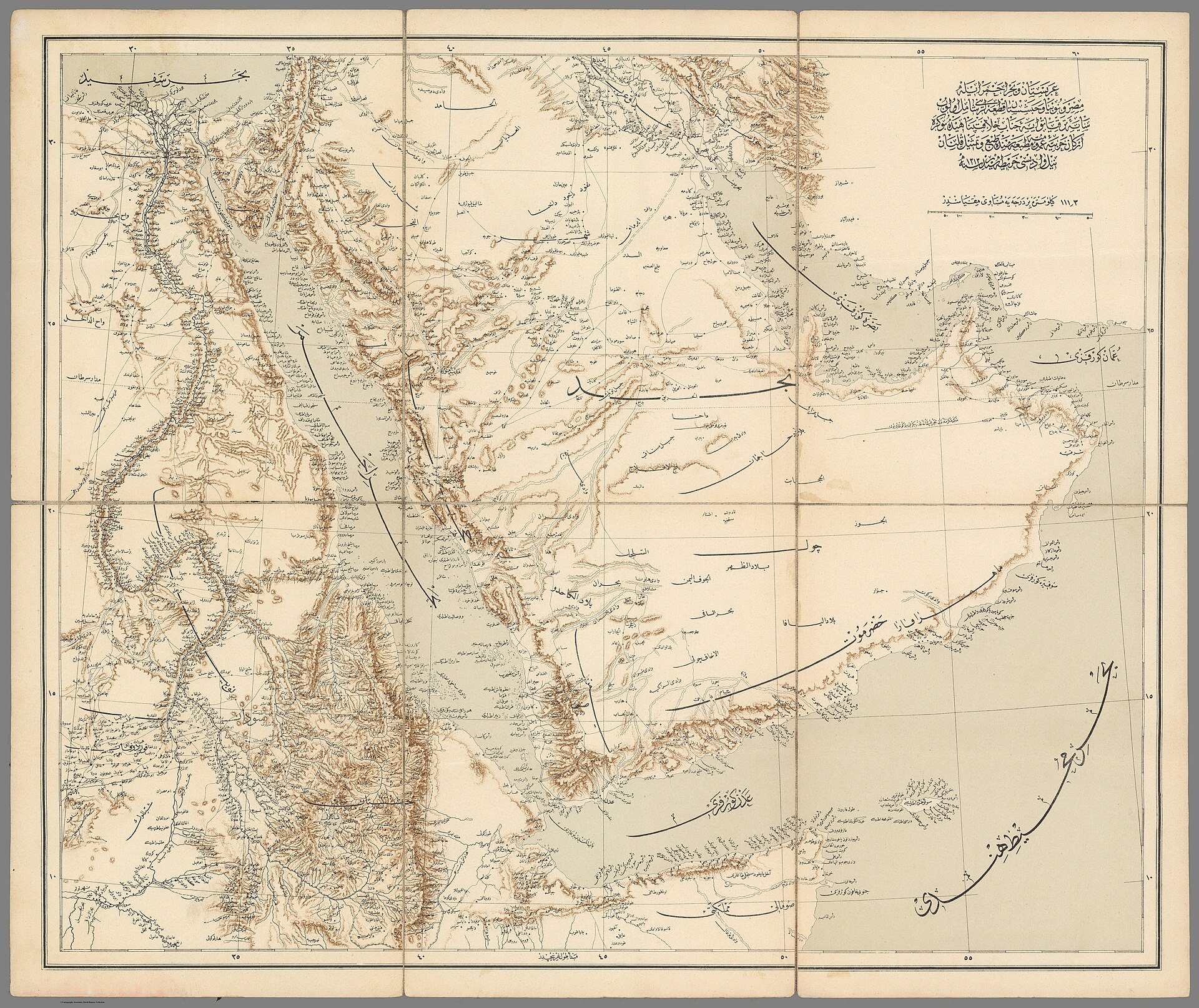
Historical map of the Strait of Hormuz region, showing the maritime gateway between the Persian Gulf and the Gulf of Oman. This reference map depicts historical geography, not current boundaries or the reported confrontation.
Image: Erkan-I Harbiye-I Umumiye. [General Staff Of The Ottoman Army]. · Public domain
Why in news
On November 27, 2026, US Central Command reported disabling M/V Pacific Archer the previous day after its departure from Bandar Abbas. Separately, Iranian state media reported that a senior adviser to Iran’s Supreme Leader opposed both reopening Hormuz and allowing the US blockade to continue.
Background
The Strait of Hormuz connects the Persian Gulf with the Gulf of Oman, which opens towards the Arabian Sea. Iran lies along its northern side, while Oman’s Musandam Peninsula forms its southern shore. Its geography makes it a strategic chokepoint for Gulf energy exports and commercial shipping. India’s dependence on imported hydrocarbons, economic links with Gulf states and wider Indian Ocean interests make secure passage important. The legal framework combines the UN Charter’s rules on force, the law of the sea and, where applicable, the law of naval warfare.
What the report establishes—and what remains uncertain
According to US Central Command, military aircraft struck the stern of the Palau-flagged M/V Pacific Archer in the Gulf of Oman after it left Bandar Abbas and attempted to breach the blockade despite repeated warnings. The command said the vessel’s propulsion was disabled and its civilian crew was unharmed; these are attributed US military claims.
Iranian state media quoted Mohammad Mokhber, an adviser to Iran’s Supreme Leader, as saying that Hormuz would not be reopened and the blockade would not be allowed to remain. The supplied report does not independently establish the extent of any closure, the vessel’s cargo, its precise location or the legal basis invoked for the strike.
- The report states that the US reimposed its naval blockade of Iranian ports in July.
- Earlier in November, the US announced Task Force Iron Gate to restrict weapons and sanctioned materials moving across Iran’s land borders and the Caspian Sea.
- A blockade of Iranian ports and an obstruction of passage through Hormuz are distinct measures with different geographical and legal implications.
Infographic
Verify
Separate attributed operational claims from independently established facts.
Apply the law
Examine force, blockade conditions and navigational rights separately.
Protect energy
Review reserves, procurement flexibility and distinct gas contingencies.
Secure shipping
Prioritise crews, advisories, monitoring and emergency assistance.
De-escalate
Engage all partners while defending lawful commercial passage.
AI-assisted infographic by Pragnya IAS Academy, based on the cited sources.
Blockade enforcement requires more than a sanctions claim
A naval blockade is a coercive measure preventing maritime access to or departure from an enemy’s coast or ports. Its legality requires separate examination of the resort to force under the UN Charter and the conduct of operations under applicable naval-warfare rules. Unilateral sanctions do not, by themselves, create a general entitlement to attack foreign merchant vessels.
Under the law of naval warfare, a blockade must satisfy requirements including declaration and notification, effectiveness and impartial application. It cannot bar access to neutral ports and is prohibited where its sole purpose is starving civilians or denying essentials, or where expected civilian harm is excessive relative to the concrete and direct military advantage anticipated.
Merchant ships believed on reasonable grounds to be breaching a lawful blockade may be captured; attack requires additional conditions, including prior warning and clear resistance to capture. The report’s references to warnings and an unharmed crew are relevant, but do not establish that every applicable legal requirement was satisfied.
- A vessel’s neutral flag does not automatically immunise it from lawful belligerent measures, but neither does departure from an Iranian port automatically justify attack.
- Assessing this incident requires evidence about the applicable conflict framework, blockade notification, vessel conduct, cargo, location and feasible alternatives.
- The supplied material does not identify a Security Council authorisation or establish the conditions for a self-defence justification.
Hormuz navigation: transit rights and security claims
UNCLOS provides a transit-passage regime for straits used for international navigation between one part of the high seas or an exclusive economic zone and another. Transit passage covers continuous and expeditious navigation and overflight; states bordering such straits must not hamper it, and it cannot be suspended under this regime.
Ships and aircraft exercising transit passage also have duties, including proceeding without delay and refraining from threats or force against bordering states. A security dispute therefore does not erase navigational responsibilities on either side. Applying treaty and customary rules to particular states and wartime conduct requires attention to their legal status and the facts.
- Transit passage is distinct from innocent passage through territorial seas.
- The freedom of navigation claim does not make merchant shipping exempt from all lawful regulation or applicable naval-warfare measures.
- An asserted closure of an international strait raises legal issues independently of the legality of the opposing blockade.
India’s exposure: energy, shipping and strategic autonomy
Disruption around Hormuz could affect India through delayed crude oil and liquefied natural gas shipments, higher freight and war-risk insurance costs, and volatility in international energy prices. These are prospective transmission channels; the supplied report does not document an Indian supply interruption or quantify price effects.
India must also consider the safety of seafarers, commercial vessels and its nationals in the wider Gulf region. Diplomatically, the challenge is to protect relations with the US, Iran and Gulf partners while consistently supporting maritime safety, lawful navigation and de-escalation.
- A ship departing a port inside the Persian Gulf cannot simply choose another sea route to bypass Hormuz.
- Alternative suppliers, export outlets and overland infrastructure may reduce exposure, but their availability and capacity cannot be assumed.
- Strategic autonomy should guide an interest-based response rather than silence on civilian protection and navigational rights.
| Measure | Meaning | Core legal issue |
|---|---|---|
| Naval blockade | Prevention of maritime access to or departure from an enemy coast or ports | Must meet applicable rules on resort to force and blockade conduct; a declaration alone is insufficient. |
| Economic sanctions | Restrictions on specified transactions, entities or goods | Sanctions do not by themselves confer a general right to use force against foreign shipping. |
| Interdiction | Stopping, boarding, inspecting or diverting a vessel | Requires an applicable legal basis, such as flag-state consent, treaty authority or relevant wartime rules. |
| Obstruction of strait passage | Interference with movement through an international navigational chokepoint | Engages transit-passage rules and any applicable armed-conflict law. |
- 1. Confrontation increases danger or restricts passage around Hormuz.
- 2. Vessels face delays, disrupted schedules and higher insurance costs.
- 3. Energy cargo availability becomes less predictable and freight costs rise.
- 4. Importers face higher procurement costs and pressure to find alternative supplies.
- 5. Persistent disruption can transmit into inflation, external-sector pressure and strategic uncertainty.
July 2026
The US reimposed its naval blockade of Iranian ports, according to the report.
Earlier in November 2026
The US announced Task Force Iron Gate to restrict weapons and sanctioned materials moving across Iran’s land borders and the Caspian Sea.
November 26, 2026
US forces disabled M/V Pacific Archer in the Gulf of Oman, according to US Central Command.
November 27, 2026
The US military publicly reported the incident; the news report also carried Iran’s stated opposition to reopening Hormuz and retaining the blockade.
Significance, challenges & way forward
Significance
- The incident highlights how coercive action against a commercial vessel can widen a bilateral confrontation into a problem for neutral trading states.
- Hormuz links regional security directly with international energy markets and India’s economic resilience.
- The dispute tests whether navigational rights and civilian protections can be maintained during escalating strategic rivalry.
- India’s response can demonstrate strategic autonomy through consistent legal principles and practical protection of national interests.
Challenges
- The absence of independently verified operational details limits any definitive legal assessment of the strike.
- Reciprocal coercion could produce miscalculation, further vessel attacks or a wider regional conflict.
- Alternative energy supplies may still carry higher costs and cannot automatically replace disrupted deliveries.
- Naval protection can reduce some operational risks but cannot substitute for a political settlement.
- Diplomatic balancing becomes harder when major partners frame maritime security through incompatible strategic narratives.
Way forward
- India should urge de-escalation, protection of civilian crews and respect for applicable navigational rights without prejudging unverified facts.
- Maintain communication with the US, Iran and Gulf partners to seek restraint and practical arrangements for safe commercial passage.
- Strengthen coordination among maritime authorities, shipowners, insurers and energy importers for advisories, tracking and contingency planning.
- Review strategic petroleum reserve readiness alongside crude and LNG procurement options, recognising that petroleum reserves do not directly replace gas supplies.
- Prepare proportionate arrangements for assistance to distressed vessels and seafarers, consistent with international law.
- Use multilateral forums, including the UN and the International Maritime Organization, to support de-escalation and maritime safety within their respective mandates.
Key terms
- Maritime chokepoint
- A narrow sea passage where disruption can constrain movement along a much wider trade network.
- Naval blockade
- A belligerent operation to prevent maritime entry into or departure from an enemy’s coast or ports, subject to legal conditions.
- Transit passage
- Navigation and overflight for continuous and expeditious transit through qualifying straits used for international navigation.
- Innocent passage
- Passage of ships through a territorial sea that is not prejudicial to the coastal state’s peace, good order or security.
- Flag state
- The state whose nationality a vessel possesses and whose flag it is entitled to fly.
- War-risk insurance
- Insurance covering specified conflict-related risks that may be excluded from ordinary marine policies.
- Strategic petroleum reserve
- An emergency stockpile of petroleum intended to help manage serious supply disruptions.
Link with static syllabus
Prelims practice MCQs
Q1. Which of the following correctly describes the geographical position of the Strait of Hormuz?
Q2. Consider the following statements about the UNCLOS transit-passage regime: Statement A: It includes navigation and overflight for continuous and expeditious transit. Statement B: Transit passage may routinely be suspended by a bordering state for political reasons. Which of the statements is correct?
Q3. Consider the following statements about maritime coercion: Statement A: Unilateral economic sanctions alone create a general right to attack foreign merchant vessels. Statement B: A vessel’s neutral flag does not automatically exempt it from all lawful blockade-enforcement measures. Which of the statements is correct?
Q4. With reference to the reported M/V Pacific Archer incident, consider the following statements: Statement A: US Central Command placed the incident in the Gulf of Oman. Statement B: The vessel was reported as Palau-flagged. Which of the statements is correct?
Mains practice questions
GS 2 · 15 marks · 250 words
The US–Iran maritime confrontation illustrates the intersection of international law and economic security. Examine the legal issues surrounding blockade enforcement and navigation through Hormuz, and suggest an Indian response.
Frequently asked questions
Does the report establish that the US strike was lawful?
No. It provides the US account of the operation but not enough evidence about the legal basis, blockade conditions or vessel conduct to reach a definitive conclusion.
Can a state suspend transit passage through an international strait?
Under the UNCLOS transit-passage regime, transit passage cannot be suspended. Assessment of a specific confrontation must also consider the applicable treaty, customary and armed-conflict rules.
Why does the Hormuz confrontation matter to India?
Disruption could affect Gulf energy deliveries, shipping costs and seafarer safety. It also complicates India’s relations with the US, Iran and Gulf partners.
Can ships simply reroute around Hormuz?
Ships leaving ports inside the Persian Gulf have no alternative sea exit bypassing Hormuz. Reducing exposure instead requires alternative supply origins or available overland export infrastructure.
Sources
Analysis prepared by the Pragnya IAS Academy current-affairs desk with AI assistance from the cited reports. Verify figures with the original sources.
Turn current affairs into marks
Join Pragnya IAS Academy's mentorship for daily answer-writing evaluation on stories like this — classroom programmes from a trusted name in IAS coaching in Hyderabad.