
G20 Atlanta Meeting: India on Terrorism, Maritime Security and Global South Vulnerabilities
Revise the static topic: UPSC International Relations notes
In short: At the G20 Foreign Ministers’ meeting in Atlanta, External Affairs Minister S. Jaishankar called for consistent opposition to terrorism, protection of civilian shipping and diplomacy to address conflicts. India linked maritime insecurity and coercive trade practices to the Global South’s economic vulnerabilities, while divisions over Ukraine, Iran and sanctions constrained prospects for collective G20 action.
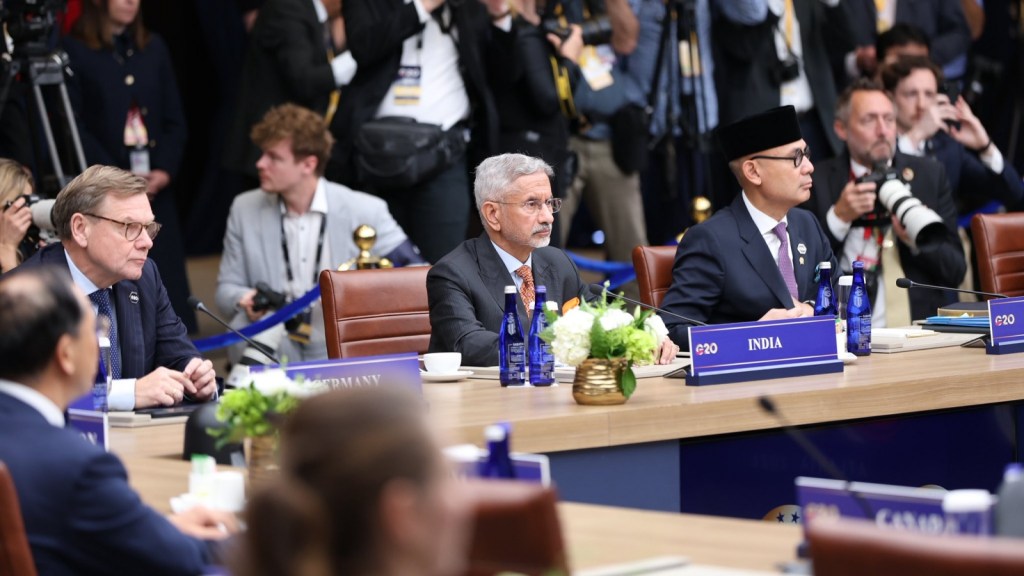
S. Jaishankar at the G20 Foreign Ministers’ meeting, where India called for consistent opposition to terrorism and protection of civilian shipping.
Image: Indian Express
Why in news
Jaishankar addressed the Atlanta meeting on October 30, 2026, hosted by U.S. Secretary of State Marco Rubio. The discussions on energy, shipping and supply-chain security are intended to prepare for the December G20 leaders’ summit in Miami; the supplied reports do not establish a final agreed outcome.
At least 22
Indians killed in West Asia since the war began in February 2026
14
Seafarers among the reported Indian fatalities
Background
The G20 is an informal forum for international economic cooperation comprising major advanced and emerging economies, the European Union and the African Union. It operates through a rotating presidency and consensus-based political coordination rather than treaty-based enforcement. Its relevance to contemporary conflicts arises from their spillovers into energy markets, trade, food security and development finance. India’s dependence on imported energy and seaborne commerce makes secure shipping routes an economic and strategic priority. The Strait of Hormuz connects the Persian Gulf with the Gulf of Oman and is a critical passage for oil and gas shipments.
What happened: security shocks became the economic agenda
The Atlanta meeting brought together major economies amid wars in Ukraine and Iran, elevated energy prices and disruption around the Strait of Hormuz. The Hindu reported that U.S.-Israel strikes on Iran from late February were followed by Tehran’s blockage of the strait. Washington framed energy access, open sea lanes and resilient supply chains as essential to economic security.
Russia’s participation and its planned criticism of international sanctions exposed continuing differences among members. A diplomatic source quoted by The Hindu expected a U.S.-drafted chair’s summary rather than an agreed declaration. This was an expectation, not a confirmed meeting outcome.
- The common economic concern is disruption; the political disagreement concerns responsibility, sanctions and the appropriate response.
- A chair’s summary records the chair’s account of discussions and should not be treated as evidence that all members endorsed its contents.
- The December Miami summit remained a forthcoming event in the supplied reporting.
Infographic
Consistent counterterrorism
Do not subordinate opposition to terrorism to tactical partnerships.
Safe seas and seafarers
Protect civilian shipping and lawful navigation.
Global South protection
Reduce exposure to fuel, food and fertiliser shocks.
Resilient industrialisation
Diversify inputs, markets and connectivity.
Practical G20 cooperation
Contain economic spillovers despite geopolitical disagreement.
AI-assisted infographic by Pragnya IAS Academy, based on the cited sources.
India’s position: oppose terrorism without tactical exceptions
Jaishankar warned that tactical calculations should not lead countries to overlook terrorism and argued that its dangers can rebound on those who practise it. The principle is that short-term strategic partnerships should not dilute opposition to terrorist violence.
The Indian Express interpreted the remarks as an indirect reference to closer U.S.-Pakistan engagement. That interpretation must be distinguished from the minister’s quoted statement, which did not explicitly name Pakistan. India’s accusation that Pakistan sponsors terrorism should likewise be identified as India’s stated position.
India also urged that diplomacy be given a chance rather than relying on military solutions. Taken together, these positions favour consistent treatment of terrorism and negotiated management of interstate conflicts, rather than selective tolerance of violence.
- For India, counterterrorism credibility depends on applying consistent standards irrespective of geopolitical alignment.
- The G20 can reinforce political commitments against terrorist financing, but investigation, prosecution and binding sanctions require action through competent national and international institutions.
Maritime security: protect navigation and the people sustaining trade
Jaishankar highlighted attacks on civilian shipping and seafarers, calling for their cessation and preservation of freedom of navigation within international law, especially the United Nations Convention on the Law of the Sea. The Indian Express reported that at least 22 Indians, including 14 seafarers, had died in West Asia since the war began in February. These figures should not be presented as deaths exclusively caused by attacks in Hormuz.
India and Liberia have launched a joint initiative to safeguard seafarers, according to the report. Its detailed operational provisions were not supplied. The initiative nevertheless places worker safety alongside the movement of cargo in India’s maritime-security agenda.
UNCLOS provides the principal legal framework for maritime zones and navigation rights. Freedom of navigation is not an unrestricted entitlement applying identically everywhere: high-seas navigation, innocent passage through territorial seas and transit passage through qualifying international straits are distinct legal regimes. UNCLOS does not itself authorise coercive military enforcement; other applicable international law also remains relevant.
- Protection of sea lanes must include crew welfare, rescue, evacuation and repatriation, not merely uninterrupted cargo flows.
- The G20 can facilitate coordination, while the International Maritime Organization provides specialised shipping expertise.
- De-escalation and lawful navigation should be mutually reinforcing priorities.
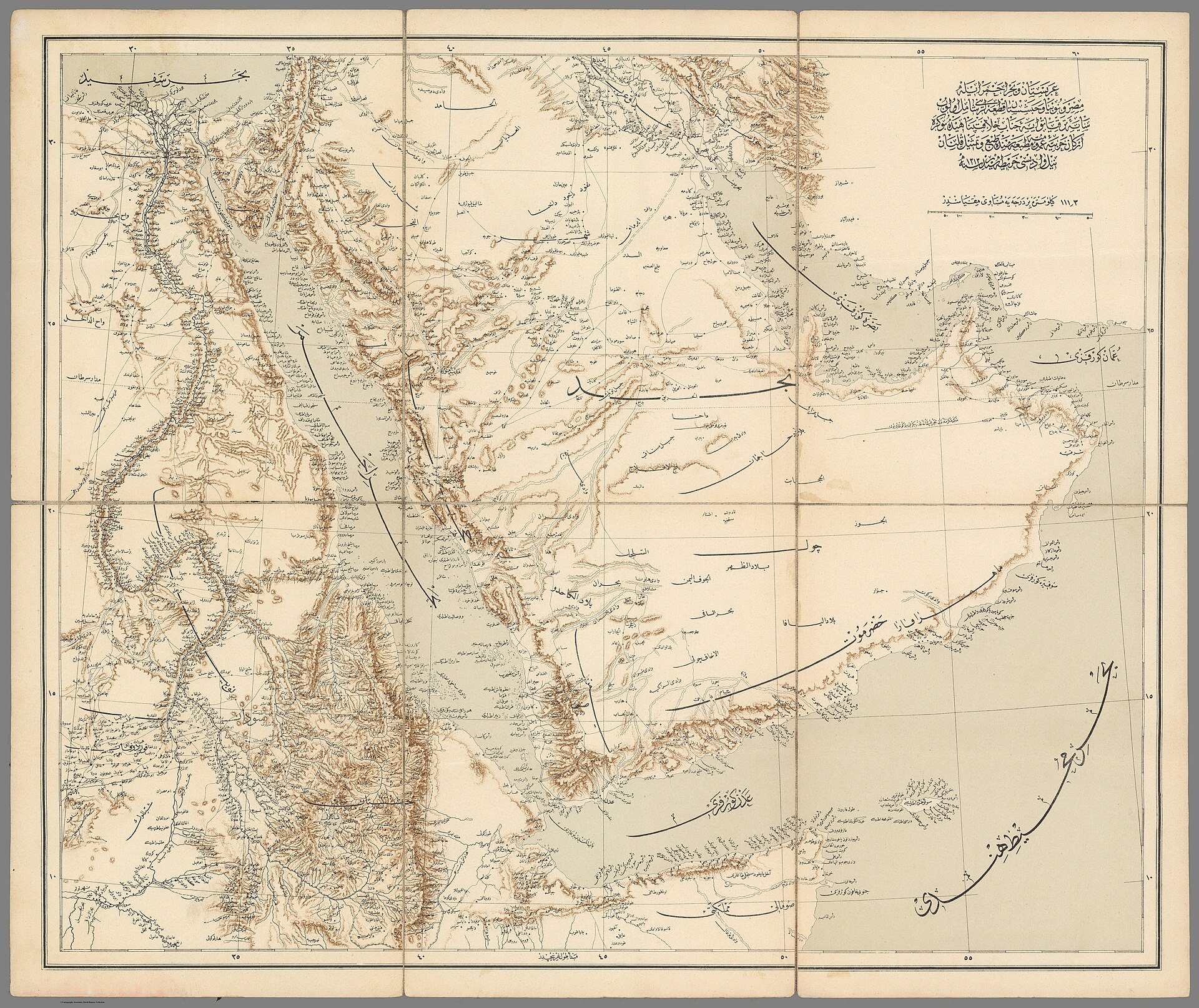
Historical map of the Strait of Hormuz region, providing geographic context for discussion of maritime security at the entrance to the Persian Gulf; not a depiction of current conditions.
Image: Erkan-I Harbiye-I Umumiye. [General Staff Of The Ottoman Army]. · Public domain
Global South: the unequal burden of conflict and economic coercion
India argued that the Global South disproportionately bears the consequences of attacks on shipping through reduced availability and higher costs of fuel, food and fertilisers. Import-dependent economies can face simultaneous pressure on household purchasing power, agricultural production, external balances and public finances.
Jaishankar also criticised market flooding, weaponised supply chains, restricted market access and market distortions as constraints on the right to industrialise. The Indian Express linked these remarks to China’s export restrictions. The broader analytical concern is that concentrated production and discretionary restrictions can prevent developing countries from accessing essential inputs or moving into higher-value manufacturing.
India’s emphasis on resilient, alternative connectivity offers a response based on diversification. De-risking should reduce excessive dependence without becoming indiscriminate economic separation, which could raise costs and further marginalise smaller economies.
- Higher fuel costs can raise freight and farm-input costs, transmitting an energy shock into food insecurity.
- Countries with limited fiscal space face harder choices between cushioning households and maintaining debt sustainability.
- Industrial resilience requires reliable inputs, competitive domestic capabilities and access to external markets.
G20 capacity: coordinate spillovers, without claiming to settle wars
The G20’s advantage is that it brings competing powers and major markets into the same forum. This permits dialogue on shared economic exposure even when members disagree over the underlying conflict. Its constraints are equally clear: it cannot impose a ceasefire, enforce navigation rights or compel compliance with political commitments.
Reported Chinese objections to earlier navigation language and Russia’s opposition to sanctions illustrate how apparently technical economic discussions become politically contested. The Hindu also reported U.S. exclusion of member South Africa from this year’s G20 events, raising concerns about inclusiveness and the forum’s credibility.
A realistic assessment should distinguish a comprehensive political settlement from practical economic coordination. Even without consensus on responsibility for wars, members could pursue information-sharing, shipping-risk reduction, supply diversification and support for vulnerable economies. These are possible policy avenues, not decisions established by the supplied sources.
- Common exposure to disruption creates incentives for cooperation but does not automatically produce agreement.
- Presidency-led priorities require broad member ownership to become durable collective commitments.
- Success should be assessed through implementation and reduced vulnerability, not communiqué language alone.
| Issue | India’s stated emphasis | Potential G20 contribution | Institutional limit |
|---|---|---|---|
| Terrorism | Do not overlook terrorism for tactical gains | Encourage consistent standards and cooperation against terrorist financing | No independent investigative or prosecutorial authority |
| Maritime insecurity | Stop attacks and protect navigation under international law | Coordinate risk information and support seafarer protection | No mandate to command naval operations |
| Fuel, food and fertilisers | Recognise disproportionate costs for the Global South | Improve supply transparency and coordinate support for vulnerable importers | Implementation depends on members and relevant institutions |
| Supply-chain coercion | Protect industrialisation through diversification and alternative connectivity | Promote predictable trade and investment conditions | Competing industrial and security policies constrain consensus |
- 1. Conflict or attacks threaten shipping routes and seafarers.
- 2. Delays, rerouting and higher risk premiums increase delivered costs.
- 3. Fuel, food and fertiliser supplies become costlier or less reliable.
- 4. Import bills and domestic production costs rise.
- 5. Household purchasing power and government fiscal space weaken.
- 6. Vulnerable economies face greater food insecurity and reduced capacity for development spending.
2022
Russia’s invasion of Ukraine deepened divisions between Moscow and Western members, shaping subsequent G20 diplomacy.
Late February 2026
According to The Hindu, U.S.-Israel strikes on Iran triggered Tehran’s blockage of the Strait of Hormuz and a sharp rise in global energy prices.
October 29, 2026
Moscow said Foreign Minister Sergey Lavrov would argue against international sanctions at the G20 meeting.
October 30, 2026
Jaishankar addressed the Atlanta meeting, highlighting terrorism, civilian shipping, Global South vulnerabilities and resilient connectivity.
December 2026, scheduled
The G20 leaders’ summit in Miami is expected to take forward the agenda discussed in Atlanta.
Significance, challenges & way forward
Significance
- India connected counterterrorism, maritime law and development concerns within a single economic-security agenda.
- The focus on seafarers recognises the human costs of keeping global commerce functioning.
- Global South concerns challenge an agenda focused narrowly on major-power rivalry and energy prices in advanced economies.
- The meeting preserves diplomatic contact among competing powers despite limited prospects for comprehensive agreement.
- Supply-chain resilience is increasingly central to industrial policy and foreign policy, rather than merely a commercial efficiency question.
Challenges
- Disagreement over responsibility for conflicts can obstruct even narrowly framed economic commitments.
- Selective opposition to terrorism can weaken trust and undermine consistent international cooperation.
- Shipping protection measures risk further escalation if they are not grounded in applicable international law.
- Diversification can involve higher short-term costs and may be difficult for smaller, resource-constrained economies.
- Exclusion of members and presidency-dominated agendas can erode the G20’s representative legitimacy.
- Non-binding commitments may remain declaratory without institutional ownership and implementation review.
Way forward
- Build minimum consensus around civilian protection, seafarer safety and predictable access to essential supplies without requiring agreement on every geopolitical dispute.
- Work with the International Maritime Organization and relevant authorities to improve incident reporting, crew assistance, evacuation and repatriation arrangements.
- Maintain dialogue on lawful navigation and de-escalation while avoiding claims that the G20 itself can authorise enforcement.
- Coordinate with international financial institutions to support vulnerable import-dependent economies and protect essential development expenditure.
- Diversify energy sources, critical inputs and connectivity routes while retaining the benefits of open and predictable trade.
- Ensure inclusive participation and publish clear follow-up responsibilities, distinguishing collective commitments from the presidency’s preferences.
- For India, combine principled opposition to terrorism with diplomatic engagement across competing geopolitical blocs.
Key terms
- Economic security
- The capacity to sustain essential economic functions and access to critical resources despite external shocks or coercion.
- Global South
- A broad political and developmental grouping of developing countries, not a strictly geographical category or a uniform economic bloc.
- UNCLOS
- The United Nations Convention on the Law of the Sea establishes the overarching legal framework for maritime zones, navigation and ocean-related rights and duties.
- Transit passage
- The UNCLOS regime permitting navigation and overflight for continuous and expeditious transit through qualifying straits used for international navigation.
- Maritime chokepoint
- A narrow sea passage where disruption can constrain shipping and affect wider trade networks.
- De-risking
- Reducing excessive exposure to vulnerable suppliers, markets or routes without necessarily severing economic relations.
- Chair’s summary
- An account issued under the chair’s authority that does not necessarily represent consensus among all participants.
- Weaponisation of supply chains
- The use of control over essential inputs, production networks or market access to exert political or strategic pressure.
Link with static syllabus
Prelims practice MCQs
Q1. With reference to the G20, consider the following statements: 1. It is an informal forum for international economic cooperation. 2. It has an independent mandate to enforce ceasefires among its members. 3. A chair’s summary necessarily reflects the consensus of every participating member. Which of the statements given above is/are correct?
Q2. The Strait of Hormuz connects which of the following water bodies?
Q3. With reference to maritime navigation under UNCLOS, consider the following statements: 1. Innocent passage and transit passage are distinct legal regimes. 2. Transit passage applies to qualifying straits used for international navigation. 3. UNCLOS automatically authorises the G20 to conduct naval enforcement operations. Which of the statements given above are correct?
Q4. Which of the following best describes de-risking in the context of international supply chains?
Mains practice questions
GS 2 · 15 marks · 250 words
Geopolitical shocks have made maritime security and supply-chain resilience central to international economic cooperation. Assess India’s positions at the Atlanta G20 Foreign Ministers’ meeting and the G20’s capacity to address these challenges.
Frequently asked questions
What were India’s main positions at the Atlanta G20 meeting?
India opposed tactical tolerance of terrorism, urged diplomacy, sought protection of civilian shipping under international law and highlighted the Global South’s exposure to higher essential-goods costs. It also advocated diversified supply chains and alternative connectivity.
Did the meeting adopt a joint declaration?
The supplied reports do not confirm an adopted joint declaration. The Hindu quoted a diplomatic source expecting a chair’s summary instead.
Why does maritime insecurity disproportionately affect the Global South?
Many vulnerable economies depend on imported fuel, food and fertilisers and have limited resources to cushion price shocks. Shipping disruption can therefore weaken purchasing power, external balances and development spending simultaneously.
Can the G20 enforce freedom of navigation?
The G20 has no independent maritime-enforcement mandate. It can coordinate political and economic responses, while any operational measures must rest on applicable international law and competent authorities.
Sources
- The Hindu: Marco Rubio hosts G20 Foreign Ministers as Iran, Ukraine wars divide members
- The Hindu: Russian Foreign Minister Sergey Lavrov arrives in U.S. for G20 meeting
- Indian Express: Jaishankar at G20 Foreign Ministers' meeting: Tactical calculations should not lead to overlooking dangers of terror
- Times of India: 'Global South bears burden': At G20 meet, Jaishankar flags attacks on ships & Indian seafarers in Hormuz
Analysis prepared by the Pragnya IAS Academy current-affairs desk with AI assistance from the cited reports. Verify figures with the original sources.
Turn current affairs into marks
Join Pragnya IAS Academy's mentorship for daily answer-writing evaluation on stories like this — classroom programmes from a trusted name in IAS coaching in Hyderabad.