
India–China LAC Face-offs: Patrol Deviations, Border Stability and Confidence Building
Revise the static topic: UPSC Internal Security notes
In short: The ITBP Director General has acknowledged continuing face-offs at several locations in Arunachal Pradesh. Responding to his remarks, the Ministry of External Affairs said deviations by Chinese forces from established patrolling patterns periodically disturb border stability, while referring operational specifics to the Ministry of Defence. The developments underline the need for predictable patrol practices, effective military communication and credible border-management arrangements.
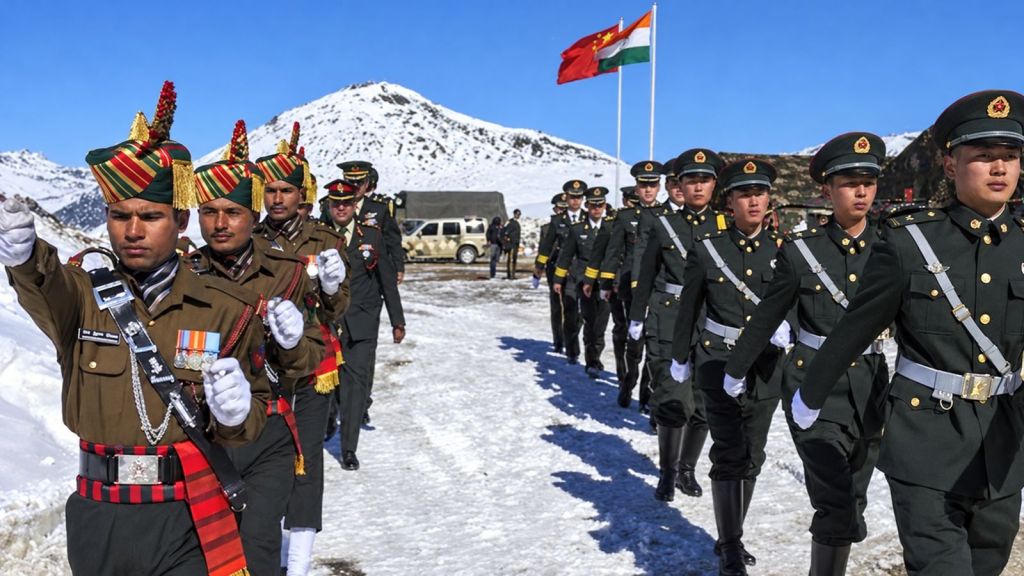
MEA spokesperson Randhir Jaiswal said departures by Chinese forces from established patrolling patterns periodically disturb stability in India–China border areas.
Image: Indian Express
Why in news
ITBP Director General Shatrujeet Kapur referred to ongoing face-offs in Arunachal Pradesh following Corps Commander-level talks at Wacha–Damai in September. The MEA reiterated that peace and tranquillity in border areas are essential for the overall development of India–China relations.
70%
Share of modernisation funds spent on drones, according to ITBP DG
Rs 400 crore
Modernisation fund cited by ITBP DG
Rs 1,000 crore
Drone allocation cited under another modernisation scheme
Background
The India–China boundary remains unsettled, and the Line of Actual Control is not a mutually delineated international boundary throughout its length. It is discussed in western, middle and eastern sectors, with Arunachal Pradesh forming a central part of the eastern-sector dispute. Differences over the LAC's alignment can bring patrols into overlapping areas of perception. The ITBP is a Central Armed Police Force under the Ministry of Home Affairs, while the Indian Army functions under the Ministry of Defence. Border peace agreements, military contacts and diplomatic mechanisms seek to manage friction pending a boundary settlement.
What is confirmed, and what remains unclear
The ITBP chief acknowledged ongoing face-offs at several locations in Arunachal Pradesh and said Shaurya Commando teams had performed an important role. The report places these remarks against the backdrop of reported tension around Taksing in Upper Subansiri district and subsequent Corps Commander-level talks.
The MEA attributed periodic disturbances to Chinese forces diverging from established patrolling patterns. It also stated that both countries continue to use diplomatic and military mechanisms and have agreed to discuss ways to improve understanding of the LAC in appropriate areas.
The supplied reporting does not establish the precise coordinates, scale or operational outcome of the face-offs. Opposition questions about restrictions on Indian patrolling are demands for clarification, not independently verified findings of lost access or territorial change.
- An official acknowledgement of a face-off should not be treated automatically as evidence of a violent clash.
- The MEA's general explanation does not provide a location-by-location account of the current incidents.
- The source does not provide a detailed Chinese response to these specific developments.
Infographic
Clarity
Improve understanding of LAC perceptions in appropriate areas.
Predictability
Reduce unexpected changes in patrol behaviour.
Communication
Resolve incidents promptly through military and diplomatic channels.
Verification
Check that negotiated arrangements are implemented.
Preparedness
Combine high-altitude capability with surveillance and counter-drone protection.
Accountability
Provide factual updates without compromising operational security.
AI-assisted infographic by Pragnya IAS Academy, based on the cited sources.
How LAC perceptions and patrol practices generate friction
Differing LAC perceptions create a structural risk: each side may regard a patrol as operating within its own perceived limits while the other sees it as an intrusion. Patrols therefore serve both operational purposes and the assertion of a position on territorial claims.
Established patrolling patterns can create practical predictability even without a settled boundary. Changes in routes, frequency, strength or duration of presence may be interpreted as attempts to alter the local status quo. These are analytical possibilities; the sources do not specify which operational changes occurred in the present face-offs.
The central distinction is between a long-standing disagreement over alignment and a change in behaviour within that disputed setting. Better understanding of the LAC can reduce accidental encounters, but sustained stability also requires restraint in patrol conduct.
- Ambiguous alignment increases the probability of patrol encounters.
- Unexpected changes in behaviour can turn routine contact into a confrontation.
- Local incidents can acquire strategic significance when either side fears a precedent affecting future access.
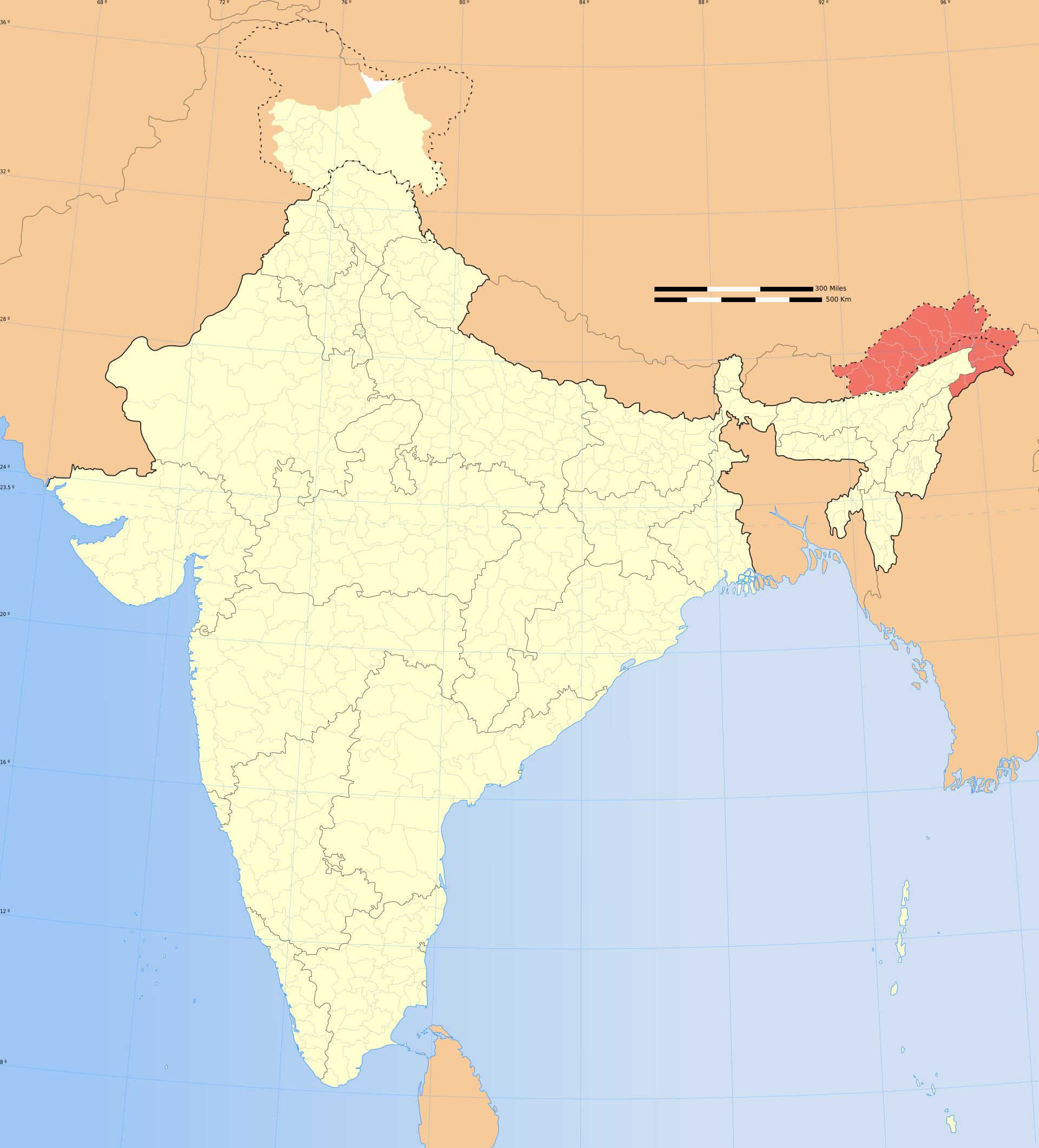
Locator map showing Arunachal Pradesh and its district boundaries, providing geographic context for the reported face-offs; it does not identify patrol routes or face-off locations.
Confidence-building measures: necessary but dependent on implementation
Border confidence-building measures seek to prevent misunderstandings from escalating into armed confrontation. Border personnel meetings, military communication channels, Corps Commander-level talks and diplomatic consultations offer different routes for resolving incidents and addressing wider concerns.
The Working Mechanism for Consultation and Coordination on India–China Border Affairs supports diplomatic coordination on border management. The Special Representatives mechanism addresses the broader boundary question. Neither should be conflated with field-level arrangements for handling an immediate patrol encounter.
Continuing face-offs despite talks underline that dialogue is not the same as resolution. Agreements must be translated into clear instructions, observable changes on the ground and procedures for addressing alleged violations.
- Incident-management procedures should enable rapid communication before confrontation intensifies.
- Disengagement at a friction point is distinct from wider de-escalation of military deployments.
- Local arrangements should not be treated as a final boundary settlement or an abandonment of territorial claims.
Operational preparedness and the diplomatic stakes
The ITBP chief described plans to strengthen specialised high-altitude capabilities through Shaurya Commando formations. He also highlighted drone platoons, pilot training, in-house drone production and investment in drones and anti-drone systems.
These capabilities can improve surveillance and situational awareness, but technology cannot resolve competing territorial claims. Its stabilising value depends on reliable communications, secure systems, clear operational protocols and effective Army–ITBP coordination.
The MEA's statement places border peace at the centre of the wider bilateral relationship. Persistent friction raises the political costs of engagement and weakens confidence in negotiated understandings, making verifiable border stability essential for durable improvement in ties.
- High-altitude preparedness requires specialised training, logistics and dependable equipment.
- Drone modernisation should include counter-drone protection and resilience against electronic interference.
- Public communication should distinguish confirmed developments from unresolved allegations without disclosing sensitive deployments.
| Mechanism or approach | Primary role | Key limitation |
|---|---|---|
| Border personnel meetings and military communication | Clarify local incidents and reduce immediate misunderstanding | Cannot independently settle the boundary dispute |
| Corps Commander-level talks | Negotiate military arrangements concerning friction and deployments | Require effective implementation by forces on the ground |
| Working Mechanism for Consultation and Coordination | Coordinate diplomatic engagement on border affairs | Does not substitute for operational incident management |
| Special Representatives mechanism | Address the broader boundary question | Is distinct from resolving an immediate patrol face-off |
| Improved understanding of the LAC | Reduce uncertainty about perceived alignments | Does not automatically amount to a final boundary settlement |
- 1. Differing perceptions of the LAC create overlapping patrol areas.
- 2. An unexpected patrol deviation raises concern about a change in the local status quo.
- 3. Patrols confront or obstruct each other, producing a face-off.
- 4. Delayed clarification or miscalculation increases escalation risks.
- 5. Military communication and diplomatic engagement can support a negotiated resolution.
- 6. Verification and predictable patrol practices help prevent recurrence.
September, as reported in the source
India and China held Corps Commander-level talks at the Wacha–Damai border meeting point on the Indian side.
Subsequently, at the Himveer Samman Samaroh
The ITBP Director General acknowledged continuing face-offs at several locations in Arunachal Pradesh and outlined modernisation priorities.
Following the ITBP chief's remarks
The MEA linked periodic border disturbances to Chinese deviations from established patrol patterns and reiterated the importance of diplomatic and military mechanisms.
Significance, challenges & way forward
Significance
- The developments show that eastern-sector border management remains important alongside concerns elsewhere along the LAC.
- Predictable patrol behaviour can reduce confrontation even while the boundary dispute remains unresolved.
- Effective coordination between the Army, ITBP and diplomatic institutions is essential for a coherent response.
- Border stability influences the political space available for wider India–China engagement.
- Specialised high-altitude capabilities and surveillance technology can strengthen preparedness when combined with disciplined operational procedures.
Challenges
- An incompletely shared understanding of the LAC leaves room for competing interpretations of patrol activity.
- Unilateral deviations from established practices can undermine confidence in existing arrangements.
- Dialogue may continue without producing sufficiently clear or verifiable changes on the ground.
- Difficult terrain and high-altitude conditions complicate mobility, logistics and communications.
- Fragmented public information can encourage speculation about territorial changes that the available evidence does not establish.
- Technology-led modernisation requires training, maintenance and protection against electronic interference, not merely procurement.
Way forward
- Seek practical clarification of LAC perceptions in appropriate areas without prejudicing India's territorial position.
- Develop mutually understood incident-handling procedures and prompt communication protocols for patrol encounters.
- Link local understandings to verifiable implementation and regular review through military and diplomatic channels.
- Ensure that temporary arrangements are scrutinised for their implications for patrolling access and territorial claims.
- Strengthen Army–ITBP coordination through shared situational awareness, compatible communications and specialised training.
- Integrate drones, counter-drone systems and high-altitude logistics into a balanced preparedness strategy.
- Provide calibrated official briefings that enable democratic accountability while protecting operational security.
Key terms
- Line of Actual Control
- The line separating areas under Indian and Chinese control, whose alignment is not mutually agreed throughout.
- Differing perceptions
- Divergent understandings of where the LAC lies, which can produce overlapping patrol areas.
- Face-off
- A direct confrontation between opposing personnel that does not necessarily involve violence or a territorial change.
- Confidence-building measures
- Agreed practices intended to increase predictability, reduce mistrust and prevent military escalation.
- Disengagement
- Separation of opposing forces at a particular friction point.
- De-escalation
- A broader reduction in military tension, force posture or deployments beyond immediate separation.
- WMCC
- The Working Mechanism for Consultation and Coordination on India–China Border Affairs, a forum for diplomatic coordination on border issues.
- Counter-drone systems
- Systems designed to detect, track and disrupt or neutralise hostile unmanned aircraft.
Link with static syllabus
Prelims practice MCQs
Q1. With reference to the Line of Actual Control, consider the following statements: 1. Its alignment is mutually agreed throughout its length. 2. Differing perceptions of its alignment can result in overlapping patrol areas. 3. Disengagement at a friction point necessarily constitutes a final boundary settlement. Which of the statements given above is/are correct?
Q2. Consider the following pairs: 1. ITBP — Ministry of Home Affairs 2. Indian Army — Ministry of Defence 3. WMCC — Diplomatic coordination on India–China border affairs Which of the pairs given above are correctly matched?
Q3. With reference to locations mentioned in the recent reporting on Arunachal Pradesh, consider the following statements: 1. Taksing is located in Upper Subansiri district. 2. Wacha is located in the Kibithoo sector. Which of the statements given above is/are correct?
Q4. Which of the following best distinguishes disengagement from de-escalation in border management?
Mains practice questions
GS 2 · 15 marks · 250 words
Differing perceptions of the LAC create structural friction, but deviations from established patrol practices can turn ambiguity into confrontation. Examine and suggest measures to strengthen India–China border stability.
Frequently asked questions
What did the MEA say about the latest LAC face-offs?
The MEA said Chinese deviations from established patrolling patterns periodically disturb the border situation and referred operational specifics to the Ministry of Defence. It reiterated that diplomatic and military mechanisms remain in use.
Do the reports confirm that India has lost patrolling access?
No definitive finding of lost access is established by the supplied material. It records an official acknowledgement of face-offs and Opposition demands for clarification about patrolling restrictions.
Why do patrols meet despite existing border agreements?
Differing perceptions of the LAC can create overlapping patrol areas, while departures from established practices can increase friction. Agreements reduce risk only when their procedures are understood and implemented on the ground.
Can drones resolve the India–China border dispute?
Drones can improve surveillance and operational awareness but cannot settle territorial claims. They must complement military preparedness, communication and diplomacy.
Sources
- Indian Express: China breaking patrol patterns leads to face-off: Centre on ITBP chief's remark
- Times of India: China’s patrolling deviations disturb border: MEA on ITBP DG's LAC face-offs remark
Analysis prepared by the Pragnya IAS Academy current-affairs desk with AI assistance from the cited reports. Verify figures with the original sources.
Turn current affairs into marks
Join Pragnya IAS Academy's mentorship for daily answer-writing evaluation on stories like this — classroom programmes from a trusted name in IAS coaching in Hyderabad.