
Single-Use Medical Devices: Patient Safety, Hospital Compliance and Waste Management
Revise the static topic: UPSC Social Justice notes · UPSC Science & Technology notes
In short: The Centre has reportedly directed hospitals against reusing single-use medical devices, with the supplied report referring to a Directorate General of Health Services letter dated 16 October. The issue requires hospitals to reconcile patient safety and affordable care while ensuring that biomedical-waste recycling does not become a route for unsafe clinical reuse.
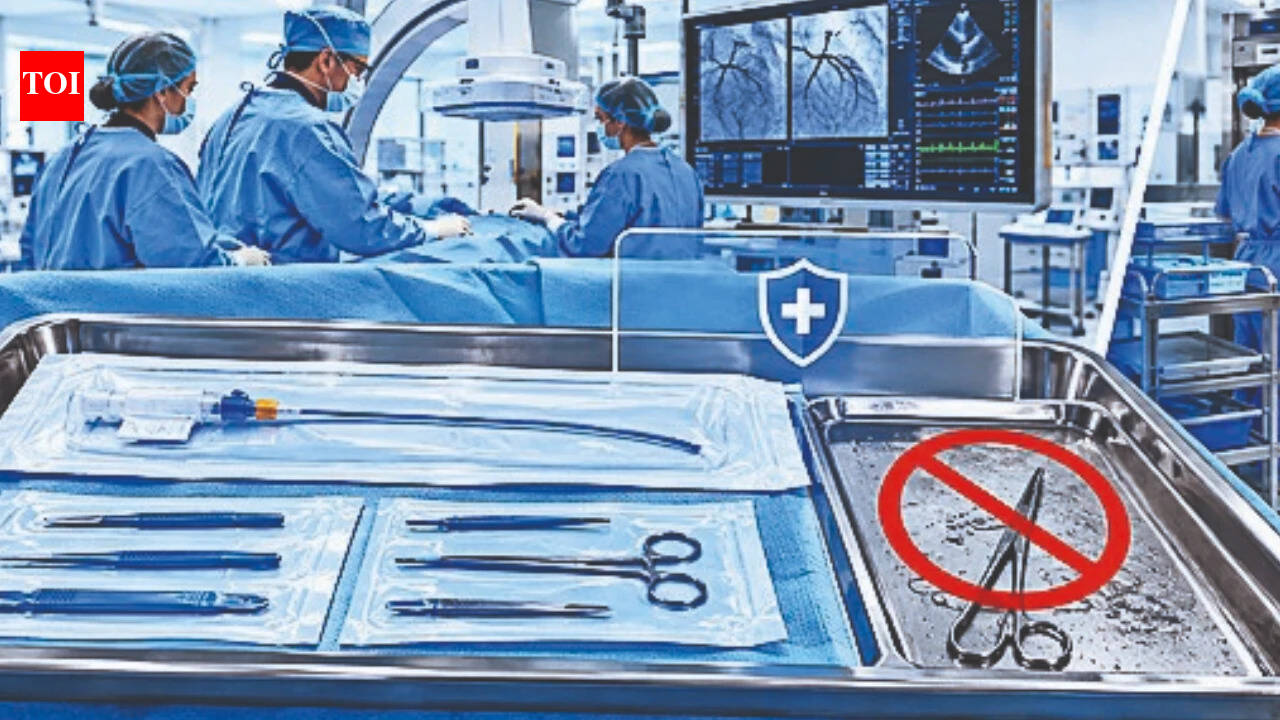
Reference image for reporting on single-use medical devices, not a photograph of the reported directive. The issue links patient safety, hospital compliance and safe biomedical-waste management.
Image: Times of India
Why in news
The Times of India reports a central direction against reuse of single-use medical devices and flags recycling of disposables. The development brings hospital procurement, infection prevention, device regulation and waste-chain accountability into focus.
Background
A single-use medical device is intended by its manufacturer for use on one patient during a single procedure, rather than for subsequent reprocessing and reuse. A reusable device is designed to undergo specified cleaning, disinfection or sterilisation between uses. In India, the Medical Devices Rules, 2017 provide the principal device-specific regulatory framework under the Drugs and Cosmetics Act, 1940, while the Bio-Medical Waste Management Rules, 2016 govern waste handling and disposal. These frameworks address different stages of the device lifecycle and must operate together to protect patients, healthcare workers and the environment.
What the reported direction establishes
The supplied report identifies a DGHS letter dated 16 October and describes a central direction against reuse of single-use medical devices across hospitals. Its immediate policy relevance is the need to align clinical practice with the intended use of a device.
The supplied extract does not reproduce the operative letter. It therefore does not establish the precise addressees, implementation deadline, exceptions, inspection arrangements or penalties. Although the headline uses the word 'bans', the direction should not automatically be described as a new statutory prohibition or an amendment to existing rules.
- The reported direction concerns devices labelled for single use, not all medical equipment.
- Its exact legal basis and enforcement mechanism require examination of the complete official communication.
- Recycling discarded material and reusing a device on a patient are distinct activities.
Infographic
Patient safety
Follow intended use; assess both contamination and functional risks.
Hospital accountability
Connect procurement, clinical use and disposal through auditable records.
Affordable compliance
Improve purchasing, supplies and billing transparency.
Waste integrity
Segregate, treat and route eligible material through authorised channels.
Regulatory clarity
Distinguish administrative directions, device rules and waste obligations.
AI-assisted infographic by Pragnya IAS Academy, based on the cited sources.
Patient safety: sterility is necessary but not sufficient
Reprocessing a device intended for single use can create risks of residual contamination, material degradation and impaired performance. Complex internal channels, joints or surfaces may be difficult to clean, while exposure to chemicals or heat may affect components not designed for repeated processing.
Sterilisation alone does not establish that a device remains safe and functional. Safe reuse requires evidence covering cleaning effectiveness, material compatibility and performance; hospitals should not assume that protocols for reusable instruments can be transferred to single-use devices.
- Infection prevention must address effective cleaning as well as appropriate disinfection or sterilisation.
- Device integrity matters because a contamination-free device may still malfunction.
- Patient consent cannot substitute for compliance with applicable safety requirements.
Hospital compliance and the affordability dilemma
Compliance is an institutional responsibility involving procurement teams, clinicians, nursing staff, infection-control personnel and waste handlers. Hospitals need reliable identification of single-use products, adequate replacement stocks and records that prevent used devices from returning to clinical inventory.
Ending reuse may increase immediate procurement requirements where reuse has occurred. However, any apparent saving must be weighed against potential infection, treatment failure and additional care costs. The supplied material provides no evidence to quantify either the financial impact or the prevalence of reuse.
- Audit device inventories and distinguish single-use products from devices designed for reuse.
- Use pooled procurement and transparent tendering to pursue affordability without lowering safety requirements.
- Consider certified reusable alternatives where clinically appropriate and supported by validated processing capacity.
- Monitor patient bills so that compliance does not become a justification for opaque charges.
Device regulation, biomedical waste and constitutional responsibility
Device regulation addresses product quality, safety and intended use; biomedical-waste regulation addresses segregation, collection, treatment and disposal. The Bio-Medical Waste Management Rules, 2016 provide category-specific pathways, including treatment and authorised recycling for specified recyclable waste. They do not make all used medical devices eligible for recycling or subsequent clinical reuse.
Constitutionally, Article 21 has been interpreted to encompass protection of health, while Article 47 directs the State to improve public health. Public health and sanitation, hospitals and dispensaries fall within the State List, making coordination between central institutions, state authorities and hospital management essential. Waste oversight also involves State Pollution Control Boards and Pollution Control Committees.
- Prevent discarded devices from being diverted back into clinical supply chains.
- Segregate waste at the point of generation and follow the treatment route appropriate to its category.
- Strengthen authorised waste-processing capacity rather than treating indiscriminate incineration as the solution.
- Pursue environmental sustainability through safe material recovery and appropriate reusable alternatives, not unauthorised clinical reuse.
| Activity | Meaning | Safety and regulatory implication |
|---|---|---|
| Use of a single-use device | Use according to the manufacturer's intended purpose | Discard after intended use through the applicable biomedical-waste pathway. |
| Reuse of a single-use device | Using the device again after its intended single use | The reported direction is against this practice; processing alone does not establish safety. |
| Reprocessing a reusable device | Preparing a device designed for repeated use for its next use | Follow manufacturer instructions and validated cleaning, disinfection or sterilisation procedures. |
| Authorised material recycling | Recovering material from eligible waste after prescribed treatment | Permitted only through applicable waste-management pathways; it is not permission for clinical reuse. |
- 1. Procure compliant devices and verify labelling and intended use.
- 2. Maintain inventory controls and use the device as intended.
- 3. Segregate the discarded device immediately into the appropriate biomedical-waste category.
- 4. Route it through prescribed treatment and authorised disposal or recycling, as applicable.
- 5. Audit procurement and waste-transfer records to detect diversion back into clinical use.
2016
The Bio-Medical Waste Management Rules establish the framework for segregation, treatment and disposal of biomedical waste.
2017
The Medical Devices Rules establish the device-specific regulatory framework under the Drugs and Cosmetics Act.
16 October, as cited in the supplied report
A DGHS letter reportedly directs hospitals against reuse of single-use medical devices.
Significance, challenges & way forward
Significance
- The reported direction reinforces patient safety as a non-negotiable component of affordable healthcare.
- It places responsibility on hospital systems rather than treating unsafe reuse solely as an individual clinical lapse.
- It highlights the need to connect device procurement, infection prevention and biomedical-waste oversight.
- It clarifies why environmental recycling cannot be equated with permission to reuse a medical device on a patient.
Challenges
- The incomplete source extract leaves the direction's precise scope, legal basis and enforcement arrangements unverified.
- Hospitals ending reuse may face higher procurement requirements unless supply planning and financing improve.
- Weak inventory controls can make it difficult to distinguish unused stock from devices returned after clinical use.
- Inadequate segregation and waste-chain oversight can enable diversion of discarded products.
- Greater reliance on disposable devices can increase waste-management requirements, demanding adequate treatment capacity.
Way forward
- Publish and communicate the complete official direction, clearly explaining its scope, legal basis and institutional responsibilities.
- Require hospitals to map single-use devices, maintain adequate stocks and establish auditable disposal procedures.
- Support affordable compliance through pooled purchasing, transparent pricing and reliable supplies to public facilities.
- Use appropriately regulated reusable devices where clinically suitable, with validated reprocessing and trained personnel.
- Coordinate health authorities and pollution-control institutions to monitor the entire device lifecycle.
- Track safety incidents, patient charges and waste flows to assess implementation without relying on unsupported assumptions about benefits or costs.
Key terms
- Single-use medical device
- A device intended by its manufacturer for use on one patient during a single procedure, rather than subsequent reprocessing and reuse.
- Reprocessing
- Processes used to prepare a previously used device for further use, including cleaning and appropriate disinfection or sterilisation.
- Sterilisation
- A validated process used to render a product free from viable microorganisms.
- Validated process
- A process supported by documented evidence that it consistently achieves its specified result.
- Biomedical waste
- Waste generated during diagnosis, treatment or immunisation of humans or animals, related research, or production or testing of biologicals.
- Traceability
- The ability to follow a device through procurement, clinical use and disposal using reliable records.
Link with static syllabus
Prelims practice MCQs
Q1. With reference to medical devices, consider the following statements: 1. Sterilisation alone establishes that a single-use device remains functionally safe for reuse. 2. A device designed for reuse requires processing appropriate to its intended use and manufacturer instructions. Which of the statements given above is/are correct?
Q2. Consider the following pairs: 1. Article 21: Protection of life and personal liberty 2. Article 47: Duty of the State to improve public health 3. Public health and sanitation: Union List Which of the pairs given above are correctly matched?
Q3. Which of the following best describes the relationship between biomedical-waste recycling and clinical reuse?
Q4. With reference to India's regulatory framework, consider the following statements: 1. The Medical Devices Rules, 2017 operate under the Drugs and Cosmetics Act, 1940. 2. The Bio-Medical Waste Management Rules, 2016 address segregation, treatment and disposal of biomedical waste. 3. An administrative direction must necessarily be treated as an amendment to statutory rules. Which of the statements given above are correct?
Mains practice questions
GS 2 · 15 marks · 250 words
The direction against reuse of single-use medical devices highlights the tension between patient safety, affordable healthcare and environmental sustainability. Discuss how India can reconcile these objectives.
Frequently asked questions
What has the Centre reportedly directed hospitals to do?
The supplied report says hospitals have been directed against reusing single-use medical devices, citing a DGHS letter dated 16 October. The full operative letter is not included in the source extract.
Does the direction mean that all medical instruments must be discarded after use?
No. Single-use devices must be distinguished from instruments designed for repeated use, which require appropriate validated cleaning, disinfection or sterilisation.
Can sterilisation make a single-use device safe for reuse?
Sterilisation alone cannot establish safety because cleaning effectiveness, material integrity and device performance also matter. It does not change the manufacturer's single-use designation.
Can biomedical waste still be recycled?
Eligible waste may undergo authorised recycling after the treatment prescribed for its category. This does not permit discarded devices to return to clinical use.
Sources
- Times of India: Centre bans reuse of single-use medical devices across hospitals; flags recycling of disposables
Analysis prepared by the Pragnya IAS Academy current-affairs desk with AI assistance from the cited reports. Verify figures with the original sources.
Turn current affairs into marks
Join Pragnya IAS Academy's mentorship for daily answer-writing evaluation on stories like this — classroom programmes from a trusted name in IAS coaching in Hyderabad.