
WMO El Niño Warning: ENSO Dynamics and Risks to India’s Monsoon and Water Security
Revise the static topic: UPSC Environment notes
In short: The WMO’s seasonal outlook warns that the prevailing El Niño could reach unprecedented strength, with tropical Pacific sea surface temperatures potentially rising 3.8°C above average during November 2026–January 2027. For India, this strengthens the case for heat, agricultural and water-security preparedness, but does not establish that drought or monsoon failure is inevitable.
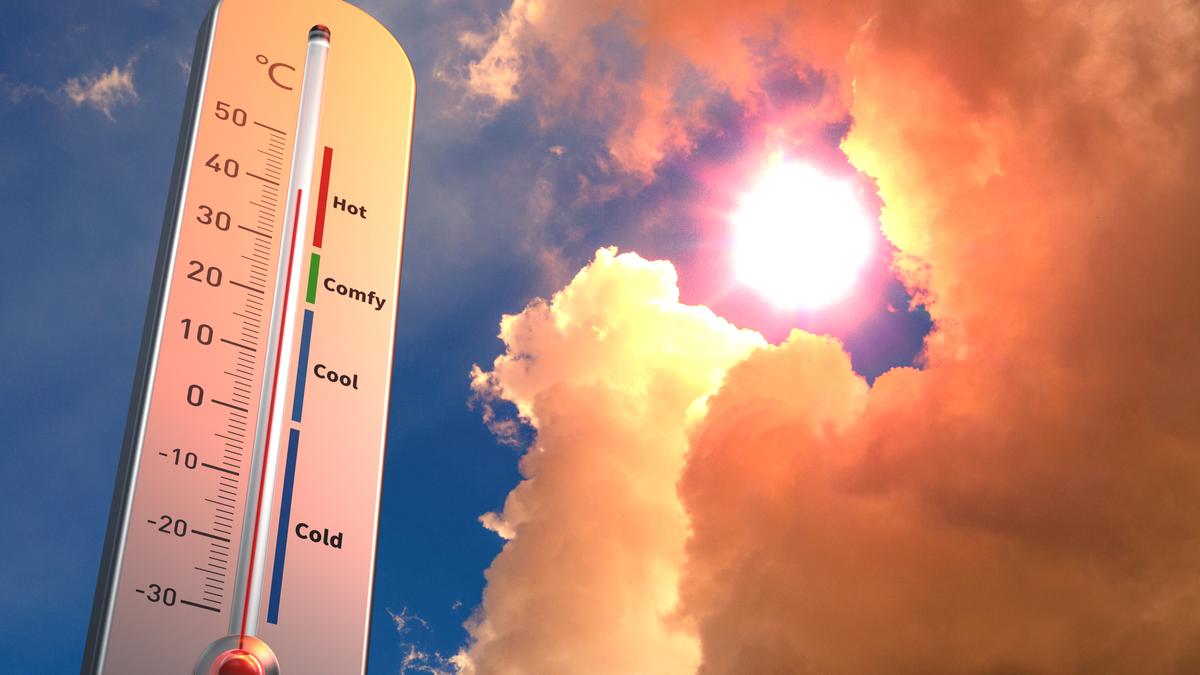
El Niño warming in the tropical Pacific can reorganise atmospheric circulation and raise risks to India’s monsoon, agriculture and water supplies; it does not make drought inevitable.
Image: The Hindu
Why in news
On October 21, 2026, the World Meteorological Organization warned that the current El Niño could be unprecedented in strength and that its impacts could persist beyond its expected peak towards the end of 2026.
3.8°C
Projected Pacific temperature anomaly
83%
Reported likelihood of strong to very strong El Niño
30.06°C
Reported Niño 3.4 temperature on October 5
13%
Reported monsoon rainfall deficit
69%
Reported storage in monitored Indian reservoirs
44%
Reported southern reservoir storage
Background
The El Niño–Southern Oscillation is a coupled ocean–atmosphere phenomenon in the tropical Pacific, with El Niño, La Niña and neutral phases. Under normal conditions, easterly trade winds push warm surface waters towards the western Pacific, while colder water rises in the eastern equatorial Pacific. El Niño involves anomalous warming of the central and eastern equatorial Pacific and associated changes in winds, pressure and tropical convection. These disturbances affect distant weather through atmospheric teleconnections. The World Meteorological Organization is a United Nations specialised agency supporting international cooperation in weather, climate and water-related observations and services.
What the warning establishes—and what it does not
According to the supplied WMO report, tropical Pacific sea surface temperatures may reach 3.8°C above average during November 2026–January 2027. The accompanying report cites the US NOAA Climate Prediction Center as assigning an 83% likelihood to a strong to very strong event. These are projections, not observations of a completed seasonal peak.
The report records a Niño 3.4 sea surface temperature of 30.06°C on October 5. An absolute temperature, a daily anomaly and a seasonal average anomaly measure different things and should not be treated as interchangeable evidence of event strength.
- Potentially unprecedented refers to the monitored record, not proof that no comparable event occurred in Earth’s climatic history.
- ENSO assessment considers sustained oceanic anomalies and atmospheric conditions; a single hot day does not establish a seasonal event’s strength.
- A stronger Pacific anomaly can increase climate risks without producing proportionately stronger impacts in every region.
Infographic
Pacific signal
Potential seasonal anomaly of 3.8°C; a projection, not a confirmed peak.
Monsoon uncertainty
Higher risk does not mean inevitable drought.
Agriculture
Watch dry spells, soil moisture, crop stages and heat stress.
Water security
Assess reservoir storage alongside seasonal norms and local demand.
Preparedness
Combine heat, drought and flood readiness with actionable forecasts.
AI-assisted infographic by Pragnya IAS Academy, based on the cited sources.
ENSO dynamics: How Pacific warming reorganises weather
During El Niño, weakened easterly trade winds allow warm surface water to spread eastwards. Reduced upwelling and a deeper thermocline in the eastern equatorial Pacific help sustain surface warming. The reduced east–west temperature contrast can further weaken the trade winds, reinforcing the initial disturbance through the Bjerknes feedback.
Tropical convection shifts towards warmer waters, reorganising the Walker circulation and influencing atmospheric circulation beyond the Pacific. Consequently, some regions experience rainfall deficits while others face heavy rainfall and flooding. La Niña generally involves stronger trade winds, enhanced eastern-Pacific upwelling and cooler central and eastern equatorial Pacific waters.
- El Niño is a coupled ocean–atmosphere phenomenon, not simply a warm ocean current.
- The Southern Oscillation is the atmospheric pressure component of ENSO.
- Neutral ENSO conditions do not imply an absence of weather extremes.
India’s monsoon: A risk relationship, not a deterministic rule
El Niño is often associated with a weaker Indian summer monsoon because altered tropical circulation can suppress convection over the Indian region. However, the Indian Ocean Dipole, Indian Ocean temperatures, intra-seasonal variability and other circulation features can modify this relationship.
The supplied report states that the 2026 monsoon was 13% below normal, while severe drought did not materialise as feared. This illustrates why a national seasonal rainfall total cannot, by itself, establish local agricultural drought or explain all monsoon behaviour.
An expected late-2026 peak is not a stand-alone forecast for the 2027 southwest monsoon. Its implications will depend on how ENSO evolves before and during that season, alongside other climate drivers.
- Rainfall timing, dry-spell duration and geographical distribution matter alongside seasonal totals.
- A deficient season can still contain destructive local downpours and floods.
- ENSO outlooks should be combined with IMD’s regional forecasts and local soil-moisture assessments.
Agriculture, reservoirs and livelihoods: The transmission channels
Rainfall deficits and prolonged dry spells can delay sowing, reduce soil moisture and damage rainfed crops. Irrigation may cushion these effects, but inadequate reservoir recharge and increased groundwater extraction can transfer the stress to water and energy systems. Heat during sensitive crop-growth stages can add to production risks.
The supplied report, citing the Central Water Commission’s latest weekly assessment, states that storage across 178 monitored reservoirs was 69% of total capacity, with southern reservoirs at 44%. These are storage-fill indicators, not estimates of the share of India’s total water resources remaining; assessing severity also requires seasonal norms, demand and basin-level conditions.
- Lower stored water can constrain rabi irrigation and subsequent dry-season supplies.
- Rainfed farmers, agricultural labourers and households with unreliable drinking-water access face heightened vulnerability.
- Production losses could create food-price pressures, but their scale depends on crop geography, irrigation, stocks and policy responses.
- Reservoir operations must balance drinking water, irrigation, hydropower and flood-management requirements.
Climate change and disaster preparedness: Manage compound risks
El Niño redistributes ocean heat and can temporarily raise global surface temperatures on top of human-induced warming. The supplied material identifies the relationship between climate change and El Niño intensity as an active research area; the reported event should not be attributed entirely to global warming.
Preparedness should cover heat, drought and water scarcity without neglecting floods. The practical objective is to convert a probabilistic climate warning into locally appropriate action, rather than to assume uniform impacts across India.
- Update heat-action plans, occupational safety measures and health-system readiness before the hot season.
- Prepare district crop contingencies using rainfall, soil moisture, crop stage and irrigation availability.
- Link reservoir and groundwater monitoring with demand management and drinking-water contingency planning.
- Communicate forecast uncertainty clearly while specifying practical actions for farmers and local authorities.
| Event | Reported temperature anomaly | Interpretation |
|---|---|---|
| 1982–83 | 2.1°C | Historical three-month average anomaly cited in the source |
| 1997–98 | 2.4°C | Historical three-month average anomaly cited in the source |
| 2015–16 | 2.6°C | Historical three-month average anomaly cited in the source |
| 2026–27 | 3.8°C | Projected seasonal anomaly; not an observed completed peak |
- 1. Trade winds weaken and central and eastern equatorial Pacific waters warm.
- 2. Ocean–atmosphere feedbacks reinforce warming and shift tropical convection.
- 3. Changes in the Walker circulation influence distant rainfall and temperature patterns.
- 4. Where rainfall deficits occur, soil moisture and water recharge may decline.
- 5. Heat and water stress can affect crops, drinking-water supplies and livelihoods.
- 6. Forecast-led local action can reduce exposure and vulnerability.
1982–83
A very strong El Niño caused widespread impacts and helped stimulate improvements in monitoring and prediction, according to the report.
1997–98
A very strong event registered a reported three-month average anomaly of 2.4°C.
2015–16
A very strong event registered a reported three-month average anomaly of 2.6°C.
June 6, 2026
The supplied report states that the onset of the current El Niño was declared.
October 5, 2026
Niño 3.4 recorded a reported sea surface temperature of 30.06°C.
October 21, 2026
WMO warned that the prevailing event could be unprecedented in strength.
November 2026–January 2027
The WMO outlook projects that tropical Pacific sea surface temperatures may reach 3.8°C above average.
Significance, challenges & way forward
Significance
- The warning provides an opportunity for anticipatory action before seasonal climate risks become humanitarian or economic losses.
- ENSO connects physical geography with food security, public health, water management and disaster governance.
- A potentially exceptional event could compound an already warmer climatic baseline, increasing the importance of heat preparedness.
- India’s response can demonstrate the value of integrating global climate information with district-level decisions.
Challenges
- A high-confidence Pacific outlook does not automatically translate into precise district-level rainfall forecasts.
- National rainfall and reservoir aggregates can conceal severe local disparities.
- Water-intensive cropping and excessive groundwater dependence can magnify climate stress.
- Fragmented responsibilities across weather, agriculture, water and disaster-management institutions can delay action.
- Sensational claims of inevitable drought or guaranteed record impacts can undermine credible risk communication.
Way forward
- Integrate IMD forecasts, CWC reservoir assessments and agricultural advisories into state and district preparedness reviews.
- Support locally suitable crop choices, drought-tolerant varieties, soil-moisture conservation and efficient irrigation.
- Prepare basin-specific water budgets and prioritise drinking-water security while maintaining essential ecological needs.
- Strengthen heat-action plans through health surveillance, cooling access and protection for outdoor workers.
- Maintain flood readiness because seasonal rainfall deficits do not eliminate extreme-rainfall risks.
- Update plans as forecasts evolve, using transparent triggers for advisories, water allocation and livelihood support.
Key terms
- ENSO
- A coupled tropical Pacific ocean–atmosphere phenomenon comprising El Niño, La Niña and neutral phases.
- Niño 3.4
- A central equatorial Pacific monitoring region whose sea surface temperature anomalies are widely used to assess ENSO.
- Sea surface temperature anomaly
- The departure of sea surface temperature from a reference climatological average.
- Walker circulation
- An east–west tropical atmospheric circulation involving rising air, upper-level flow, sinking air and surface return winds.
- Thermocline
- The ocean layer in which temperature decreases rapidly with depth.
- Bjerknes feedback
- A reinforcing interaction among equatorial Pacific sea temperatures, trade winds and ocean structure.
- Teleconnection
- A climatic linkage through which conditions in one region influence weather in distant regions.
- Indian Ocean Dipole
- A pattern of contrasting sea surface temperature anomalies between the western and eastern equatorial Indian Ocean.
Link with static syllabus
Prelims practice MCQs
Q1. With reference to El Niño, consider the following statements: 1. It involves oceanic warming and associated atmospheric changes in the tropical Pacific. 2. It is generally associated with stronger easterly trade winds and enhanced upwelling in the eastern equatorial Pacific. 3. Its effects can extend beyond the Pacific through atmospheric teleconnections. Which of the statements given above are correct?
Q2. Consider the following statements about El Niño and the Indian monsoon: 1. El Niño necessarily causes drought throughout India. 2. Indian Ocean conditions can modify the monsoon response to El Niño. 3. A below-normal seasonal rainfall total can coexist with local flooding. Which of the statements given above are correct?
Q3. Consider the following pairs: 1. Southern Oscillation — Atmospheric pressure component of ENSO 2. Thermocline — Ocean layer with a rapid temperature decrease with depth 3. Bjerknes feedback — Reinforcing interaction between Pacific ocean temperatures and atmospheric circulation How many of the above pairs are correctly matched?
Q4. With reference to interpreting climate outlooks, consider the following statements: 1. A projected seasonal temperature anomaly is equivalent to an observed daily absolute temperature. 2. Reservoir storage expressed as a percentage of capacity is not, by itself, a measure of departure from normal seasonal storage. Which of the statements given above is/are correct?
Mains practice questions
GS 3 · 15 marks · 250 words
A potentially exceptional El Niño is a warning for anticipatory governance, not a deterministic forecast of drought. Explain its implications for India’s monsoon, agriculture and water security, and suggest a preparedness strategy.
Frequently asked questions
Does the WMO warning mean record El Niño strength has already been confirmed?
No. The 3.8°C anomaly is a projection for November 2026–January 2027; the completed seasonal peak remains to be observed.
Does a very strong El Niño guarantee drought in India?
No. El Niño can increase the risk of monsoon weakness, but Indian Ocean conditions, intra-seasonal variability and regional rainfall distribution modify the outcome.
Is El Niño caused by climate change?
El Niño is a naturally occurring climate phenomenon operating within a warming climate. How human-induced warming influences its intensity remains an active research question.
Why can El Niño impacts continue after its peak?
Ocean–atmosphere responses can lag the event’s peak, while depleted reservoirs, soil-moisture deficits and livelihood losses can persist even as Pacific conditions change.
Sources
- The Hindu: A ferocious El Niño is brewing thanks to record Pacific heat
- The Hindu: Current El Nino event could be unprecedented in strength: WMO
Analysis prepared by the Pragnya IAS Academy current-affairs desk with AI assistance from the cited reports. Verify figures with the original sources.
Turn current affairs into marks
Join Pragnya IAS Academy's mentorship for daily answer-writing evaluation on stories like this — classroom programmes from a trusted name in IAS coaching in Hyderabad.