
Jojari River Pollution: Supreme Court Flags Rajasthan’s Regulatory Failure
Revise the static topic: UPSC Environment notes
In short: On October 26, 2026, the Supreme Court questioned Rajasthan’s handling of pollution and illegal mining in the Jojari-Luni-Bandi river system, warning of a possible CBI investigation if remedial action remained inadequate. It sought a concrete financing proposal for treatment and water-reuse infrastructure, indicating that regulatory failure could require the State to share restoration costs alongside industries.
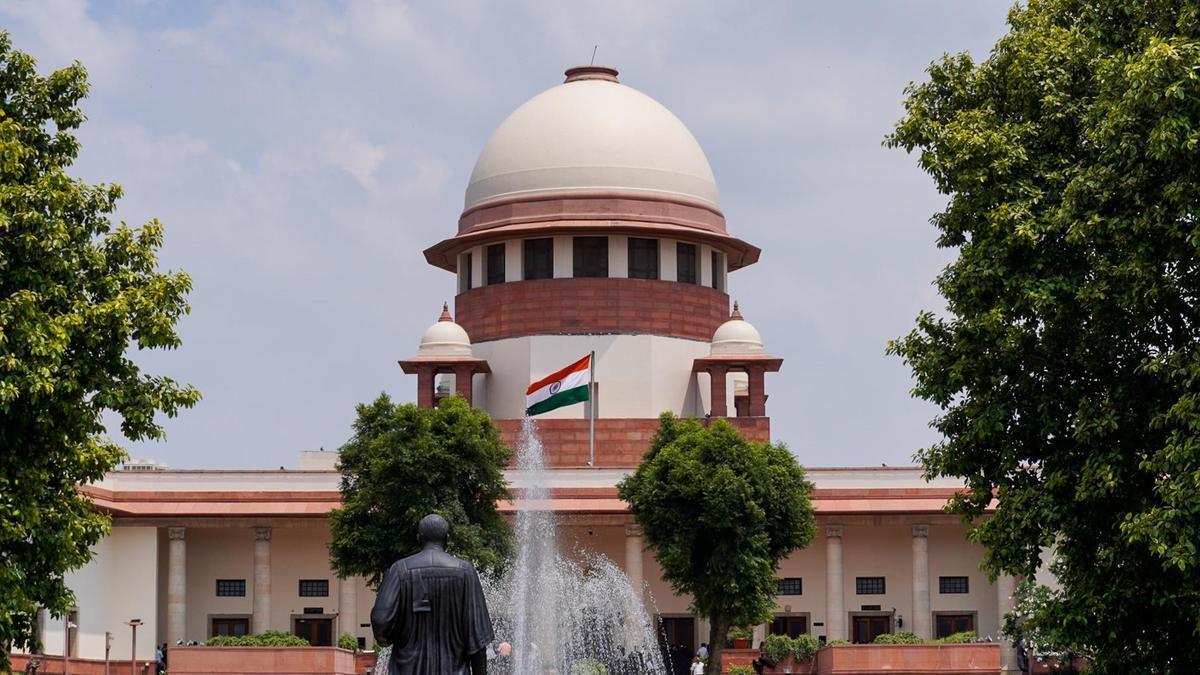
Photo from the source report: Jojari River Pollution: Supreme Court Flags Rajasthan’s Regulatory Failure
Image: The Hindu
Why in news
During ongoing suo motu proceedings, the Supreme Court questioned the regularisation of mining leases after violations had been detected and sought a workable river-restoration proposal by November 27. Its observations connect industrial compliance, official accountability and the financing of environmental restoration.
Nearly 20 lakh
People dependent on the Jojari, as reported
100 metres
Reported construction exclusion from river banks
500 metres
Reported hazardous-activity exclusion from flood lines
Background
The Jojari-Luni-Bandi river system lies in Rajasthan, where water scarcity makes protection of river flows and water quality especially important. India’s water-pollution framework rests principally on the Water (Prevention and Control of Pollution) Act, 1974, supported by the Environment (Protection) Act, 1986. State Pollution Control Boards undertake frontline regulation, including consent administration, inspection and enforcement, while the Central Pollution Control Board performs national coordination, technical and advisory functions. Environmental protection also draws constitutional support from Article 21, Article 48A and Article 51A(g).
What the Supreme Court has sought
The Bench questioned Rajasthan officials over mining leases allegedly regularised after violations were identified. It also raised concerns about contiguous leases affecting river flow. The State informed the court that cases had been registered and steps were being taken to prevent industrial waste from entering the river system.
Earlier directions required the State to seal and dismantle unauthorised discharge points, including bypass arrangements, manholes, chambers, pipelines and conduits. Authorities were also directed to initiate appropriate proceedings against responsible landowners or occupiers and State officials.
At the latest hearing, the court sought a concrete financial proposal for common effluent treatment plants equipped with zero-liquid-discharge technology and pipelines to recirculate treated water to industries. The CBI investigation was a conditional warning, not an investigation already ordered; the indicated cost-sharing approach likewise must be distinguished from a final, quantified liability determination.
- The next hearing was identified as November 27, when the State must place its proposal on record.
- The source reports earlier restrictions on construction near river banks and hazardous activities near flood lines.
- Court-created coordination and restoration bodies have been tasked with flood-line demarcation and identifying encroachments.
Infographic
Stop illegal discharge
Seal bypasses and verify industrial compliance.
Make treatment work
Fund CETP operation, water reuse and residue management.
Allocate costs fairly
Enable urgent restoration without absolving polluters.
Protect the river system
Address mining, encroachments and impaired flow.
Verify recovery
Use independent monitoring and public accountability.
AI-assisted infographic by Pragnya IAS Academy, based on the cited sources.
Effluent standards: infrastructure is necessary, enforcement is decisive
Effluent standards regulate the quality of wastewater released from industrial processes. A treatment plant’s existence does not establish compliance: regulators must verify whether wastewater actually reaches it, whether it operates effectively and whether its outlet meets applicable standards. Illegal bypasses can undermine even substantial treatment investments.
A CETP allows industrial units to share treatment infrastructure, but its performance depends on compatible incoming effluent, appropriate pre-treatment, adequate capacity and reliable operation. ZLD aims to eliminate liquid effluent discharge through treatment, recovery and reuse; it does not eliminate salts, sludge or other residual waste.
The court’s emphasis on a financial proposal is therefore important. Capital expenditure must be accompanied by operating funds, energy provision, maintenance, residue management and enforceable obligations for member industries.
- Inspect both industrial outlets and the entire conveyance network to detect bypasses.
- Use inlet and outlet sampling alongside water-balance checks to test actual performance.
- Make individual units accountable for pre-treatment and compliance with CETP admission conditions.
- Treat safe management of sludge and concentrated residues as part of compliance, not an afterthought.
Pollution board accountability and the polluter-pays principle
The Rajasthan State Pollution Control Board is central to industrial effluent regulation, but river restoration also requires action by mining authorities, municipal bodies, district administrations and the State government. The reported observations concern State officials broadly; the supplied account does not establish individual culpability within the pollution control board.
The polluter-pays principle requires polluters to bear the costs of preventing and remedying environmental harm rather than externalising them to society. Indian environmental jurisprudence recognises restoration of damaged ecology as part of this responsibility, alongside compensation where appropriate.
The Bench indicated that the State should bear an initial share of restoration costs because its authorities had apparently failed to discharge regulatory obligations. This is significant but should not be read as a universal rule that every regulatory lapse automatically makes the State financially liable. Public financing should enable urgent restoration without extinguishing industrial liability or preventing lawful recovery from responsible parties.
- Assess regulatory performance through inspection quality, enforcement follow-through and verified environmental outcomes.
- Separate the responsibilities of polluters, infrastructure operators and public authorities.
- Determine compensation and cost recovery through reasoned assessment, evidence and due process.
- Investigate official misconduct without treating oral observations as final findings of guilt.
Judicial oversight must lead to durable basin governance
The proceedings illustrate the judiciary’s role in addressing prolonged administrative inaction affecting environmental rights. Article 21 supports protection of life and health, while Article 48A directs the State to protect and improve the environment. Judicial monitoring can compel disclosure, coordinate agencies and set restoration milestones.
However, wastewater treatment alone cannot restore a river system affected by mining, encroachments and impaired flow. Flood-line demarcation, protection of river space, scrutiny of mining permissions and industrial compliance must form a single basin-level programme.
The source reports a restoration committee headed by Justice R.M. Lodha and Chief Secretary-led coordination arrangements. Their effectiveness should be judged by clearly assigned responsibilities and measurable improvements, not by institutional proliferation. Judicial supervision should ultimately strengthen routine executive regulation rather than become its permanent substitute.
- Link court compliance to water quality, functioning treatment assets and removal of illegal discharges.
- Assess cumulative impacts of mining permissions on channel continuity and river flow.
- Protect affected residents’ access to information and grievance redress.
- Balance industrial transition needs with non-negotiable environmental compliance.
| Actor | Core responsibility | Accountability test |
|---|---|---|
| Industrial units | Control effluent, comply with applicable standards and contribute to treatment and restoration. | Verified discharges, effective pre-treatment and absence of bypasses. |
| CETP operator | Operate shared treatment and manage recovered water and residual wastes. | Operating records, inlet-outlet performance and safe residue disposal. |
| State Pollution Control Board | Administer applicable consents, inspect facilities and enforce pollution-control requirements. | Timely detection, reasoned enforcement and follow-up verification. |
| State government and local authorities | Coordinate restoration, address encroachments and mining violations, and enable infrastructure delivery. | Funded plans, assigned responsibilities and measurable river recovery. |
| Supreme Court | Review compliance and issue appropriate directions in the ongoing proceedings. | Administrative compliance translating into environmental improvement. |
- 1. Map industrial outlets, bypasses, mining sites and encroachments across the river system.
- 2. Stop unauthorised discharges and secure evidence for enforcement proceedings.
- 3. Route eligible effluent through pre-treatment, shared treatment and proposed recovery systems.
- 4. Finance reliable operation, reuse pipelines and safe residual-waste disposal.
- 5. Assess restoration liability and recover costs from responsible parties through lawful procedures.
- 6. Independently verify water quality, river conditions and sustained compliance.
Before the latest hearing
The Supreme Court directed Rajasthan to seal and dismantle unauthorised discharge points and initiate proceedings against those responsible for lapses.
October 26, 2026
The court questioned mining-lease regularisation, warned of a possible CBI probe and sought a concrete treatment-infrastructure financing proposal.
November 27, 2026 — scheduled
The State is to place its restoration and financing proposal on record at the next hearing.
Significance, challenges & way forward
Significance
- The proceedings place residents’ health and environmental interests above arguments for continued non-compliance based solely on industrial viability.
- They connect pollution control with the accountability of public authorities that permit or fail to prevent environmental damage.
- Shared treatment and industrial water reuse could reduce direct discharges and freshwater demand if technically sound and reliably operated.
- A river-system approach recognises that mining, encroachments and wastewater pollution can interact to undermine restoration.
Challenges
- Hidden bypasses and irregular discharges can defeat inspections focused only on visible treatment assets.
- ZLD systems can impose substantial energy, operational and residue-management burdens.
- Fragmented authority across pollution control, mining, urban administration and water management can obscure responsibility.
- Public funding without a credible recovery mechanism could shift industrial pollution costs onto taxpayers.
- Ambiguous flood-line demarcation and weak cumulative-impact assessment can undermine river-space protection.
- Court-driven compliance may remain temporary unless routine regulatory capacity and accountability improve.
Way forward
- Publish a basin restoration plan specifying responsible agencies, financing sources, implementation milestones and outcome indicators.
- Audit industrial water balances and discharge networks, using risk-based inspections and independently verified sampling.
- Require treatment proposals to demonstrate suitability for local effluent, lifecycle affordability and safe handling of residual wastes.
- Design transparent cost-sharing arrangements that enable urgent State action while preserving polluter liability and lawful cost recovery.
- Review mining permissions against river-flow protection, cumulative impacts and applicable environmental requirements.
- Strengthen the pollution control board’s technical capacity and publish compliance status and enforcement outcomes.
- Provide accessible grievance channels and public information for communities dependent on the river system.
Key terms
- Polluter-pays principle
- The principle that those causing pollution should bear the costs of prevention, remediation and associated liability rather than shifting them to society.
- Common Effluent Treatment Plant
- A shared facility that treats wastewater received from multiple industrial units.
- Zero Liquid Discharge
- A treatment and recovery approach intended to eliminate liquid effluent discharge while leaving residual wastes requiring safe management.
- Effluent standard
- An applicable limit or requirement governing pollutants and other characteristics of discharged wastewater.
- Suo motu proceedings
- Proceedings initiated by a court on its own motion rather than solely through a petition filed by an affected party.
- High flood line
- A demarcated boundary associated with high flood levels, used in flood-risk assessment and regulation of river-adjacent activities.
- Environmental compensation
- A monetary assessment intended to address environmental harm and its remediation, distinct from merely paying for routine treatment.
Link with static syllabus
Prelims practice MCQs
Q1. With reference to effluent treatment, consider the following statements: 1. A Common Effluent Treatment Plant can serve multiple industrial units. 2. Zero Liquid Discharge eliminates the need to manage solid residues. 3. An unauthorised bypass can undermine compliance despite the presence of a treatment plant. Which of the statements given above are correct?
Q2. Consider the following constitutional provisions: 1. Article 21: Protection of life and personal liberty. 2. Article 48A: The State’s responsibility to protect and improve the environment. 3. Article 51A(g): A citizen’s duty to protect and improve the natural environment. Which of the pairs given above are correctly matched?
Q3. Which of the following best describes the polluter-pays principle?
Q4. With reference to the reported Supreme Court hearing on the Jojari-Luni-Bandi river system on October 26, 2026, consider the following statements: 1. The court had already ordered a CBI investigation at that hearing. 2. The court sought a concrete financial proposal for CETPs equipped with ZLD technology. 3. The court indicated that both the State and industries should contribute towards remedial measures. Which of the statements given above are correct?
Mains practice questions
GS 3 · 15 marks · 250 words
Persistent river pollution reflects failures of both industrial compliance and environmental governance. Discuss with reference to the Jojari-Luni-Bandi river system, highlighting the polluter-pays principle and the limits of judicial oversight.
Frequently asked questions
Has the Supreme Court ordered a CBI probe into the Jojari matter?
The supplied report describes a conditional warning of a CBI investigation if Rajasthan failed to take remedial steps. It does not report that such an investigation was ordered at the October 26 hearing.
Why did the court indicate that Rajasthan should share restoration costs?
The Bench linked State participation to the apparent failure of its authorities to discharge regulatory obligations. It indicated that industries must also contribute; no final cost allocation is reported.
Does zero-liquid-discharge technology eliminate all pollution?
No. ZLD aims to eliminate liquid effluent discharge through recovery and reuse, but concentrated salts, sludge and other residues still require safe management.
Why is illegal mining relevant to a river-pollution case?
Mining can alter river channels and affect flow, complicating ecological restoration. In this hearing, the court specifically questioned lease regularisation after violations and the effect of contiguous leases on river flow.
Sources
Analysis prepared by the Pragnya IAS Academy current-affairs desk with AI assistance from the cited reports. Verify figures with the original sources.
Turn current affairs into marks
Join Pragnya IAS Academy's mentorship for daily answer-writing evaluation on stories like this — classroom programmes from a trusted name in IAS coaching in Hyderabad.