
COP31 Adaptation Finance: Funding Adequacy, Article 6.4 and India’s Accountability Push
Revise the static topic: UPSC Environment notes
In short: According to the supplied reports, COP31 failed to adopt the proposed Antalya Pact, while a $120 billion adaptation-finance figure did not secure agreement in the final outcome. India welcomed a $50 million pledge to the Adaptation Fund but demanded adequate, predictable and accessible funding; a separate decision linked the Fund’s exclusive service of the Paris Agreement to the first realised Article 6.4 share-of-proceeds revenue.
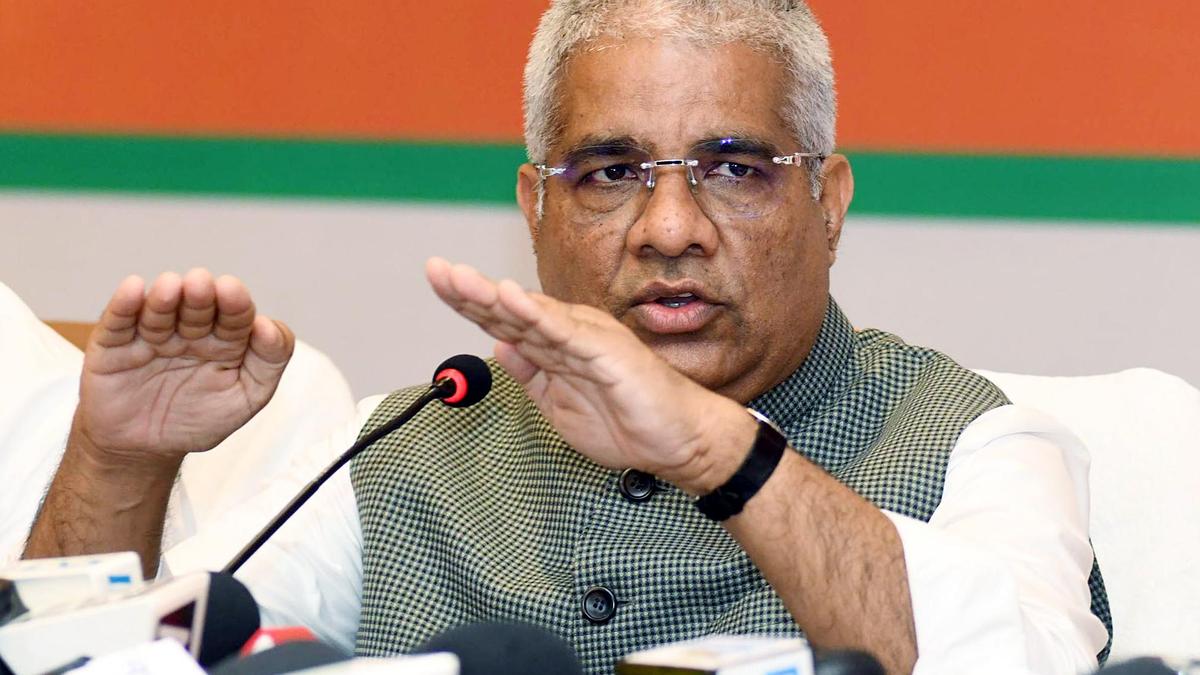
Photo from the source report: COP31 Adaptation Finance: Funding Adequacy, Article 6.4 and India’s Accountability Push
Image: The Hindu
Why in news
At COP31 in Antalya, Türkiye, India highlighted the gap between adaptation-finance announcements and actual delivery. The reported outcomes combined disagreement over an overarching pact with specific decisions on the Adaptation Fund, climate-finance discussions and just transition.
$50 million
Pledge welcomed by India
$120 billion
Adaptation-finance figure not agreed
2035
Reported adaptation-finance tripling horizon
2027
Ministerial finance roundtable
November 2029
Just Transition Work Programme extended until
Background
Adaptation means adjusting human and natural systems to actual or expected climate impacts, whereas mitigation addresses greenhouse-gas emissions and removals. The UNFCCC and the Paris Agreement place climate action within a framework of equity and common but differentiated responsibilities and respective capabilities. The Adaptation Fund originated under the Kyoto Protocol and also serves the Paris Agreement, supporting concrete adaptation projects and programmes in vulnerable developing countries. Its direct-access approach allows accredited national implementing entities to access resources without necessarily routing them through multilateral implementing agencies.
What COP31 delivered—and what remained unresolved
The supplied reports describe a failure to secure consensus on the proposed Antalya Pact, an overarching political cover decision. Differences involved fossil-fuel transition, mitigation pathways, historical responsibility and climate-finance obligations. This should not be equated with the cancellation of existing treaties or the absence of every substantive outcome.
India expressed disappointment that the proposed $120 billion adaptation-finance formulation did not secure agreement. The reported goal of tripling adaptation finance by 2035 remained entangled with questions about predictable commitments and how progress should be measured and monitored.
Other tracks advanced. The Climate Finance Work Programme created a process for further discussions ahead of COP32 and COP33, while its substantive scope remained unresolved. Parties also extended the Just Transition Work Programme until November 2029 and agreed to pursue a phased approach to operationalising the Just Transition Mechanism.
- A failed cover decision does not extinguish existing UNFCCC or Paris Agreement commitments.
- A work programme establishes a negotiating process; it is not itself proof of additional finance.
- The Just Transition Mechanism’s functions and institutional arrangements require further consideration in 2027.
Infographic
Adequacy
Assess support against adaptation needs, not announcement size alone.
Predictability
Combine reliable public support with supplementary market proceeds.
Fair terms
Prioritise grants and avoid additional debt burdens.
Access
Enable timely delivery through capable implementing entities.
Accountability
Track pledges through disbursement to resilience outcomes.
AI-assisted infographic by Pragnya IAS Academy, based on the cited sources.
Adaptation-finance adequacy: assess delivery, not announcements
India welcomed the $50 million Adaptation Fund pledge but considered it inadequate relative to developing-country needs. The source does not provide a comprehensive estimate of those needs, so an exact financing shortfall cannot be calculated from the supplied material.
Adequacy has several dimensions: the amount available, predictability over time, the balance between grants and loans, ease of access and the speed of disbursement. A pledge is an announcement; it does not establish that resources have reached an implementing agency or a vulnerable community.
The $50 million pledge and the proposed $120 billion figure concern different financing references. The sources do not establish a common period, coverage or accounting basis, so comparing them as a formal funding-gap ratio would be misleading.
- India favours adaptation finance that is adequate, predictable, primarily public and substantially grant-based.
- Debt-financed adaptation can add repayment burdens to countries already confronting climate damage.
- Public support is especially important where resilience benefits are substantial but commercial returns are limited.
- Delivery assessment should track accessibility and resilience outcomes alongside financial volumes.
Adaptation Fund, Paris Agreement and Article 6.4 revenues
The reported COP31 decision provides for the Adaptation Fund to serve the Paris Agreement exclusively once the first share of proceeds from the Article 6.4 mechanism turns into revenue. The key distinction is between an agreed institutional arrangement and the fulfilment of its revenue-linked trigger.
Article 6.4 establishes a carbon-crediting mechanism under the Paris Agreement. A share of proceeds from activities under the mechanism is intended to help vulnerable developing countries meet adaptation costs, alongside the mechanism’s provision for administrative expenses.
Exclusive service of the Paris Agreement does not mean exclusive dependence on carbon-market receipts. Voluntary contributions remain distinct from Article 6.4-linked revenue. Nor does the decision mean that the Fund was created at COP31 or that it had no earlier relationship with the Paris Agreement.
- The institutional transition is conditional on realised revenue, not merely the adoption of a decision.
- Carbon-market proceeds can supplement adaptation finance but do not automatically ensure sufficient funding.
- Revenue predictability depends on mechanism activity and the conversion of the relevant proceeds into funds.
- Market-linked receipts should complement, rather than displace, developed-country financial support.
India’s position: equity with implementation accountability
India’s position connects climate justice with verifiable delivery. It argues that developing countries should not be compelled to incur additional debt to protect vulnerable communities and that existing commitments must translate into timely, accessible resources.
The sources report that India coordinated with the Like-Minded Developing Countries, BASIC and the wider G77 framework. Their shared priorities included climate finance, adaptation, technology transfer, capacity-building and equitable implementation, although developing countries have diverse national circumstances.
India also advocated a nationally determined, party-guided approach to just transition covering employment, social protection, energy access, poverty eradication and sustainable development. Its proposed test of negotiating success was the practical finance, technology and capacity-building delivered to developing countries.
- Accountability requires distinguishing pledges, committed funding and actual disbursements.
- Transparency should clarify financial terms, recipients, delivery schedules and implementation results.
- Equity requires attention to historical responsibility alongside present vulnerability and development needs.
- Consensus-building remains essential because substantive differences extend across negotiating constituencies.
| Issue | Reported position | Correct analytical interpretation |
|---|---|---|
| Adaptation Fund pledge | $50 million welcomed by India | A pledge is not evidence of completed disbursement or adequate overall support. |
| Adaptation-finance formulation | $120 billion figure did not secure agreement | It must not be presented as an adopted COP31 obligation. |
| Adaptation Fund transition | Exclusive service of the Paris Agreement linked to first realised Article 6.4 proceeds | A conditional institutional arrangement, not an assurance of sufficient revenue. |
| Climate Finance Work Programme | Further discussions, workshops, dialogues and a ministerial roundtable | A procedural pathway whose substantive scope remains unresolved. |
| Just transition | Work programme extended until November 2029 | Implementation-oriented progress, with mechanism details still under consideration. |
- 1. Activities under the Article 6.4 carbon-crediting mechanism generate eligible credits.
- 2. The adaptation-related share of proceeds is channelled towards the Adaptation Fund.
- 3. The relevant proceeds are converted into revenue.
- 4. The first realised revenue activates the reported condition for exclusive service of the Paris Agreement.
- 5. Fund resources support approved adaptation projects and programmes through implementing entities.
COP31, 2026
The proposed Antalya Pact failed to secure consensus; India welcomed the Adaptation Fund pledge while questioning finance adequacy.
COP31, 2026
Parties agreed on arrangements linking the Adaptation Fund’s exclusive service of the Paris Agreement to realised Article 6.4 share-of-proceeds revenue.
2027
A high-level ministerial finance roundtable is envisaged; the Just Transition Mechanism’s functions and institutional arrangements will receive further consideration.
November 2029
The extended Just Transition Work Programme is scheduled to run until this point.
2035
Horizon of the adaptation-finance tripling goal referred to in the supplied report; measurement and monitoring remain contested.
Significance, challenges & way forward
Significance
- Adaptation finance protects development gains by supporting resilience in livelihoods, infrastructure, water systems and ecosystems.
- The Adaptation Fund decision strengthens its institutional relationship with the Paris Agreement while linking it to a market-based revenue stream.
- India’s grant-based finance position foregrounds the interaction between climate vulnerability and debt sustainability.
- Separating political disagreement from issue-specific decisions enables a more accurate assessment of climate negotiations.
- Implementation accountability shifts attention from summit announcements to support actually reaching vulnerable communities.
Challenges
- The reported outcomes do not establish that adaptation finance is sufficient, predictable or readily accessible.
- Unresolved accounting and monitoring questions weaken confidence in progress towards the adaptation-finance goal.
- Market-linked revenues may fluctuate and cannot be treated as guaranteed budgetary resources.
- Loan-heavy support can transfer adaptation costs into future debt-service obligations.
- Further meetings may prolong negotiations without resolving the substantive scope of financial commitments.
- Disagreements over mitigation pathways, historical responsibility and finance complicate balanced consensus.
Way forward
- Agree on transparent accounting rules that distinguish pledges, commitments, disbursements, grants and loans.
- Establish clear delivery schedules and publicly track whether promised support reaches intended recipients.
- Prioritise predictable public and grant-based funding for vulnerable communities and adaptation activities with limited commercial returns.
- Improve direct access by strengthening national implementing entities and simplifying procedures without weakening safeguards.
- Treat Article 6.4 proceeds as supplementary finance rather than a substitute for developed-country support.
- Assess adaptation results through context-specific resilience outcomes, community participation and transparent evaluation.
- Use the Climate Finance Work Programme to settle substantive accountability questions rather than merely expand the calendar of discussions.
Key terms
- Adaptation finance
- Financial resources supporting adjustment to actual or expected climate impacts and the reduction of vulnerability.
- Adaptation Fund
- A fund originating under the Kyoto Protocol that finances concrete adaptation projects and programmes in vulnerable developing countries and also serves the Paris Agreement.
- Article 6.4 mechanism
- The Paris Agreement’s supervised carbon-crediting mechanism, with a share-of-proceeds provision supporting adaptation.
- Share of proceeds
- A portion of the proceeds of mechanism activities allocated for specified purposes, including adaptation support.
- Direct access
- Access to fund resources through accredited national implementing entities rather than necessarily through multilateral agencies.
- Cover decision
- An overarching political decision framing a climate conference’s outcome, distinct from its individual issue-specific decisions.
- Just transition
- A transition towards sustainable development that addresses impacts on workers and communities while protecting livelihoods and development priorities.
- Common but differentiated responsibilities and respective capabilities
- The principle that countries share responsibility for climate action but have differing responsibilities and capacities.
Link with static syllabus
Prelims practice MCQs
Q1. With reference to the Adaptation Fund, consider the following statements: 1. It originated under the Kyoto Protocol. 2. The reported COP31 arrangement links its exclusive service of the Paris Agreement to the first realised Article 6.4 share-of-proceeds revenue. 3. Exclusive service of the Paris Agreement means that voluntary contributions can no longer finance the Fund. Which of the statements given above are correct?
Q2. Which of the following best explains the adaptation-finance implementation gap?
Q3. Consider the following statements about the COP31 outcomes described in the supplied reports: 1. Failure to adopt the Antalya Pact extinguished developed countries’ existing treaty commitments. 2. The proposed $120 billion adaptation-finance figure became an agreed COP31 obligation. 3. The Climate Finance Work Programme established further discussions while its substantive scope remained unresolved. Which of the statements given above is/are correct?
Q4. Which of the following groups comprises Brazil, South Africa, India and China?
Mains practice questions
GS 3 · 15 marks · 250 words
Adaptation-finance credibility depends more on predictable delivery than on headline pledges. Discuss in the light of the reported COP31 outcomes, with reference to the Adaptation Fund and India’s position.
Frequently asked questions
Did COP31 adopt a $120 billion adaptation-finance commitment?
No. According to the supplied report, the proposed figure did not secure agreement in the final outcome and should not be presented as an adopted commitment.
When will the Adaptation Fund serve the Paris Agreement exclusively?
The reported arrangement links exclusive service to the point when the first Article 6.4 share of proceeds becomes revenue. Agreement on the arrangement is distinct from fulfilment of that condition.
Why does India favour grant-based adaptation finance?
India argues that developing countries should not incur additional debt to protect vulnerable communities. Grants can support essential resilience measures without adding repayment obligations.
Did the failure of the Antalya Pact invalidate all COP31 outcomes?
No. The reports identify separate progress on the Adaptation Fund, climate-finance discussions and just transition, while existing treaty commitments remain in place.
Sources
- The Hindu: COP31: India welcomes $50 million climate fund pledge, says adaptation needs far greater
- The Hindu: Why is COP31 perceived to be a failure? | Explained
Analysis prepared by the Pragnya IAS Academy current-affairs desk with AI assistance from the cited reports. Verify figures with the original sources.
Turn current affairs into marks
Join Pragnya IAS Academy's mentorship for daily answer-writing evaluation on stories like this — classroom programmes from a trusted name in IAS coaching in Hyderabad.