
Karnataka’s SC/ST Quota: Ninth Schedule Protection and Judicial Review
Revise the static topic: UPSC Polity notes · UPSC Governance notes
In short: Karnataka plans to request inclusion of its enhanced SC/ST reservation law in the Ninth Schedule after the High Court quashed the legislation; the State has also approached the Supreme Court. Inclusion requires a constitutional amendment by Parliament and cannot provide absolute immunity from basic-structure review.
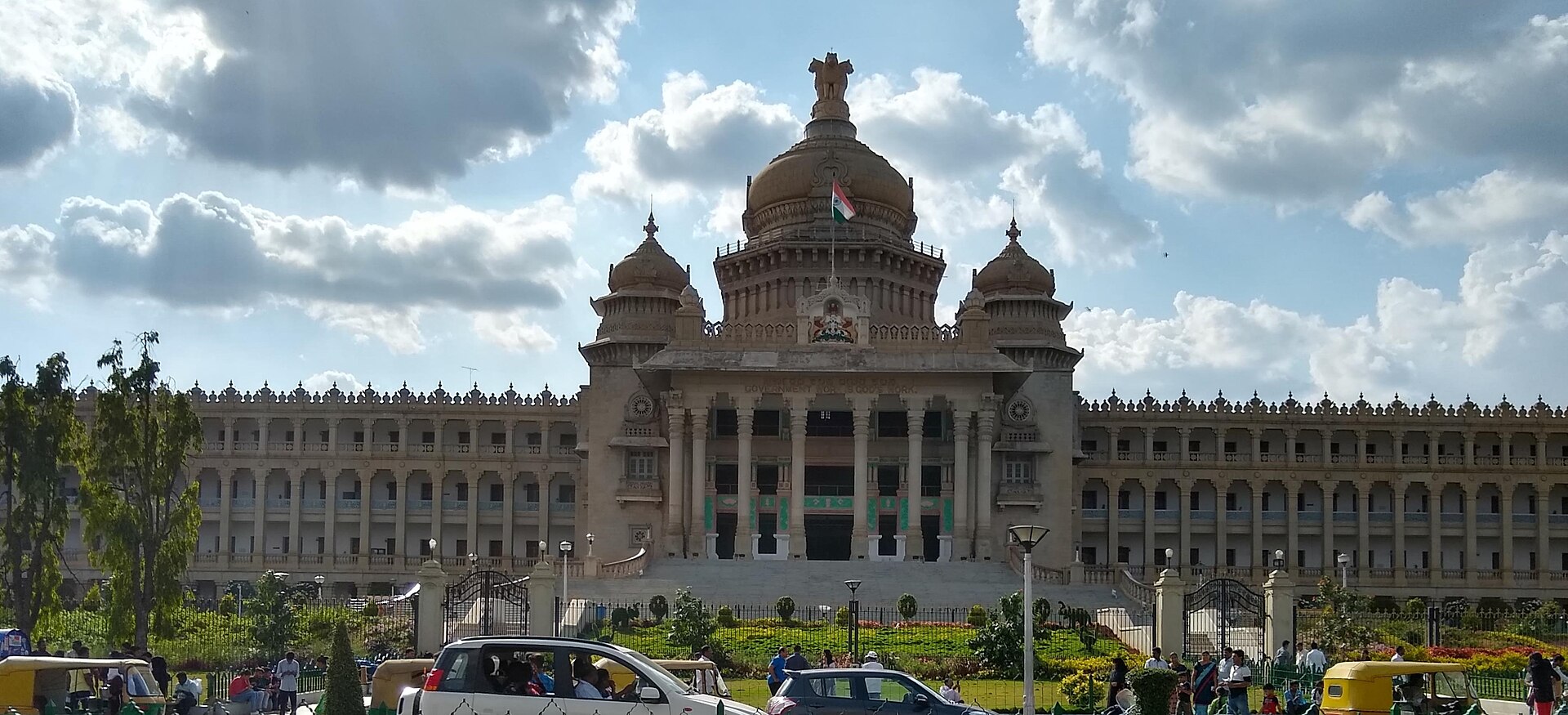
Reference view of Vidhana Soudha, Karnataka’s legislature in Bengaluru. The State proposes Ninth Schedule protection for its enhanced SC/ST reservation law, but inclusion requires a constitutional amendment by Parliament.
Image: N. Vivekananthamoorthy · CC BY-SA 4.0
Why in news
According to the supplied report, Karnataka will write to the Prime Minister seeking Ninth Schedule protection for its reservation law enacted in 2022. The development raises questions about reservation ceilings, Parliament’s amending power and the constitutional limits of legislative protection against judicial scrutiny.
₹44,631 crore
Reported SCSP/TSP allocation
₹1,937 crore
Central scheme funds reported pending
Background
Reservation is an instrument of substantive equality within India’s constitutional framework. Article 15(4) enables special provisions for socially and educationally backward classes and for Scheduled Castes and Scheduled Tribes, while Article 16(4) enables reservation in public employment for backward classes inadequately represented in State services. These enabling provisions operate within constitutional equality requirements and judicially developed limits. Article 31B protects laws placed in the Ninth Schedule against invalidation on the ground of inconsistency with Fundamental Rights, but the constitutional amendment granting that protection remains subject to the basic structure doctrine.
What Karnataka has proposed—and what remains unverified
The High Court of Karnataka has quashed the Karnataka Scheduled Castes and Scheduled Tribes (Reservation of Seats in Educational Institutions and of Appointments or Posts in the Services under the State) Act, 2022. The State proposes to seek its inclusion in the Ninth Schedule and has filed a Special Leave Petition against the High Court order.
These are separate constitutional routes: litigation seeks relief from the Supreme Court, while Ninth Schedule inclusion requires parliamentary action. A request to the Prime Minister does not itself restore the law or suspend the High Court’s order.
The supplied report does not reproduce the judgment, specify the enhanced reservation percentages or explain the precise grounds of invalidation. Consequently, the general reservation-ceiling debate should not be presented as the High Court’s verified reasoning.
- The source reports a proposal for Ninth Schedule inclusion, not an enacted constitutional amendment.
- The filing of a Special Leave Petition does not, by itself, amount to a stay.
- Any claim about the law’s present operation requires verification of subsequent judicial orders.
Infographic
Affirmative action
Articles 15 and 16 enable measures addressing disadvantage.
Policy justification
Relevant evidence and applicable reservation limits matter.
Parliamentary route
Ninth Schedule inclusion requires constitutional amendment.
Qualified shield
Article 31B protects against Fundamental Rights-based invalidation.
Judicial review
Basic-structure scrutiny survives Ninth Schedule placement.
AI-assisted infographic by Pragnya IAS Academy, based on the cited sources.
Reservation ceilings: equality permits affirmative action but limits excess
In Indra Sawhney v. Union of India, the Supreme Court articulated a general ceiling on reservation while recognising a narrow scope for exceptional circumstances. Reservation is therefore constitutionally enabled, but its extent cannot be determined solely by political preference or a demand for population-proportionate allocation.
For employment reservation under Article 16(4), inadequate representation is a constitutional consideration. Educational measures operate under distinct enabling provisions. A defensible policy must identify the applicable provision and support its design with relevant evidence rather than treat educational admissions and public appointments as constitutionally identical.
The Supreme Court’s decision in Janhit Abhiyan upheld the distinct constitutional framework for economically weaker sections reservation. That ruling should not be read as a blanket removal of the general ceiling applicable to ordinary caste-based reservation measures.
- The general ceiling is judicially developed; it is not expressly written into Article 16(4).
- Any claimed departure requires justification under the applicable constitutional doctrine.
- Demographic data is relevant, but it cannot substitute for the complete constitutional inquiry.
Article 31B: protection from Fundamental Rights challenges, not absolute immunity
Article 31B gives Ninth Schedule laws protection against invalidation for inconsistency with rights in Part III of the Constitution. Its text also contemplates protection despite a contrary judgment. However, the provision does not abolish judicial review or create an unrestricted power to override constitutional limitations.
Kesavananda Bharati established that Parliament cannot damage or destroy the Constitution’s basic structure through amendment. In I.R. Coelho v. State of Tamil Nadu, the Supreme Court held that Ninth Schedule insertions made after the Kesavananda Bharati judgment remain open to basic-structure review.
The inquiry examines the effect of the protected law on rights and principles forming part of the basic structure. A Fundamental Rights infringement is not automatically equivalent to destruction of the basic structure; equally, Ninth Schedule placement cannot shield a measure whose impact crosses that constitutional threshold.
- The constitutional amendment granting protection can be challenged.
- Equality and judicial review are central to the basic-structure inquiry.
- Article 31B is not a general cure for every constitutional defect, including lack of legislative competence.
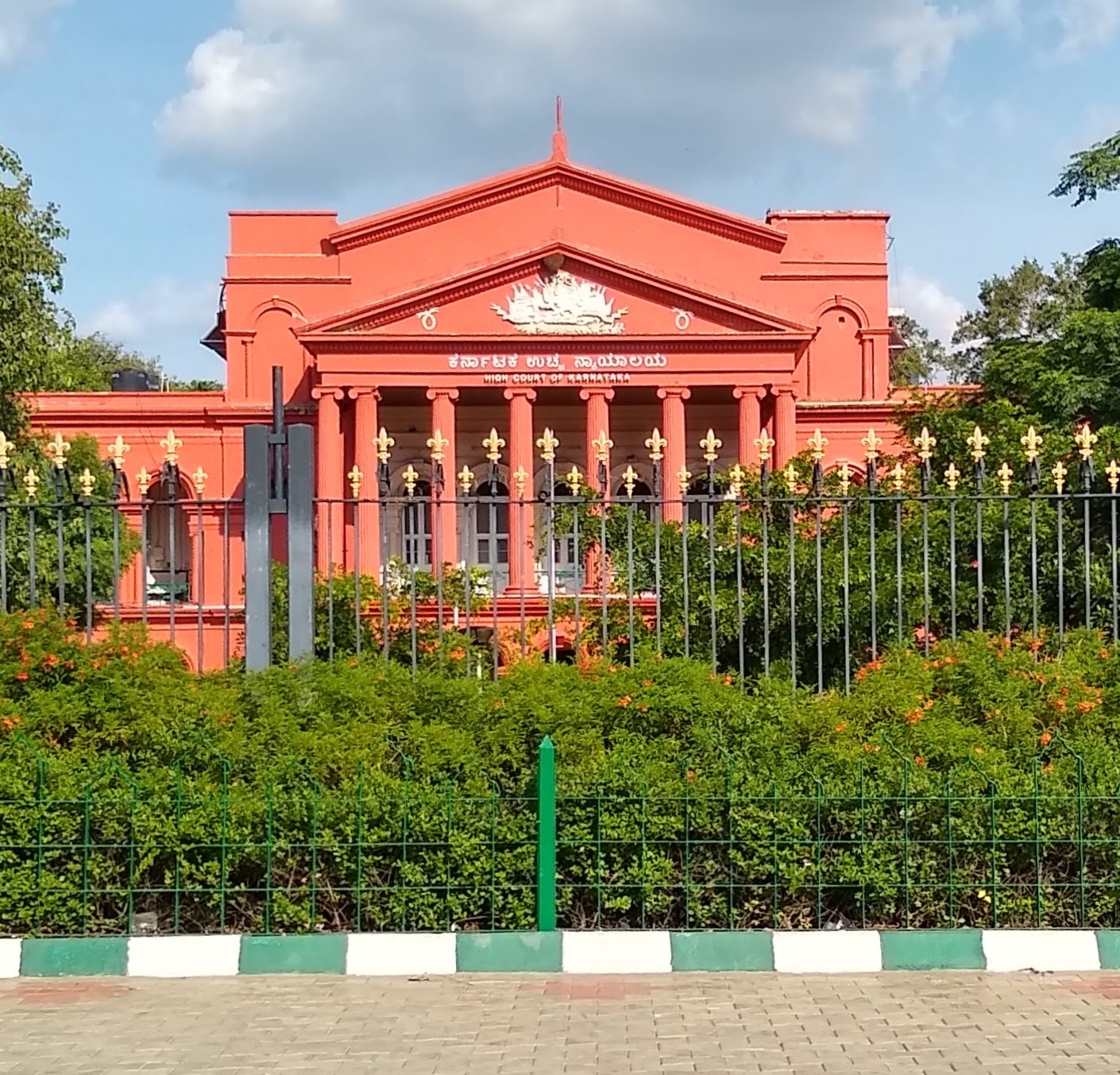
Reference view of Attara Kacheri, home to the Karnataka High Court in Bengaluru. Ninth Schedule inclusion cannot give a law absolute immunity from judicial review on basic-structure grounds.
Image: N. Vivekananthamoorthy · CC BY-SA 4.0
Institutional route: the State proposes, Parliament amends, courts review
Karnataka cannot place its law in the Ninth Schedule through a State enactment or executive notification. Inclusion requires a constitutional amendment under Article 368, passed with the prescribed special majority in each House of Parliament and followed by presidential assent.
State ratification is required only where an amendment attracts the federal provisions specified in the proviso to Article 368; a standalone Ninth Schedule insertion does not automatically require it. Even after inclusion, the amendment remains reviewable under the basic structure doctrine.
The State’s Supreme Court proceedings must therefore be pursued on their own legal merits. Any later constitutional amendment would raise separate questions about its validity and effect on the litigation.
- An executive assurance cannot substitute for the constitutional amendment process.
- Parliamentary enactment and judicial validity are distinct stages.
- The legal consequences of any retrospective protection must be assessed against the amendment’s terms and applicable judgments.
Beyond quotas: welfare delivery and accountability
The report also records a proposed social audit of SCSP/TSP programmes to assess the impact of grants and identify overlapping schemes. It cites an allocation of ₹44,631 crore and pending Central assistance of ₹1,937 crore under Centrally sponsored schemes for 2025–2026.
These figures concern welfare financing, not reservation percentages. They underline the need to complement representation measures with effective education, hostels, scholarships and accountable expenditure: an allocation is not evidence that benefits have reached intended recipients.
- Social audits should test beneficiary access and outcomes, not merely record expenditure.
- Coordination between departments can reduce duplication without weakening entitlements.
- Predictable fund releases are necessary to prevent interruptions in welfare programmes.
| Route or doctrine | Function | Principal limitation |
|---|---|---|
| Supreme Court proceedings | Seek judicial relief against the High Court order | Filing a petition does not automatically stay the order |
| Ninth Schedule inclusion | Extends Article 31B protection against Fundamental Rights-based invalidation | Requires a constitutional amendment, not executive action |
| Basic-structure review | Tests whether the amendment’s effect damages constitutional fundamentals | Ninth Schedule placement does not exclude this scrutiny |
| Evidence-based policy redesign | Addresses identified legal and administrative weaknesses | Must comply with the applicable constitutional standards |
- 1. Karnataka requests Union support for inclusion of the State law.
- 2. A constitutional amendment bill is introduced in Parliament.
- 3. Each House passes the bill with the special majority required by Article 368.
- 4. Presidential assent brings the amendment into law.
- 5. Article 31B protection applies, subject to possible basic-structure review.
2022
Karnataka enacted the SC/ST reservation legislation identified in the report.
Subsequently
The High Court of Karnataka quashed the legislation.
Following the High Court order
The State filed a Special Leave Petition before the Supreme Court.
Latest reported development
The State announced that it would request Ninth Schedule inclusion of the law.
Significance, challenges & way forward
Significance
- The controversy tests how substantive equality can be advanced within enforceable constitutional limits.
- It illustrates the distinction between ordinary legislative power and Parliament’s constituent power.
- It demonstrates that the Ninth Schedule offers qualified protection rather than constitutional immunity.
- It links representative inclusion with the wider challenge of delivering welfare benefits effectively.
Challenges
- The absence of the High Court judgment in the supplied material prevents a reliable assessment of the exact defects identified by the court.
- The State must establish a constitutionally defensible basis for its policy rather than rely on Ninth Schedule placement alone.
- Pending litigation can create uncertainty for applicants, educational institutions and recruiting authorities.
- Treating judicial scrutiny as an obstacle to be bypassed risks weakening constitutionally sustainable policymaking.
- Delayed funding and overlapping schemes can undermine welfare outcomes even when allocations are substantial.
Way forward
- Publish an accessible legal explanation of the High Court ruling and clarify the operative position after any Supreme Court orders.
- Build the policy justification around relevant data, the applicable enabling provisions and judicial standards.
- Pursue appellate remedies without suggesting that a pending petition has already restored the law.
- If Ninth Schedule inclusion is pursued, assess the proposal against I.R. Coelho rather than promise absolute protection.
- Provide transparent transitional guidance for admissions and recruitment consistent with court directions.
- Use independent social audits and timely fund releases to strengthen the wider SC/ST welfare framework.
Key terms
- Substantive equality
- An approach that addresses structural disadvantage rather than relying only on identical formal treatment.
- Article 31B
- The provision protecting Ninth Schedule laws against invalidation for inconsistency with Fundamental Rights, subject to constitutional limits on amendments.
- Ninth Schedule
- A constitutional schedule listing enactments granted Article 31B protection.
- Basic structure doctrine
- The rule that Parliament’s amending power cannot damage or destroy the Constitution’s foundational features.
- Reservation ceiling
- A judicially developed general limit on the extent of reservation, with departures governed by applicable constitutional doctrine.
- Special Leave Petition
- A petition seeking the Supreme Court’s discretionary permission under Article 136 to appeal against a judicial determination.
- Social audit
- Participatory scrutiny of public programmes to assess expenditure, implementation and beneficiary outcomes.
Link with static syllabus
Prelims practice MCQs
Q1. With reference to Ninth Schedule protection, consider the following statements: 1. A State legislature can place its own law in the Ninth Schedule by passing a resolution. 2. Article 31B concerns protection against invalidation for inconsistency with Fundamental Rights. 3. Ninth Schedule insertions made after the Kesavananda Bharati judgment remain open to basic-structure review. Which of the statements given above are correct?
Q2. Consider the following pairs: 1. Indra Sawhney — General ceiling on reservation 2. Kesavananda Bharati — Basic structure limitation on constitutional amendments 3. I.R. Coelho — Absolute immunity of Ninth Schedule laws from judicial review Which of the pairs given above are correctly matched?
Q3. With reference to the constitutional framework for reservation, consider the following statements: 1. Article 16(4) refers to inadequate representation of a backward class in State services. 2. The general reservation ceiling is expressly written into Article 16(4). 3. Article 15(4) enables special provisions for Scheduled Castes and Scheduled Tribes. Which of the statements given above are correct?
Q4. A State files a Special Leave Petition against a High Court order quashing its legislation. Which of the following is the most accurate consequence of filing the petition?
Mains practice questions
GS 2 · 15 marks · 250 words
Ninth Schedule inclusion is a qualified constitutional shield, not an escape from judicial review. Discuss in the context of Karnataka’s proposal concerning enhanced SC/ST reservation.
Frequently asked questions
Can the Prime Minister directly place Karnataka’s law in the Ninth Schedule?
No. Inclusion requires a constitutional amendment passed by Parliament under Article 368 and presidential assent.
Would Ninth Schedule inclusion make the reservation law completely immune from courts?
No. Under I.R. Coelho, a new insertion remains open to review for damage to the Constitution’s basic structure.
Does the supplied report establish why the High Court quashed the law?
No. It reports the invalidation but does not reproduce the judgment’s reasoning or specify the enhanced quota percentages.
Has filing the Special Leave Petition restored the law?
Filing alone does not restore the law or stay the High Court order. That would require appropriate judicial relief or another legally effective development.
Sources
- The Hindu: Karnataka to write to Prime Minister asking for inclusion of enhanced quota in Ninth Schedule
Analysis prepared by the Pragnya IAS Academy current-affairs desk with AI assistance from the cited reports. Verify figures with the original sources.
Turn current affairs into marks
Join Pragnya IAS Academy's mentorship for daily answer-writing evaluation on stories like this — classroom programmes from a trusted name in IAS coaching in Hyderabad.