
Agnipath Overhaul: Longer Tenure, Merit-Based Absorption and Defence Readiness
Revise the static topic: UPSC Internal Security notes
In short: The Cabinet has approved an Agnipath overhaul that gives Agniveers not selected for regular service after their initial four-year tenure an additional two years of engagement, followed by another opportunity for regular absorption. The change expands career pathways but does not guarantee permanent service: absorption remains subject to merit and prescribed selection criteria.
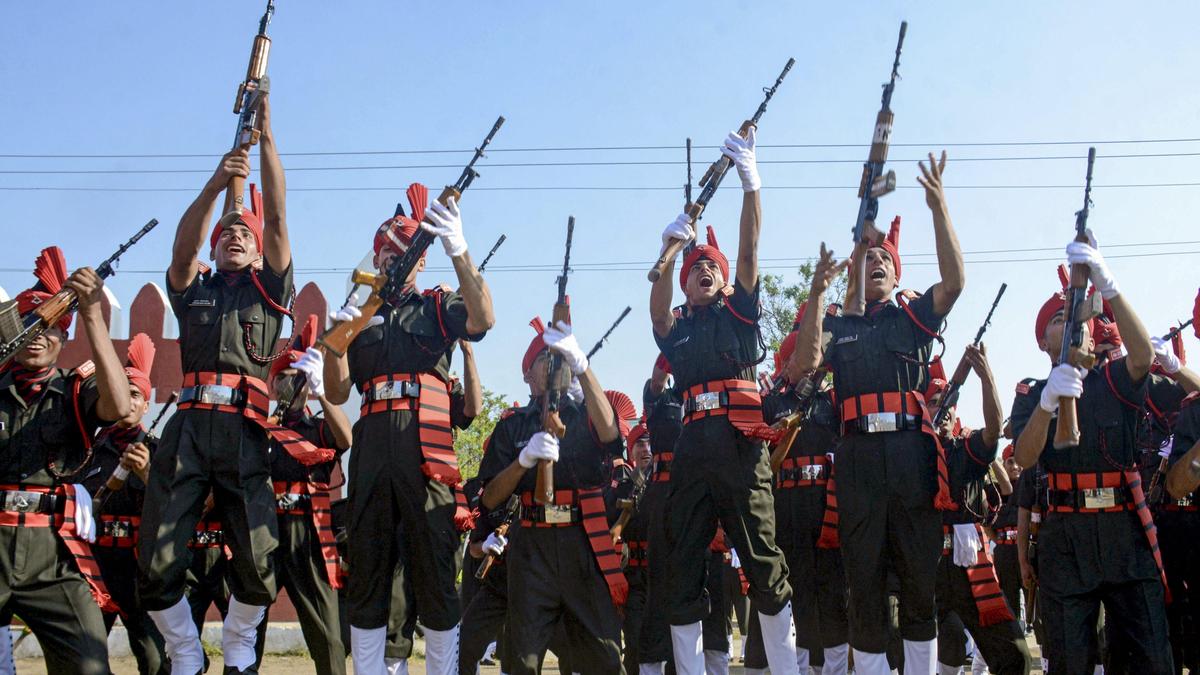
Reference image accompanying an explainer on changes to the Agniveer scheme, not a photograph of the Cabinet approval.
Image: The Hindu
Why in news
On November 4, 2026, the Cabinet approved changes to Agnipath on the recommendations of the three services. The reported decision creates a pathway for the eventual absorption of all willing Agniveers, subject to selection requirements.
4 years
Initial Agniveer tenure
2 years
Additional engagement
75%
Extension group identified by Indian Express
Background
Agnipath is a recruitment framework for personnel below officer rank in the Indian Armed Forces, with recruits designated as Agniveers. It combines an initial fixed-term engagement with a selection pathway into the regular cadre. Military personnel policy must balance a youthful force with experience, continuity, training requirements and career incentives. It also affects defence budgeting because personnel commitments and capability acquisition draw on the same overall resource envelope.
What has changed: a longer pathway, not automatic absorption
The reported Cabinet decision retains the initial four-year tenure but adds two years of engagement for Agniveers not selected for regular service at that stage. These personnel subsequently receive another opportunity to join the Armed Forces as regular soldiers.
The Indian Express headline identifies the extension group as 75% of Agniveers. The Hindu describes the reform as creating a pathway for the eventual absorption of all willing Agniveers, subject to merit and prescribed selection criteria. An expanded opportunity must therefore not be confused with assured absorption.
- The initial selection stage is followed by an additional engagement and another opportunity for regular service.
- Willingness to continue is not sufficient by itself; prescribed selection requirements remain applicable.
- The supplied material does not specify detailed assessment rules, cohort coverage or service conditions during the extension.
Infographic
Longer engagement
Two additional years for those not selected after the initial four-year tenure.
Conditional absorption
A further regular-service opportunity, subject to merit and prescribed criteria.
Readiness potential
Retain experience and improve utilisation of trained manpower.
Recruitment incentives
Broader career prospects require clear communication and credible assessment.
Fiscal discipline
Balance personnel commitments, training efficiencies and modernisation needs.
AI-assisted infographic by Pragnya IAS Academy, based on the cited sources.
Military readiness: retaining experience while protecting standards
Longer engagement can preserve trained manpower and allow units to derive more operational value from the initial training investment. It may also support continuity in teams and give personnel more time to acquire role-specific proficiency.
A longer observation period can improve assessment of performance, discipline and suitability. However, tenure alone does not establish competence: readiness gains depend on meaningful employment, progressive training and credible selection standards.
- The operational value of additional service will vary across technical, combat and support roles.
- Commanders need predictable personnel availability for training and deployment planning.
- Absorption decisions should reflect demonstrated suitability and force requirements rather than an expectation of universal retention.
Recruitment incentives and retention: greater opportunity, continuing uncertainty
An additional route to regular service may make recruitment more attractive to applicants seeking a military career. It can also encourage Agniveers who are not selected initially to improve their performance rather than treating that decision as the final outcome.
These benefits depend on applicants understanding the distinction between eligibility and selection. Unclear communication could create unrealistic expectations, while opaque assessments could weaken morale and confidence in the reform.
- Clear career pathways can strengthen motivation and institutional commitment.
- Transparent evaluation and timely feedback can support improvement during the extended engagement.
- Civilian transition support remains necessary because regular absorption is conditional.
Defence expenditure: assess lifecycle costs alongside operational returns
Compared with release after the initial tenure, additional engagement would extend expenditure on serving personnel. If the reform increases eventual regular absorption, it could also enlarge longer-term personnel commitments under the applicable service rules.
Conversely, retaining trained personnel for longer may spread initial training costs over a longer period of useful service and reduce some replacement-related burdens. The net fiscal effect cannot be established from the supplied material, which provides no costing, extension-stage remuneration rules or projected absorption outcomes.
The policy should therefore be assessed through lifecycle costing and operational effectiveness, not through the assumption that either shorter service always saves money or longer service automatically improves readiness.
- Distinguish immediate engagement costs from future regular-cadre liabilities.
- Assess whether personnel commitments leave adequate resources for equipment, maintenance and modernisation.
- Compare expenditure with proficiency, continuity and deployability outcomes.
| Aspect | Reported position | Policy implication |
|---|---|---|
| Initial tenure | Four-year initial engagement remains the starting point. | The reform adds a subsequent pathway rather than replacing the initial tenure. |
| Additional engagement | Those not selected for regular service receive two additional years. | Trained personnel can remain available for longer. |
| Regular-service opportunity | A further opportunity follows the additional engagement. | Career prospects widen, but selection remains conditional. |
| Absorption standard | Merit and prescribed selection criteria apply. | Opportunity for all willing Agniveers is not a guarantee of absorption. |
| Fiscal implications | No cost estimate is supplied. | Net savings or additional expenditure cannot be quantified. |
- 1. Complete the initial four-year engagement.
- 2. Undergo selection for regular service.
- 3. If not selected, receive an additional two years of engagement.
- 4. Receive a further opportunity for regular-service selection.
- 5. Regular absorption remains subject to willingness, merit and prescribed criteria.
November 4, 2026
The Cabinet approved the Agnipath overhaul on the recommendations of the three services.
Significance, challenges & way forward
Significance
- The reform broadens the route from fixed-term engagement to a regular military career.
- Longer engagement may preserve accumulated skills and improve continuity within units.
- An extended assessment window can support better-informed personnel selection.
- The recommendations of the three services provide an institutional basis for the reported change.
- The decision brings military effectiveness, recruitment incentives and fiscal sustainability into a common policy debate.
Challenges
- Applicants may interpret a pathway for all willing Agniveers as a promise of universal absorption.
- Unclear or inconsistent assessment practices could undermine confidence in merit-based selection.
- Longer engagement must be accompanied by useful training and deployment rather than merely extending time in service.
- Greater eventual absorption could create longer-term personnel commitments that require careful budgeting.
- Personnel who are not ultimately absorbed will still require credible civilian employment and skill-transition pathways.
- The supplied reports leave cohort applicability, extension conditions and detailed selection procedures unspecified.
Way forward
- Publish clear implementation rules covering eligible cohorts, extension conditions and regular-service selection.
- Communicate explicitly that willingness and eligibility do not by themselves guarantee absorption.
- Use documented performance assessments with role-specific criteria, periodic feedback and appropriate review mechanisms.
- Align absorption planning with service-wise manpower needs, skill requirements and career structures.
- Prepare lifecycle cost projections that distinguish engagement expenditure, regular-cadre commitments and training efficiencies.
- Evaluate the reform through proficiency, retention, unit continuity and readiness indicators.
- Maintain recognised skill certification and transition assistance for personnel leaving military service.
Key terms
- Agnipath
- A recruitment framework for personnel below officer rank in the Indian Armed Forces, combining fixed-term engagement with a route to regular service.
- Agniveer
- A recruit serving under the Agnipath framework.
- Regular absorption
- Selection into the regular military cadre under applicable service conditions.
- Merit-based selection
- Selection based on assessed performance and suitability against prescribed criteria.
- Military readiness
- The ability of armed forces to undertake assigned missions with adequately trained, equipped and available personnel and units.
- Lifecycle costing
- Assessment of costs across the relevant service period rather than only the immediate budget year.
Link with static syllabus
Prelims practice MCQs
Q1. With reference to the reported Agnipath overhaul, consider the following statements: 1. Agniveers not selected for regular service after their initial four-year tenure receive an additional two years of engagement. 2. Every willing Agniveer is guaranteed regular absorption without further selection. Which of the statements given above is/are correct?
Q2. According to the supplied report, the Agnipath overhaul was approved by which authority and on whose recommendations?
Q3. Consider the following pairs: 1. Regular absorption — Selection into the regular military cadre 2. Lifecycle costing — Assessment restricted to the immediate budget year 3. Military readiness — Ability to undertake assigned missions with adequate personnel and capability Which of the pairs given above are correctly matched?
Q4. With reference to the fiscal assessment of longer Agniveer engagement, consider the following statements: 1. Additional engagement can extend personnel expenditure relative to release after the initial tenure. 2. Longer service may spread initial training costs over a longer period of useful service. 3. The supplied reports establish the quantified net fiscal impact of the reform. Which of the statements given above are correct?
Mains practice questions
GS 3 · 15 marks · 250 words
The Agnipath overhaul seeks to reconcile a youthful military profile with personnel continuity and career aspirations. Examine its implications for military readiness, recruitment incentives and defence expenditure.
Frequently asked questions
Does the overhaul guarantee permanent service to every Agniveer?
No. It creates a pathway for the eventual absorption of all willing Agniveers, but regular selection remains subject to merit and prescribed criteria.
What happens to Agniveers not selected after the initial tenure?
According to the supplied report, they receive an additional two years of engagement after the initial four-year tenure, followed by another opportunity to join the regular cadre.
Why could longer engagement improve military readiness?
It may retain trained personnel, support unit continuity and provide more time to develop specialised skills. These gains depend on effective training, deployment and selection.
Will the reform increase defence expenditure?
Longer engagement extends personnel spending, while better utilisation of training investment may provide offsetting benefits. The supplied material does not establish the net fiscal impact.
Sources
- The Hindu: What are the changes in Agniveer scheme, and what prompted government to implement them? | Explained
- Indian Express: Big Agnipath change: 2-year extension to 75% Agniveers opens permanent service door to all
Analysis prepared by the Pragnya IAS Academy current-affairs desk with AI assistance from the cited reports. Verify figures with the original sources.
Turn current affairs into marks
Join Pragnya IAS Academy's mentorship for daily answer-writing evaluation on stories like this — classroom programmes from a trusted name in IAS coaching in Hyderabad.