
ECI Separates Form 6 and SIR Declaration: Electoral Registration and Inclusion Safeguards
Revise the static topic: UPSC Polity notes · UPSC Governance notes
In short: The Election Commission of India has separated online Form 6 from the accompanying SIR declaration in States undergoing Special Intensive Revision, requiring separate OTP verification and e-Sign for each document. The change distinguishes the prescribed registration form from the additional declaration, but applicants must still complete both submissions, making legal clarity and safeguards against exclusion central concerns.
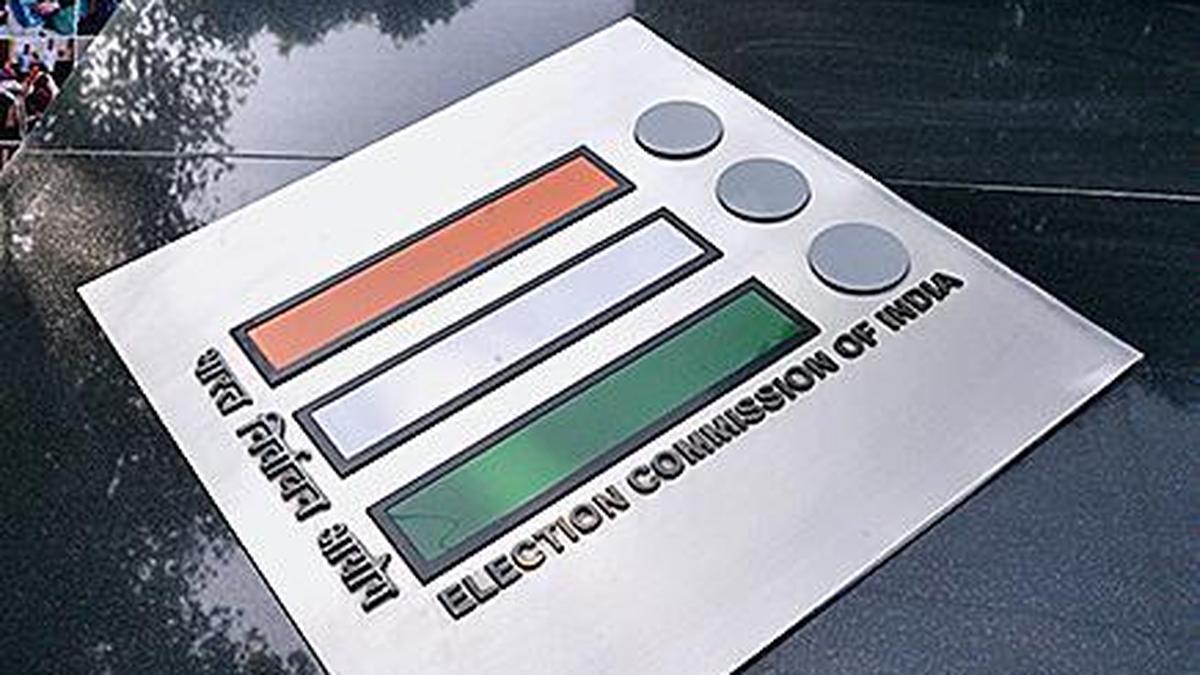
The ECI has separated online Form 6 from the SIR declaration, requiring applicants to submit and verify each document separately.
Image: The Hindu
Why in news
The ECI has revised its online submission process following concerns about combining Form 6 and the SIR declaration. It had already withdrawn the declaration from digital platforms in States where SIR had been completed.
Background
Electoral registration is governed principally by the Representation of the People Act, 1950 and the Registration of Electors Rules, 1960. Eligibility rests on Indian citizenship, attainment of the statutory voting age, ordinary residence in the constituency and absence of statutory disqualification. Form 6 is the prescribed application for inclusion of a name in the electoral roll. Electoral Registration Officers decide registration claims, while the ECI supervises preparation and revision of rolls. Revision must reconcile two objectives: removing ineligible or duplicate entries and ensuring that eligible citizens are not excluded through procedural barriers.
What has changed in the online process?
According to the supplied report, Form 6 and the accompanying SIR declaration were already separate documents in physical submissions following the introduction of the declaration during the Bihar SIR. Online, however, they were submitted together using a single OTP and e-Sign.
Under the revised arrangement, the prescribed Form 6 and the SIR declaration are distinct online submissions. Each requires separate OTP verification and e-Sign, and applicants in States where SIR is underway must complete both steps for successful submission.
- The separation does not mean that the accompanying declaration has been withdrawn in States undergoing SIR.
- The declaration had earlier been withdrawn from digital platforms in States where SIR had been completed.
- The ECI's counter-affidavit referred to an October 21 decision of its electoral roll division directing the separation.
Infographic
Prescribed application
Form 6 remains the application for electoral-roll inclusion.
Separate declaration
The SIR declaration requires distinct authentication where applicable.
Legal discipline
Administrative requirements must comply with the Act and Rules.
Fair procedure
Notice, hearing where required and accessible remedies protect applicants.
Inclusive accuracy
Prevent unlawful entries without excluding eligible citizens.
AI-assisted infographic by Pragnya IAS Academy, based on the cited sources.
Why the distinction between a prescribed form and a declaration matters
Form 6 derives its prescribed format from the Registration of Electors Rules. Combining an additional declaration with it raised concerns that the statutory form had effectively been altered without the required rule-making process. The report states that the online change was among the issues flagged in dissent notes by Election Commissioners Sukhbir Singh Sandhu and Vivek Joshi.
Separating the documents makes their administrative identity clearer. It does not, by itself, settle whether every requirement in the accompanying declaration is legally authorised, necessary or proportionate. Those questions require examination of the declaration, the relevant directions and the governing law; the supplied material does not establish a final judicial ruling on its validity.
- An administrative workflow must remain consistent with the Act and the Rules.
- Separate authentication establishes distinct submissions; it does not independently establish the legality of their contents.
- Procedural convenience cannot substitute for a lawful basis for additional obligations.
Constitutional and statutory framework
Article 324 places the superintendence, direction and control of electoral-roll preparation and election conduct with the ECI. Article 325 requires one general electoral roll for each territorial constituency and prohibits exclusion on grounds only of religion, race, caste or sex. Article 326 anchors elections to the Lok Sabha and State Legislative Assemblies in adult suffrage, subject to constitutional and lawful qualifications.
The Representation of the People Act, 1950 governs registration eligibility, correction, deletion and inclusion of entries. Its framework prohibits registration in more than one constituency and more than once in the same constituency. The ECI's supervisory authority operates within this statutory framework rather than displacing it.
The ECI has clarified that action will not be taken merely because a person included in an earlier electoral roll submits Form 6 during or after SIR, provided the person is not already enrolled in another Parliamentary or Assembly constituency. This is a limited assurance against action solely for earlier inclusion and reapplication, not permission for duplicate registration or a blanket exemption for false declarations.
Safeguards against wrongful exclusion
Verification is essential, but an incomplete digital workflow must not be confused with a finding that a citizen is ineligible. OTP failure, lack of assistance or confusion about an additional declaration can obstruct submission without resolving citizenship, age or ordinary residence.
Electoral Registration Officers must apply the prescribed inquiry process and provide a reasonable opportunity of hearing where the law requires it. For disputed eligibility or residence, clear notice, intelligible grounds, an opportunity to respond and access to statutory remedies are central safeguards. Administrative design should help applicants correct procedural defects rather than turn them into silent exclusion.
- Provide clear acknowledgement of each submission and identify any unfinished step.
- Maintain accessible physical and assisted channels alongside online applications.
- Communicate adverse decisions and the available appeal process in understandable language.
- Distinguish correction of an existing entry from fresh inclusion so that applicants use the appropriate procedure.
The ECI's dual responsibility: accuracy and inclusion
Accurate rolls protect electoral equality by preventing duplicate and ineligible entries. Inclusive rolls protect the ability of eligible citizens to participate. These are complementary duties: wrongful exclusion is a roll-quality failure just as wrongful inclusion is.
The revised process may improve documentary clarity, but it also introduces separate authentication steps. Its success should therefore be judged not merely by formal separation of documents, but by whether eligible applicants can complete registration, understand requirements and obtain timely correction of errors.
- Internal dissent should trigger careful legal review and transparent clarification.
- Public instructions should distinguish requirements in ongoing-SIR States from those where SIR has ended.
- Monitoring should identify applications stalled between the Form 6 and declaration stages.
| Aspect | Form 6 | SIR declaration |
|---|---|---|
| Character | Application prescribed under the Registration of Electors Rules | Additional declaration accompanying Form 6 in the reported SIR process |
| Purpose | Application for inclusion in the electoral roll | Supplementary declaration connected with SIR; its detailed contents are not supplied |
| Earlier online arrangement | Submitted together with the declaration using a single OTP and e-Sign | Submitted together with Form 6 using the same authentication |
| Revised arrangement in ongoing-SIR States | Requires its own OTP verification and e-Sign | Requires separate OTP verification and e-Sign |
| Where SIR had been completed | Continues as the prescribed registration application | Withdrawn from digital platforms, according to the report |
- 1. Complete the prescribed Form 6 application.
- 2. Authenticate and submit Form 6 through OTP verification and e-Sign.
- 3. Complete the accompanying SIR declaration as a distinct document.
- 4. Authenticate and submit the declaration through separate OTP verification and e-Sign.
- 5. Complete both submissions; successful submission is not itself approval of electoral registration.
During the Bihar SIR
A separate declaration began accompanying physical Form 6 submissions; the online process combined the documents.
September
The ECI withdrew the declaration from digital platforms in States where SIR had been completed.
October 21
The ECI's electoral roll division decided that online applications should distinguish prescribed Form 6 from the SIR declaration.
Subsequent clarification reported in the source
The ECI confirmed separate OTP verification and e-Sign for each document, with both submissions required in States undergoing SIR.
Significance, challenges & way forward
Significance
- Separating the documents clarifies the distinction between a prescribed application and an additional administrative declaration.
- The controversy highlights that digital interfaces can affect substantive electoral rights by shaping access to registration.
- The ECI's clarification reduces uncertainty for previously enrolled persons seeking inclusion during or after SIR, subject to its stated condition.
- Transparent, accurate and inclusive rolls strengthen confidence in electoral administration.
Challenges
- Separate authentication requirements may create additional barriers for applicants with limited digital access or assistance.
- Different requirements across ongoing-SIR and completed-SIR States can cause confusion unless clearly communicated.
- Document separation alone cannot resolve questions about the legal basis and proportionality of additional declarations.
- Overemphasis on documentary or technical compliance can exclude eligible citizens without establishing substantive ineligibility.
- Unclear notices, delayed decisions and inaccessible remedies can make formal safeguards ineffective.
Way forward
- Publish consolidated instructions explaining the legal basis, purpose and applicability of the SIR declaration.
- Ensure that digital requirements faithfully reflect the prescribed forms and applicable law.
- Provide assisted submission, accessible physical channels and clear guidance in relevant local languages.
- Enable applicants to identify and complete pending steps without unnecessarily restarting the registration process.
- Ensure notice, opportunity to respond where required, reasoned decisions and accessible statutory appeals.
- Review registration errors in both directions: wrongful inclusion and wrongful exclusion.
Key terms
- Form 6
- The prescribed application for inclusion of a person's name in the electoral roll.
- Special Intensive Revision
- A special intensive exercise to verify and revise electoral rolls under the applicable electoral framework.
- Ordinary residence
- The statutory connection between a person and a constituency for registration; property ownership alone does not establish it, and temporary absence alone does not end it.
- Electoral Registration Officer
- The statutory authority responsible for preparing and revising the electoral roll and deciding registration matters for the assigned constituency.
- Natural justice
- Procedural fairness, including an opportunity to respond before an adverse decision where required and impartial consideration of the case.
- Statutory form
- A form prescribed under legislation or rules whose legal requirements cannot be displaced merely through administrative convenience.
Link with static syllabus
Prelims practice MCQs
Q1. With reference to the reported separation of online Form 6 and the SIR declaration, consider the following statements: 1. Each document requires separate OTP verification and e-Sign in States undergoing SIR. 2. Separation means that applicants in such States need submit only Form 6. 3. The declaration had already been withdrawn from digital platforms in States where SIR had been completed. Which of the statements given above are correct?
Q2. Which constitutional provision requires one general electoral roll for every territorial constituency and prohibits exclusion on grounds only of religion, race, caste or sex?
Q3. Consider the following statements about electoral registration: 1. Ownership of a house in a constituency is, by itself, sufficient to establish ordinary residence there. 2. Temporary absence from a place of ordinary residence does not, by itself, terminate ordinary residence. 3. A person may lawfully be registered in two Assembly constituencies if the person votes in only one. Which of the statements given above is/are correct?
Q4. With reference to electoral-roll administration, consider the following statements: 1. Form 6 is prescribed under the Registration of Electors Rules, 1960. 2. The ECI may use an administrative instruction to override an express provision of electoral law. 3. Separating an additional declaration from a prescribed form does not, by itself, establish the legality of every requirement in the declaration. Which of the statements given above are correct?
Mains practice questions
GS 2 · 15 marks · 250 words
Accurate electoral rolls and inclusive voter registration are complementary constitutional responsibilities. Examine this statement in the context of the separation of Form 6 from the SIR declaration.
Frequently asked questions
Has the ECI abolished the SIR declaration?
No. The report says it has separated the declaration from online Form 6 in States undergoing SIR, where both submissions remain required; it had earlier withdrawn the declaration from digital platforms in States where SIR was completed.
Does submitting Form 6 automatically make a person a registered voter?
No. Form 6 is an application for inclusion, and registration depends on verification and a decision under the applicable electoral law.
Can a previously enrolled person face action merely for submitting Form 6 again?
The ECI clarified that earlier inclusion and a subsequent Form 6 application during or after SIR would not alone attract action, provided the person is not already enrolled in another Parliamentary or Assembly constituency. The clarification does not authorise duplicate registration.
Does separating the documents settle the legal controversy?
No. It clarifies the distinction between the prescribed form and the additional declaration, but the declaration's legal basis and requirements remain separate questions.
Sources
- The Hindu: ECI separates online Form 6, accompanying declaration for States undergoing SIR
- Indian Express: Election Commission completes Form 6 U-turn, drops SIR para a Commissioner called ‘illegal'
Analysis prepared by the Pragnya IAS Academy current-affairs desk with AI assistance from the cited reports. Verify figures with the original sources.
Turn current affairs into marks
Join Pragnya IAS Academy's mentorship for daily answer-writing evaluation on stories like this — classroom programmes from a trusted name in IAS coaching in Hyderabad.