
U.S. Midterm Shift: Congressional Checks and India’s Strategic Choices
Revise the static topic: UPSC International Relations notes
In short: The supplied reports describe Democratic gains securing control of both chambers of the U.S. Congress, setting the stage for divided government under President Donald Trump. For India, the main implications concern its geopolitical operating environment and negotiations on trade, energy and mobility—not an automatic reversal of U.S. policy or a fundamental weakening of bilateral ties.
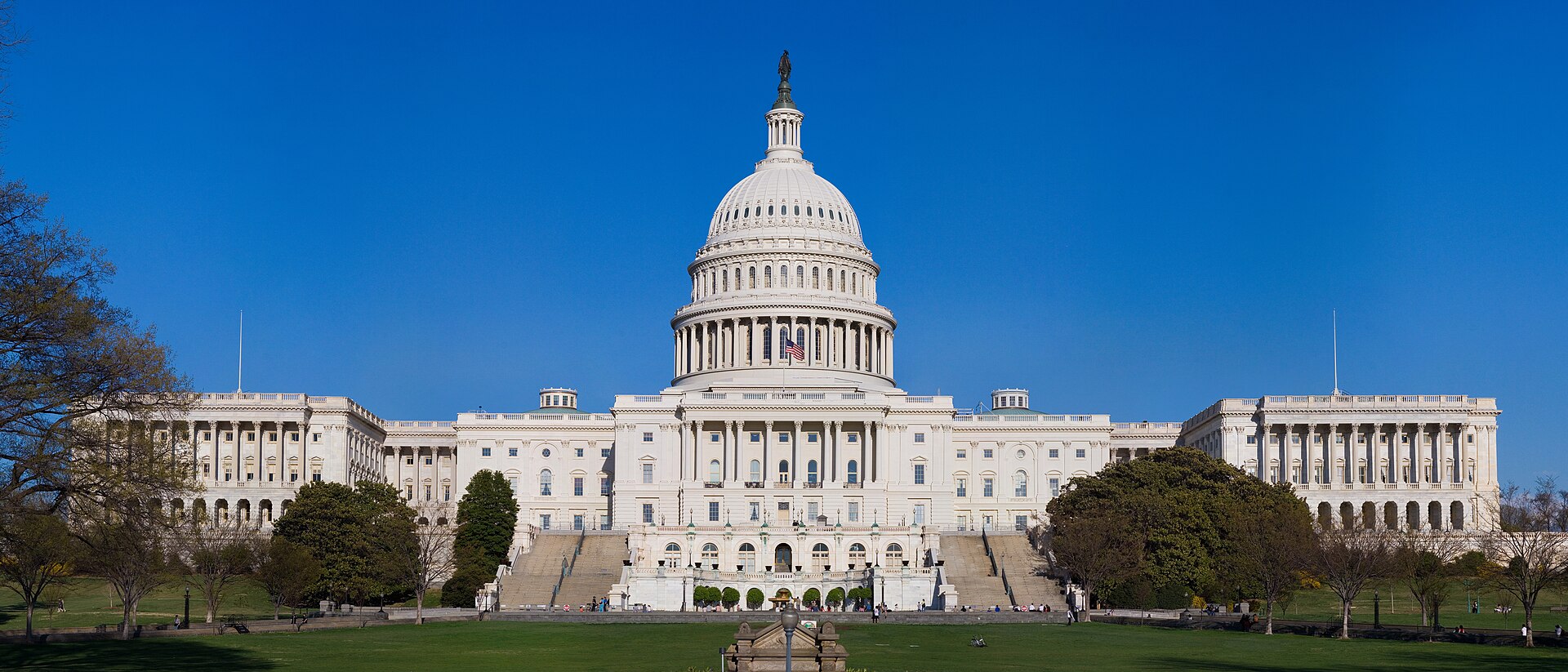
Reference view of the U.S. Capitol, home to the House of Representatives and Senate. Congressional control shapes legislative oversight of the president, with implications for India’s strategic choices.
Image: Noclip · Public domain
Why in news
The Hindu’s reporting on the November 2026 U.S. midterms links Republican losses to dissatisfaction over living costs, tariffs and the Iran war. Its accompanying analyses examine how congressional checks could influence Washington’s dealings with India, China and other strategic partners.
$14 billion
Taiwan weapons package reportedly delayed
Background
The United States follows a presidential system in which the executive and legislature have separate electoral mandates. Congress comprises the House of Representatives and the Senate; it legislates, authorises expenditure and oversees the executive. The President conducts diplomacy and exercises executive powers within constitutional and statutory limits. India-U.S. relations span defence, technology, trade, education and the Indian diaspora. India’s strategic autonomy seeks independent, issue-based choices rather than an obligation to align with a partner across every international dispute.
What changes: stronger checks, not a transfer of executive power
The supplied reports describe Democrats winning control of both congressional chambers. The institutional consequences follow when the newly elected Congress takes office; an electoral verdict does not itself amend laws, cancel tariffs or transfer presidential authority.
An opposition-controlled Congress can scrutinise policy through hearings, investigations, legislation and expenditure decisions. The Senate also has a distinct role in confirming specified appointments and consenting to treaties. However, presidential vetoes, legislative bargaining and existing statutory delegations constrain what a congressional majority can achieve.
For India, the key distinction is between political pressure and legally effective policy change. Congressional opposition may restrain particular initiatives, delay decisions or increase uncertainty without producing a coherent alternative foreign policy.
- The U.S. President does not require the continuing confidence of the House to remain in office.
- Congressional oversight can raise the political cost of executive action without immediately stopping it.
- An election result alone does not revoke powers already delegated to the executive by legislation.
Infographic
Institutions
Track legislative authority and executive discretion.
Trade
Seek durable access; expect protectionist pressures.
Mobility
Distinguish electoral rhetoric from visa rules.
Energy
Manage conflict, shipping and sanctions risks separately.
China
Prepare for confrontation and selective accommodation.
Autonomy
Combine partnerships with independent capabilities.
AI-assisted infographic by Pragnya IAS Academy, based on the cited sources.
Trade negotiations: possible restraint, persistent protectionism
The China-focused source suggests that Democrats could seek to limit the President’s use of tariffs. It also highlights a countervailing constraint: protectionist measures have support among constituencies that Democrats must consider, including unions and some businesses. Reduced presidential discretion therefore need not mean an embrace of free trade.
For India-U.S. negotiations, the immediate analytical task is to identify the legal basis of each proposed concession or restriction. Measures that require legislative change face a different approval process from actions available under existing executive authority. India should not assume that every trade understanding requires Senate treaty consent.
A more constrained administration could face pressure to offer predictable terms, but divided government could also delay implementation. The supplied material does not establish any revised India-U.S. trade agreement, tariff concession or negotiating deadline.
- Assess market-access commitments separately from political announcements.
- Seek clarity on implementation authority, review provisions and dispute-management arrangements.
- Prepare for continued sector-specific protectionism even if sweeping tariff threats become harder to sustain.
Immigration: electoral signals are not visa reform
The supplied reporting interprets the result as a setback to anti-immigrant rhetoric. This is a political assessment, not evidence that visa rules, admission criteria or enforcement practices have changed.
Congress can amend immigration law, while executive agencies administer visa and immigration processes within the law. Oversight may expose implementation problems, but substantive reform still requires political agreement and lawful administrative action.
India should distinguish skilled-worker mobility, student pathways and broader immigration enforcement. Their legal frameworks and political constituencies differ, so improvement in one area does not guarantee improvement in another.
- Prioritise predictable processing and clear compliance guidance for Indian professionals and students.
- Engage employers, universities and legislators across party lines.
- Avoid equating a change in political rhetoric with an expansion of immigration entitlements.
Iran and Russian oil: India’s energy choices remain exposed
The sources connect the Republican defeat partly to the Iran war and associated fuel-price pressures. They report continuing talks and uncertainty over whether Trump will pursue an early exit. Congressional scrutiny and expenditure decisions could affect the administration’s options, but the election does not itself end hostilities.
For India, developments around Iran matter through energy prices, maritime security, shipping costs and the safety of Indian nationals in the wider region. Even without a direct change in India-U.S. relations, these developments can alter India’s economic and diplomatic room for manoeuvre.
The reporting also identifies Russian oil as an issue to watch and records Ukrainian expectations of greater U.S. assistance. Neither establishes a new sanctions decision or a change in the treatment of Indian purchases. India must monitor the actual scope of applicable measures rather than infer relief or tightening from party control alone.
- Separate oil-price risk, shipping disruption and sanctions exposure in policy planning.
- Diversify energy sourcing while retaining commercially and legally viable options.
- Maintain dialogue with Washington and relevant regional partners without making commitments conditional on electoral expectations.
China and Taiwan: continuity can coexist with sharper institutional friction
The China analysis presents competing possibilities. Congress could resist tariff escalation that raises domestic costs while also pressing for stronger support to Taiwan. These positions are not contradictory: legislators may favour economic restraint in one domain and strategic firmness in another.
The source reports a delayed $14-billion Taiwan weapons package and differing assessments of renewed U.S. support: it could strengthen deterrence or increase bilateral friction. Congress can influence arms-transfer policy through legislation, oversight and funding, but implementation depends on applicable law and executive-legislative interaction.
India should therefore avoid treating a weakened U.S. President as either an assured strategic opportunity or an inevitable security setback. Cooperation through the Quad and other partnerships should be complemented by independent capabilities and diversified economic relationships.
- Monitor tariffs, technology controls and security commitments as distinct policy tracks.
- Build resilience against both U.S.-China confrontation and selective accommodation.
- Treat strategic autonomy as the capacity to make sustainable choices, not merely the freedom to announce them.
| Policy area | Potential congressional lever | What India must not assume |
|---|---|---|
| Trade and tariffs | Legislation, oversight and scrutiny of delegated authority | Opposition control automatically removes existing tariffs |
| Immigration | Amendment of immigration law, appropriations and agency oversight | A political setback to anti-immigrant rhetoric changes visa rules |
| Iran conflict | War-powers debate, funding decisions and oversight | An electoral defeat legally requires an immediate end to hostilities |
| Russia-related measures | Sanctions legislation and scrutiny of assistance and implementation | Greater support for Ukraine automatically changes restrictions affecting Indian oil purchases |
| China and Taiwan | Arms-transfer scrutiny, legislation and funding | Tariff restraint necessarily implies strategic accommodation with China |
- 1. Election changes the composition of Congress.
- 2. The incoming majority reshapes committee leadership and legislative priorities.
- 3. Hearings, funding decisions and proposed laws increase pressure on the executive.
- 4. Statutory authority, presidential responses and legislative bargaining determine actual policy changes.
- 5. Changes in trade, mobility, energy and security conditions affect India.
- 6. India adjusts negotiations and risk management while preserving independent choices.
February 2026
The supplied India-focused report identifies this as the month of Trump’s decision to attack Iran.
May 2026
The China-focused report states that Trump suggested Taiwan arms sales could serve as a bargaining chip in talks with China.
November 2026
The supplied reports describe Democrats securing control of both congressional chambers in the midterms.
After the newly elected Congress takes office
Changed congressional control can translate into new oversight priorities, legislative proposals and expenditure bargaining; specific policy outcomes remain uncertain.
Significance, challenges & way forward
Significance
- The result may change India’s external operating environment more than the underlying direction of India-U.S. relations.
- Stronger congressional scrutiny could create openings for more predictable policy, but it may also generate delays.
- Energy and maritime disruptions can transmit geopolitical developments into Indian inflation and business costs.
- Congressional engagement becomes more important when executive commitments face legislative constraints.
- Divergent U.S. approaches to trade and security require India to assess cooperation issue by issue.
Challenges
- Divided government can produce policy gridlock rather than a stable corrective to presidential discretion.
- Protectionist preferences may persist across party lines despite disagreement over particular tariffs.
- The supplied sources do not establish new India-specific trade concessions, visa reforms or oil-related sanctions decisions.
- A politically weakened President may still retain substantial discretion under existing law.
- U.S.-China bargaining and Taiwan-related tensions can create economic and security spillovers beyond India’s control.
- Dependence on a narrow set of suppliers, markets or technologies can reduce the practical scope of strategic autonomy.
Way forward
- Institutionalise bipartisan outreach to Congress alongside engagement with the U.S. administration.
- Map the legal authority and implementation requirements behind every major trade or mobility commitment.
- Pursue predictable market access and transparent rules rather than relying on short-lived political understandings.
- Provide timely compliance information and consular support to Indian students and professionals.
- Diversify energy supplies and strengthen preparedness for shipping and payment disruptions.
- Deepen defence and technology cooperation while investing in domestic capability and alternative partnerships.
- Use scenario planning for U.S.-China escalation, selective accommodation and prolonged executive-legislative deadlock.
Key terms
- Divided government
- A situation in which the presidency and at least one chamber of Congress are controlled by different political parties.
- Congressional oversight
- Legislative scrutiny of executive policies, administration and expenditure through institutional mechanisms such as committees and hearings.
- Appropriation
- Legislative authority permitting public money to be spent for specified purposes.
- Delegated authority
- Power conferred by legislation on the executive to act within prescribed conditions and limits.
- Strategic autonomy
- The capacity to make independent foreign-policy choices according to national interests while cooperating with multiple partners.
- Secondary sanctions
- Measures intended to deter third-country actors from specified dealings with sanctioned parties, subject to the applicable legal regime.
- Deterrence
- Discouraging an action by convincing an actor that its likely costs would outweigh its expected benefits.
Link with static syllabus
Prelims practice MCQs
Q1. With reference to divided government in the United States, consider the following statements: 1. It can arise when the President’s party does not control one chamber of Congress. 2. Defeat of the President’s party in House elections automatically requires the President to resign. 3. Congress can scrutinise executive action through hearings and expenditure decisions. Which of the statements given above are correct?
Q2. Consider the following statements regarding changes in U.S. congressional control: 1. They automatically repeal tariffs imposed under existing statutory authority. 2. They can affect the scrutiny of immigration administration. 3. They necessarily terminate ongoing military operations abroad. Which of the statements given above is/are correct?
Q3. Which of the following best describes strategic autonomy in India’s foreign policy?
Q4. With reference to U.S. constitutional institutions, consider the following pairs: 1. Congress — Enactment of federal legislation 2. Senate — Advice and consent on treaties 3. President — Conduct of diplomacy within constitutional and statutory limits Which of the pairs given above are correctly matched?
Mains practice questions
GS 2 · 15 marks · 250 words
A shift to divided government in the United States may alter India’s geopolitical operating environment more than the foundations of India-U.S. relations. Discuss with reference to trade, immigration and strategic autonomy.
Frequently asked questions
Does Democratic control of Congress automatically reverse Trump’s foreign policy?
No. Congress can constrain policy through legislation, funding and oversight, but the President retains executive authority within constitutional and statutory limits.
Does the midterm result guarantee an easier India-U.S. trade deal?
No. It may change negotiating incentives, but protectionism and legislative gridlock can persist; the supplied sources report no revised India-specific trade agreement.
Will Indian students and professionals immediately benefit from the result?
No immediate legal benefit is established by the sources. Changes depend on enacted legislation, valid administrative measures and their implementation.
What should India prioritise after the congressional shift?
India should strengthen bipartisan engagement, verify the legal durability of commitments and diversify economic and security options. Its response should follow actual policy decisions rather than assumptions about party preferences.
Sources
- The Hindu: U.S. midterm results may matter less for India-U.S. ties than for India’s room to manoeuvre in geopolitics
- The Hindu: U.S. midterm elections 2026 LIVE: Republican U.S. House Speaker to step down; Zelenskyy hopes Democrat gains will bring more help for Ukraine
- The Hindu: What the U.S. midterms mean for ties with China
- The Hindu: U.S. midterm election results: Senate, House and Governor shifts before and after
Analysis prepared by the Pragnya IAS Academy current-affairs desk with AI assistance from the cited reports. Verify figures with the original sources.
Turn current affairs into marks
Join Pragnya IAS Academy's mentorship for daily answer-writing evaluation on stories like this — classroom programmes from a trusted name in IAS coaching in Hyderabad.