
India–Mexico PTA Framework: Market Access, Export Diversification and Latin America
Revise the static topic: UPSC International Relations notes
In short: India and Mexico have signed Terms of Reference establishing the framework for negotiations on a Preferential Trade Agreement. The initiative could diversify India’s export markets and deepen engagement with Latin America, but it does not itself grant tariff concessions or bring a trade agreement into force.
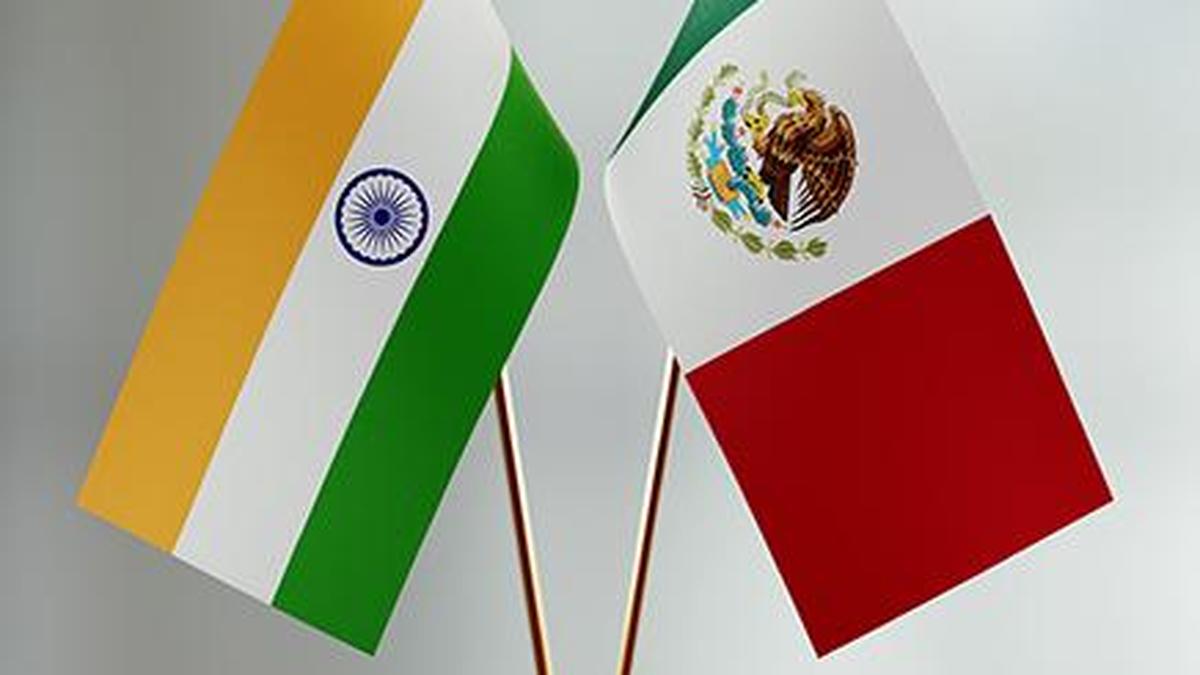
India and Mexico signed Terms of Reference establishing a framework for preferential trade agreement negotiations; the step does not itself grant tariff concessions or bring an agreement into force.
Image: The Hindu
Why in news
Commerce Secretary Rajesh Agrawal visited Mexico for the signing of the negotiating framework. The two sides also discussed a possible Mexican business mission to India in the first quarter of 2027.
Background
A Preferential Trade Agreement grants participating economies more favourable treatment for specified trade than that available to non-participants, typically through negotiated tariff concessions. In Indian trade-policy usage, a limited-scope PTA generally covers selected products, while a Free Trade Agreement normally has wider goods coverage. India already has preferential trade arrangements with Chile and MERCOSUR, providing a foundation for economic engagement with Latin America. Mexico is geographically part of North America and belongs to the wider Latin American region; its manufacturing economy is closely linked to North American production networks.
What has been agreed—and what has not
The Terms of Reference establish the framework, scope, modalities and roadmap for negotiations. They follow an understanding reached between Prime Minister Narendra Modi and Mexican President Claudia Sheinbaum on the sidelines of the G7 Summit in Canada in June 2025.
India was represented at the signing by Commerce Secretary Rajesh Agrawal. Mexico’s Undersecretary of Foreign Trade Luis Rosendo Gutiérrez Romano participated on behalf of Secretary of Economy Marcelo Ebrard Casaubon. The development is a negotiating milestone, not a concluded PTA.
- The source does not announce agreed tariff cuts, final product coverage or an implementation date.
- The announced negotiating areas focus on goods trade and related disciplines; a comprehensive services or investment agreement should not be assumed.
- The Mexican business mission discussed for the first quarter of 2027 remains a possibility, not a confirmed visit.
Infographic
Current stage
Negotiating framework signed; no final concessions announced.
Market access
Seek meaningful preferences for covered goods.
Trade rules
Origin, customs, standards and remedies shape usability.
Strategic value
Diversify exports and deepen Latin American engagement.
Success condition
Combine negotiated access with exporter competitiveness.
AI-assisted infographic by Pragnya IAS Academy, based on the cited sources.
The negotiating architecture: tariffs and beyond
The framework covers market access for goods, rules of origin, customs procedures and trade facilitation, dispute settlement, sanitary and phytosanitary measures, technical barriers to trade, and trade remedies. Together, these determine whether a formal tariff preference translates into commercially usable access.
Rules of origin will determine which goods qualify for preferences. Customs simplification can reduce transaction costs, while cooperation on standards and certification can address regulatory obstacles without weakening legitimate health, safety or environmental protections.
- Market-access negotiations must identify products where concessions create meaningful opportunities while accounting for domestic sensitivities.
- Origin requirements should prevent trade deflection without imposing disproportionate documentation costs.
- Dispute settlement can improve predictability, but its procedures and enforceability remain subject to negotiation.
- Trade-remedy disciplines must be distinguished from ordinary tariff concessions and aligned with applicable WTO obligations.
Why Mexico matters for India’s trade diversification
The government identifies Mexico’s strong global value-chain linkages as an attraction for Indian exporters and investors. It lists automotive, chemicals, electronics, pharmaceuticals, agri-food, energy, critical minerals, medical devices and advanced manufacturing as sectors with cooperation potential. These are prospective opportunities, not commitments already secured.
For India, improved access to Mexico could broaden export destinations and connect firms with manufacturing and sourcing networks. A PTA could also reinforce India’s wider Latin American engagement, complementing existing preferential arrangements elsewhere in the region.
Mexico’s participation in the United States–Mexico–Canada Agreement makes its production networks relevant to Indian businesses. However, an India–Mexico PTA would not automatically give Indian goods preferential access to the United States or Canada: eligibility under those markets’ trade arrangements would depend on their own rules of origin and other conditions.
- Export diversification can reduce dependence on a narrow set of markets, although the actual effect depends on firms securing sustained demand.
- Business-to-business engagement can help identify buyers, distributors and supply-chain partnerships.
- Critical-mineral cooperation could support supply diversification, but the source announces no mineral-specific supply or investment commitment.
WTO compatibility and the limits of preferential access
Preferential agreements depart from the WTO’s general most-favoured-nation principle by offering selected partners better treatment. WTO law permits qualifying arrangements through specified legal routes. The Enabling Clause provides a basis for certain preferential goods arrangements among developing countries; the source does not identify the legal route proposed for this PTA.
Tariff preferences can create trade by shifting purchases towards more efficient partner suppliers. They can also divert trade from a more efficient non-member supplier merely because the partner receives preferential treatment. The economic assessment must therefore consider competitiveness and consumer welfare, not only bilateral export gains.
Even well-designed tariff concessions may remain underused if freight costs, standards compliance, origin certification or limited market information outweigh the preference margin. Successful implementation requires domestic export preparedness alongside negotiated access.
- Lower tariffs are not equivalent to regulatory approval or guaranteed market entry.
- Preferential access does not create a customs union or a common external tariff.
- An agreement’s value should be assessed through utilisation, trade additionality and participation by smaller firms.
| Negotiating area | Purpose | Issue to watch |
|---|---|---|
| Market access for goods | Negotiate preferential treatment for covered products | Product coverage, depth of concessions and domestic sensitivities |
| Rules of origin | Identify goods eligible for preferences | Prevent circumvention without excessive compliance costs |
| Customs and trade facilitation | Make border clearance more predictable and efficient | Documentation, transparency and administrative capacity |
| Sanitary and phytosanitary measures | Address measures protecting human, animal and plant health | Scientific justification and workable certification procedures |
| Technical barriers to trade | Address technical regulations, standards and conformity assessment | Unnecessary obstacles and duplicative compliance requirements |
| Dispute settlement and trade remedies | Manage disagreements and specified forms of trade injury | Clear procedures and consistency with applicable WTO obligations |
- 1. Terms of Reference establish the negotiating scope and roadmap.
- 2. Negotiators seek agreement on product coverage, concessions and trade disciplines.
- 3. A negotiated text would require conclusion and applicable domestic approvals.
- 4. Entry into force would activate the agreed preferences and procedures.
- 5. Eligible firms would claim preferences subject to origin and compliance requirements.
- 6. Implementation review should assess utilisation, barriers and distribution of benefits.
June 2025
Prime Minister Narendra Modi and President Claudia Sheinbaum reached an understanding during their meeting on the sidelines of the G7 Summit in Canada.
Subsequent negotiating milestone
India and Mexico signed Terms of Reference in Mexico to establish the framework for PTA negotiations.
First quarter of 2027 — proposed
The two sides discussed a possible Mexican business mission to India to facilitate business-to-business engagement.
Significance, challenges & way forward
Significance
- The initiative can expand India’s trade-policy engagement with Latin America beyond its existing preferential arrangements.
- Improved access to Mexico could diversify export destinations and create opportunities in manufacturing and agri-food supply chains.
- Predictable customs and regulatory procedures could make market access more usable, particularly for firms facing high transaction costs.
- Cooperation in pharmaceuticals, medical devices, energy and critical minerals could complement broader economic-resilience objectives.
- Commercial engagement alongside negotiations can help align the agreement with actual business demand.
Challenges
- Geographical distance and logistics costs may reduce the commercial value of tariff preferences.
- Complex origin rules and certification requirements can discourage smaller exporters from using an agreement.
- Divergent technical and health requirements may continue to constrain trade even after tariff reductions.
- Domestic producers in sensitive sectors may face adjustment pressures from preferential imports.
- Trade diversion can weaken welfare gains if preferences displace more efficient non-member suppliers.
- Expectations of automatic access to other North American markets would misread the scope of a bilateral PTA.
Way forward
- Use product-level trade analysis and industry consultations to prioritise commercially meaningful concessions.
- Design transparent, verifiable rules of origin that reflect production realities while preventing circumvention.
- Pursue clearer standards information, predictable certification and efficient customs procedures without diluting legitimate safeguards.
- Provide smaller firms with market intelligence, origin-compliance guidance and support for identifying Mexican partners.
- Use the proposed business mission, if organised, to identify sector-specific barriers and actionable commercial partnerships.
- Provide for implementation reviews that examine preference utilisation, export diversification and adjustment needs.
Key terms
- Terms of Reference
- An agreed framework specifying the scope, modalities and roadmap of negotiations rather than the final trade concessions.
- Preferential Trade Agreement
- An arrangement granting participating economies preferential treatment, often through tariff concessions on selected products.
- Rules of origin
- Criteria used to determine a product’s economic origin and eligibility for preferential treatment.
- Preference margin
- The difference between the normally applicable tariff and the preferential tariff available under an agreement.
- Sanitary and phytosanitary measures
- Measures addressing specified food-safety and animal- or plant-health risks.
- Technical barriers to trade
- Trade issues arising from technical regulations, standards and conformity-assessment procedures.
- Trade diversion
- A shift towards a less efficient partner supplier because preferential treatment disadvantages a more efficient non-member supplier.
- Global value chain
- A production network in which different stages of creating a good or service occur across countries.
Link with static syllabus
Prelims practice MCQs
Q1. With reference to the India–Mexico PTA initiative, consider the following statements: 1. The Terms of Reference establish the scope and roadmap for negotiations. 2. Their signing immediately brings preferential tariff concessions into force. 3. Rules of origin and technical barriers to trade are among the identified negotiating areas. Which of the statements given above are correct?
Q2. Consider the following pairs: 1. Rules of origin — Determination of eligibility for preferential treatment 2. Sanitary and phytosanitary measures — Protection against specified food-safety and animal- or plant-health risks 3. Trade diversion — Replacement of a less efficient partner supplier by a more efficient non-member supplier Which of the pairs given above are correctly matched?
Q3. Which one of the following most accurately describes the implications of a possible India–Mexico PTA for access to the United States and Canada?
Q4. With reference to WTO principles and preferential trade arrangements, consider the following statements: 1. The most-favoured-nation principle generally requires non-discriminatory treatment among WTO members. 2. Every preferential trade arrangement necessarily requires a common external tariff. 3. The Enabling Clause provides a legal basis for certain preferential goods arrangements among developing countries. Which of the statements given above are correct?
Mains practice questions
GS 3 · 15 marks · 250 words
Preferential trade agreements can support export diversification, but negotiated market access does not automatically translate into export gains. Discuss with reference to the India–Mexico PTA negotiating framework.
Frequently asked questions
Have India and Mexico signed a final Preferential Trade Agreement?
No. They have signed Terms of Reference establishing the framework, scope, modalities and roadmap for negotiations.
Which sectors have been identified as having cooperation potential?
The government lists automotive, chemicals, electronics, pharmaceuticals, agri-food, energy, critical minerals, medical devices and advanced manufacturing, among others. These are potential cooperation areas, not final tariff commitments.
Why are rules of origin important in a PTA?
They determine which goods qualify for preferences and help prevent non-partner goods from obtaining benefits through mere rerouting. Excessively complex requirements can, however, discourage legitimate utilisation.
Would an India–Mexico PTA provide automatic preferential access to the United States?
No. Any preferential access under North American trade arrangements would depend on those arrangements’ own origin rules and eligibility conditions.
Sources
- The Hindu: India and Mexico sign Terms of Reference for preferential trade agreement negotiations to begin
Analysis prepared by the Pragnya IAS Academy current-affairs desk with AI assistance from the cited reports. Verify figures with the original sources.
Turn current affairs into marks
Join Pragnya IAS Academy's mentorship for daily answer-writing evaluation on stories like this — classroom programmes from a trusted name in IAS coaching in Hyderabad.