
Gram Yojana Approval: Panchayat Capacity, Participatory Planning and Devolution
Revise the static topic: UPSC Polity notes · UPSC Governance notes
In short: A Times of India headline reports approval of a Gram Yojana aimed at empowering panchayats. Its significance lies in whether capacity-building is accompanied by meaningful devolution of functions, funds and functionaries; the supplied material does not establish the scheme’s detailed provisions.
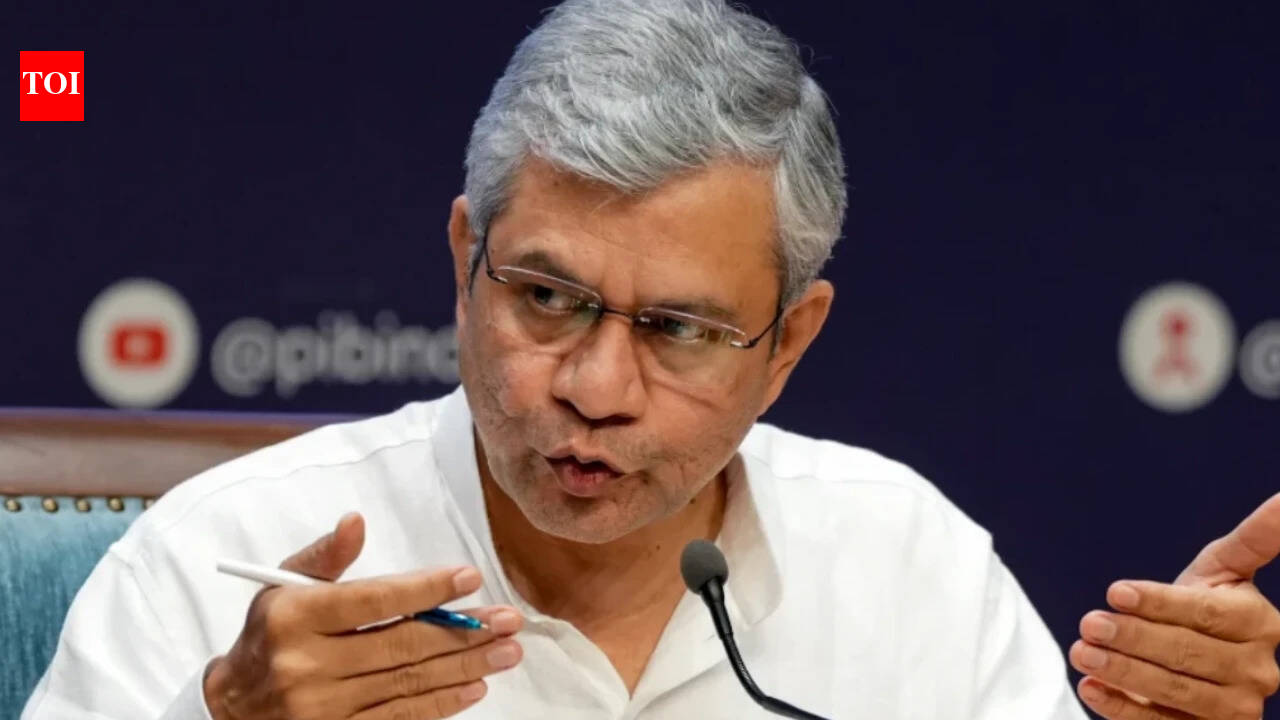
Photo from the source report: Gram Yojana Approval: Panchayat Capacity, Participatory Planning and Devolution
Image: Times of India
Why in news
The supplied headline reports that a Gram Yojana has received approval. However, the accompanying text contains website notices rather than the report, so the approving authority, financial allocation, coverage and implementation arrangements cannot be verified.
Background
The Constitution’s Article 40 directs the State to organise village panchayats and endow them with powers necessary to function as units of self-government. The Constitution (Seventy-third Amendment) Act, 1992 gave constitutional recognition to Panchayati Raj through Part IX and added the Eleventh Schedule. The framework provides for elected institutions, reservations, State Election Commissions and State Finance Commissions. However, substantive empowerment depends substantially on state legislation and administrative action: constitutional recognition does not itself transfer every listed function, its funding or the personnel needed to discharge it.
What the reported approval establishes—and what remains unknown
The headline supports a limited conclusion: approval has been reported for an initiative described as a Gram Yojana, with panchayat empowerment as its stated purpose. It does not establish the initiative’s official nomenclature, eligibility conditions, funding pattern or relationship with existing programmes.
The appropriate analytical test is therefore conditional: does the eventual design strengthen panchayats as institutions of self-government, or merely improve their ability to implement decisions taken elsewhere? The following assessment sets out constitutional benchmarks, not verified scheme provisions.
- Verify the official notification and operational guidelines before attributing specific components to the initiative.
- Distinguish capacity-building support from legally enforceable transfers of authority.
- Assess empowerment through local decision-making space rather than training or expenditure alone.
Infographic
Authority
Clear functions and meaningful local decision-making.
Resources
Predictable finance and usable fiscal discretion.
Capability
Skilled representatives, staff and technical support.
Participation
Inclusive Gram Sabha deliberation linked to plans.
Accountability
Public disclosure, scrutiny and measurable service outcomes.
AI-assisted infographic by Pragnya IAS Academy, based on the cited sources.
The constitutional test: functions, funds and functionaries
Article 243G enables state legislatures to endow panchayats with powers necessary for self-government, including preparation of plans for economic development and social justice and implementation of entrusted schemes. The Eleventh Schedule lists 29 subjects, but their inclusion does not automatically confer exclusive jurisdiction on panchayats.
Financial empowerment is addressed through Article 243H, under which state laws may authorise local taxation, assign revenues and provide grants and funds. Article 243I provides for State Finance Commissions to review panchayat finances. Article 280 also connects Union Finance Commission recommendations with augmentation of state Consolidated Funds to supplement panchayat resources.
Functionaries complete this framework. Assigning responsibilities without access to suitable staff, technical support and clear supervisory arrangements can leave elected bodies accountable for outcomes they cannot control.
- Functions require clear activity mapping across village, intermediate and district levels.
- Funds require predictability, usable fiscal discretion and proportionate accountability.
- Functionaries require defined responsibilities and effective accountability to the institutions they serve.
Participatory planning: from village priorities to district coordination
Article 243A recognises the Gram Sabha and allows it to exercise powers and perform functions provided by state law. Meaningful participation requires accessible information, inclusive deliberation and a visible link between community priorities and the final panchayat plan.
A Gram Panchayat Development Plan can provide a framework for translating local needs into prioritised, costed activities. Participation becomes substantive when residents can assess resource constraints, compare alternatives and obtain explanations when proposals are deferred or rejected.
Article 243ZD provides for District Planning Committees to consolidate plans prepared by panchayats and municipalities and prepare a draft development plan for the district. Local autonomy therefore needs coordination, particularly for shared resources and infrastructure that cross village boundaries.
- Enable women, Scheduled Castes, Scheduled Tribes and other marginalised residents to influence priorities, not merely attend meetings.
- Disclose available resources before inviting proposals so that planning reflects a realistic budget envelope.
- Link village plans with district-level coordination without reducing local consultation to a formality.
Capacity-building must support democratic authority
Panchayat capacity includes the ability to identify needs, prepare budgets, manage procurement, maintain accounts, supervise works and monitor services. Training should therefore be linked to actual responsibilities and supported by continuing technical assistance rather than treated as an isolated activity.
Digital systems can improve record-keeping and disclosure, but should not substitute for deliberation or exclude residents with limited connectivity and literacy. Assisted access and offline participation remain important safeguards.
Any implementation framework must also respect differentiated constitutional arrangements. Part IX does not apply uniformly to all areas; the Panchayats (Extension to the Scheduled Areas) Act, 1996 extends its provisions to Fifth Schedule areas with modifications and safeguards for Gram Sabhas.
- Combine training for elected representatives with practical support for panchayat staff.
- Use local-language materials and accessible public disclosures.
- Measure improvements in planning quality, inclusion and service delivery rather than attendance at training alone.
| Dimension | Legal anchor | Evaluation question |
|---|---|---|
| Village self-government | Article 40 | Does the initiative strengthen local self-government rather than only administrative delivery? |
| Community participation | Article 243A | Can Gram Sabha deliberations meaningfully influence priorities under state law? |
| Functional authority | Article 243G and Eleventh Schedule | Are responsibilities clearly assigned with sufficient decision-making powers? |
| Fiscal capacity | Articles 243H and 243I | Are local revenues, transfers and financial review arrangements adequate? |
| District coordination | Article 243ZD | Are panchayat and municipal plans consolidated into district development planning? |
| Scheduled Area safeguards | Article 243M and PESA | Does implementation respect the applicable legal framework and Gram Sabha powers? |
- 1. Map local needs, existing services and legally assigned panchayat responsibilities.
- 2. Disclose available resources and invite inclusive Gram Sabha deliberation.
- 3. Convert priorities into costed activities with technical scrutiny.
- 4. Adopt the plan through the applicable procedure and coordinate with district planning.
- 5. Implement activities with clear financial and staff responsibilities.
- 6. Publish progress, enable community review and use feedback in the next planning cycle.
1950
The Constitution came into force with Article 40 directing the organisation of village panchayats.
1992
The Constitution (Seventy-third Amendment) Act, 1992 established the constitutional framework for Panchayati Raj.
1993
The Seventy-third Amendment came into force, bringing Part IX into operation.
1996
PESA extended Part IX provisions to Fifth Schedule areas with modifications.
Significance, challenges & way forward
Significance
- Stronger panchayats can align public expenditure more closely with locally identified needs.
- Participatory planning can make development choices more inclusive and publicly accountable.
- Predictable resources and technical support can improve the credibility and implementation of local plans.
- Clear devolution can strengthen the connection between elected representatives, administrative responsibility and service outcomes.
Challenges
- Ambiguous allocation of responsibilities can create overlap between panchayats and line departments.
- Responsibilities without adequate funding or staff can produce unfunded mandates.
- Excessively tied funding can constrain responses to locally identified priorities.
- Social exclusion and elite capture can weaken the representative character of village deliberations.
- Capacity gaps and digital barriers can turn planning and reporting into compliance exercises.
- The absence of usable scheme details in the supplied material prevents assessment of its actual financial and institutional design.
Way forward
- Publish the official approval and guidelines with a clear statement of objectives, responsibilities, financing and accountability.
- Link capacity-building with state-level activity mapping and matching transfers of resources and personnel.
- Strengthen State Finance Commission processes and transparent follow-up on their recommendations.
- Provide realistic resource envelopes and accessible information before participatory planning begins.
- Support inclusive Gram Sabha deliberation, public disclosure and community scrutiny in accordance with applicable laws.
- Evaluate results through planning quality, equitable service access, fiscal predictability and local decision-making autonomy.
Key terms
- Devolution
- Transfer of powers, responsibilities and resources to elected lower-level governments with meaningful autonomy.
- Three Fs
- Functions, funds and functionaries—the interdependent foundations of effective decentralisation.
- Gram Sabha
- A body consisting of persons registered in the electoral rolls relating to a village within the village-level panchayat area.
- Activity mapping
- Clear allocation of specific tasks and responsibilities among different governmental tiers and agencies.
- Gram Panchayat Development Plan
- A local development planning framework that links identified needs, available resources and prioritised activities.
- State Finance Commission
- A constitutional commission constituted by the Governor to review panchayat finances and recommend measures concerning fiscal distribution and financial improvement.
- Subsidiarity
- The principle that public responsibilities should be exercised at the lowest level capable of performing them effectively.
- PESA
- The law extending Part IX provisions to Fifth Schedule areas with modifications protecting community participation and Gram Sabha authority.
Link with static syllabus
Prelims practice MCQs
Q1. With reference to Article 243G and the Eleventh Schedule, consider the following statements: 1. Article 243G enables state legislatures to endow panchayats with powers necessary to function as institutions of self-government. 2. Inclusion of a subject in the Eleventh Schedule automatically gives panchayats exclusive legislative authority over it. Which of the statements given above is/are correct?
Q2. Consider the following pairs: 1. Article 243A — Gram Sabha 2. Article 243H — State Election Commission 3. Article 243I — State Finance Commission Which of the pairs given above are correctly matched?
Q3. Which of the following best describes the constitutional role of a District Planning Committee?
Q4. With reference to the Panchayats (Extension to the Scheduled Areas) Act, 1996, consider the following statements: 1. It extends Part IX provisions to Fifth Schedule areas with modifications. 2. It makes Part IX uniformly applicable to all Sixth Schedule tribal areas. 3. It provides safeguards concerning Gram Sabha participation and community interests in Scheduled Areas. Which of the statements given above are correct?
Mains practice questions
GS 2 · 15 marks · 250 words
Capacity-building alone cannot transform panchayats into institutions of self-government. Discuss with reference to constitutional devolution and participatory planning.
Frequently asked questions
What does the supplied source confirm about Gram Yojana?
Its headline reports approval of a Gram Yojana intended to empower panchayats. The supplied text does not verify its approving authority, budget, coverage or detailed provisions.
Does the Eleventh Schedule automatically devolve powers to panchayats?
No. Article 243G enables empowerment through state law; listing a subject in the Eleventh Schedule does not itself transfer all associated functions, funding and staff.
Why is training alone insufficient for panchayat empowerment?
Training improves capability, but panchayats also need decision-making authority, predictable resources and administrative support. Without these, better-trained representatives may still lack the means to fulfil local priorities.
How are the Gram Sabha and Gram Panchayat different?
The Gram Sabha comprises registered voters of the relevant village area, while the Gram Panchayat is the elected village-level local government. Gram Sabha powers and functions depend on the applicable legal framework.
Sources
- Times of India: To empower panchayats, gram yojana gets nod
Analysis prepared by the Pragnya IAS Academy current-affairs desk with AI assistance from the cited reports. Verify figures with the original sources.
Turn current affairs into marks
Join Pragnya IAS Academy's mentorship for daily answer-writing evaluation on stories like this — classroom programmes from a trusted name in IAS coaching in Hyderabad.