
COP31: Climate Delivery, Fossil-Fuel Equity and Himalayan Vulnerability
Revise the static topic: UPSC Environment notes
In short: COP31 in Antalya, Türkiye, has exposed divisions over delivering climate finance, moving away from fossil fuels and recognising mountain vulnerability. India’s insistence on predictable finance and nationally determined pathways, alongside Nepal’s demand for Himalayan recognition, highlights the need to connect climate ambition with equitable implementation and protection of vulnerable communities.
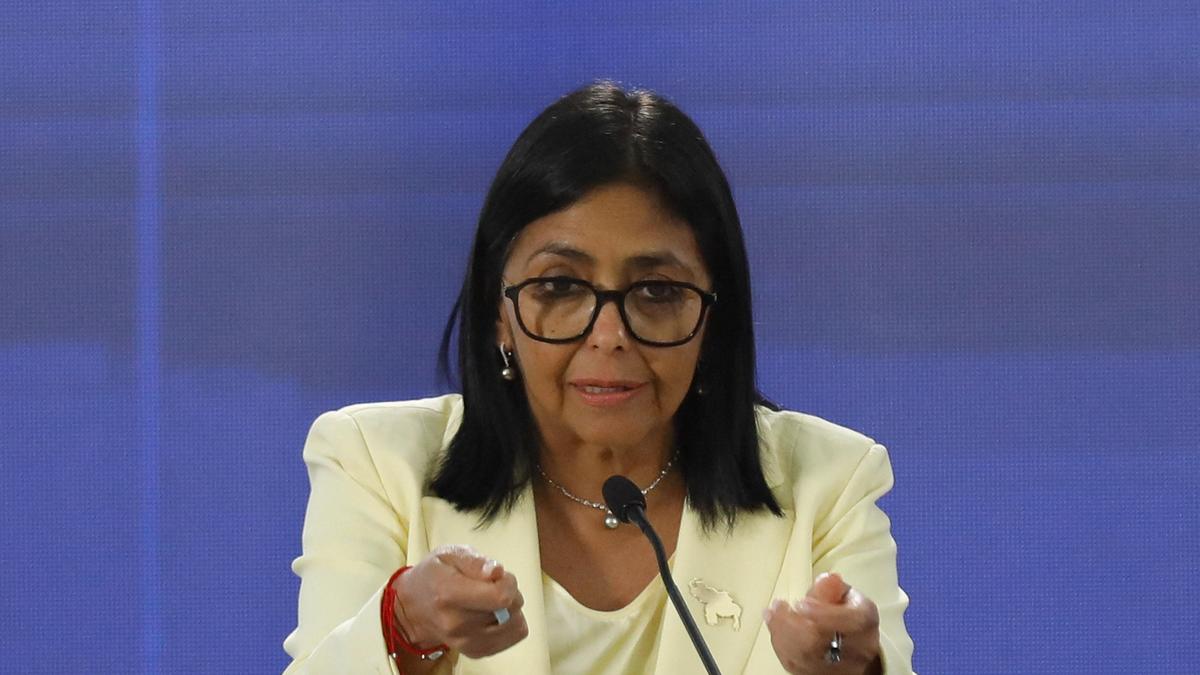
Photo from the source report: COP31: Climate Delivery, Fossil-Fuel Equity and Himalayan Vulnerability
Image: The Hindu
Why in news
Reports from COP31 describe Venezuela defending oil development, India declining an electrification pledge and a Himalayan agenda proposal failing to enter the formal agenda. Negotiations remain ongoing; proposed initiatives and assurances should not be treated as adopted conference outcomes.
$300 billion annually
COP29 finance goal by 2035
Triple
COP30 call on adaptation finance
23%
Electricity share cited as baseline
35% by 2035
Proposed electricity-share target
$21.6 million
Provisional Nepal loss-and-damage allocation
1.5°C
Paris warming limit pursued
Background
The United Nations Framework Convention on Climate Change provides the institutional framework for international climate cooperation. The Paris Agreement seeks to hold warming well below 2°C above pre-industrial levels and pursue efforts to limit it to 1.5°C. Countries communicate nationally determined contributions, while the global stocktake assesses collective progress. Equity and common but differentiated responsibilities and respective capabilities recognise differing historical responsibilities and capacities. Mitigation addresses emissions, adaptation reduces vulnerability, and loss-and-damage responses address adverse impacts not avoided through mitigation and adaptation.
Climate delivery: promises need operational pathways
Türkiye is hosting COP31, with Australia presiding over negotiations. The supplied editorial identifies delivery of existing commitments as a central concern: the COP29 finance goal of $300 billion annually by 2035 and the COP30 call to triple adaptation finance over that interval.
The editorial reports that decisions on how these funds will practically flow have been deferred to COP32. It also states that the second global stocktake begins at COP31. The implementation challenge is therefore not merely announcing ambition, but connecting commitments to accessible finance, scientific assessment and demonstrable action.
- A finance commitment is not equivalent to money disbursed or a completed resilience project.
- Credibility requires transparent reporting on finance quality, accessibility and delivery.
- Assessment of collective progress should inform stronger implementation rather than become a substitute for it.
Infographic
Finance
Convert commitments into accessible disbursement.
Energy equity
Combine cleaner energy with affordability and worker protection.
Mountain resilience
Link recognition to science, warnings and recovery support.
Urban protection
Fund local heat, flood and essential-service resilience.
Accountability
Measure emissions outcomes and reduced vulnerability.
AI-assisted infographic by Pragnya IAS Academy, based on the cited sources.
Fossil fuels: sovereignty, security and global emissions
Venezuela’s Acting President Delcy Rodriguez defended the country’s sovereign right to develop its oil industry. Other leaders argued that fossil-fuel supply disruptions strengthen the case for clean energy. The disagreement reflects competing development strategies, fiscal interests and understandings of energy security.
The supplied editorial states that COP30 ended without a formal roadmap away from fossil fuels and that the voluntary roadmap ahead of COP31 remains outside the formal negotiating text. Rodriguez’s claim that Venezuela’s forests absorb more carbon than the country emits is a reported assertion, not independently established by the supplied material.
- Oil dependence can create transition risks for public revenue, employment and export earnings.
- Territorial emissions accounting does not eliminate the global emissions produced when exported fuels are burned elsewhere.
- Forest sinks cannot be assumed to provide permanent, unlimited compensation for continued fossil-fuel use.
- An equitable transition requires economic diversification and worker protection alongside emissions reduction.
India’s position: electrification must be nationally appropriate
The COP31 presidency is promoting a voluntary initiative to raise electricity’s share of global energy consumption from 23% to 35% by 2035, including through electrification of transport, buildings and industry. According to the supplied editorial, India has declined to sign the pledge and has emphasised predictable climate finance, technology transfer and nationally determined mitigation pathways.
Electrification is not synonymous with decarbonisation. Its emissions benefits depend on the electricity mix, efficiency, grid capability and the fuels displaced. India’s position should therefore be examined as a demand for enabling conditions and policy flexibility, rather than automatically characterised as opposition to clean energy.
- Common global objectives need not imply identical national sectoral pathways.
- Affordable electricity, reliable networks and storage are important complements to end-use electrification.
- Equity requires attention to low-income consumers and workers in fossil-fuel-dependent regions.
Himalayan vulnerability: recognition must lead to support
A Himalayan agenda item proposed by Nepal, Bhutan and Kyrgyzstan was not included in COP31’s formal agenda. Nepal’s Foreign Minister attributed the difficulty to insufficient support from major blocs. Nepal’s government nevertheless reported an expected research dialogue and a presidency assurance concerning mountain-related language in the eventual outcome document; neither amounts to an adopted outcome.
The supplied report cites a UNEP–International Cryosphere Climate Initiative assessment warning that cryosphere impacts in Nepal were exceeding local adaptation limits and causing irreversible loss and damage. Nepal is seeking research assistance, satellite monitoring, early-warning technology and finance for adaptation, mitigation and reconstruction.
The reported provisional allocation of $21.6 million to Nepal by the Fund for responding to Loss and Damage illustrates the distinction between funding approval and recovery needs. Himalayan vulnerability also matters for India because mountain hazards and changes in snow and ice affect settlements, infrastructure and downstream river systems.
- Kyrgyzstan is a Central Asian mountain country, not a Himalayan state; its participation reflects a wider mountain coalition.
- Mountain monitoring should integrate glaciers, glacial lakes, slope instability and downstream exposure.
- A brief temperature exceedance is not identical to a sustained breach of the Paris Agreement’s long-term temperature goal.
- Individual disasters require scientific attribution; reported observations alone do not establish exclusive climate causation.
Urban adaptation: translate climate justice into local protection
The supplied material does not establish a specific COP31 decision on urban adaptation. Urban resilience is, however, a necessary policy implication of the delivery debate: international commitments have limited protective value unless local institutions can reduce exposure to heat, flooding and infrastructure disruption.
For India, adaptation should connect municipal finance, land-use regulation, drainage, wetlands, public health and affordable housing. Himalayan towns need terrain-sensitive planning and slope-risk assessment, while other cities require locally appropriate heat and flood protection. Vulnerability should guide investment rather than the visibility of infrastructure alone.
- Prioritise informal settlements, outdoor workers, older persons and people with disabilities in adaptation planning.
- Link early warnings to evacuation arrangements, accessible shelters and continuity of essential services.
- Combine engineered infrastructure with wetlands, permeable surfaces and context-appropriate urban vegetation.
- Measure reduced exposure and service disruption, not merely expenditure or assets constructed.
| Issue | Reported status | Implementation test |
|---|---|---|
| Climate finance | Existing COP29 goal; practical flow decisions reportedly deferred | Predictable access and actual disbursement |
| Fossil-fuel transition | Voluntary roadmap outside formal negotiating text | Credible pathways with worker and community protection |
| Electrification | Voluntary presidency initiative; India has declined | Cleaner power, affordability and reliable grids |
| Himalayan recognition | Formal agenda proposal not included; further dialogue expected | Research, monitoring and accessible resilience finance |
| Urban adaptation | Policy implication, not a reported COP31 agreement | Locally delivered reductions in heat and flood vulnerability |
- 1. Identify climate hazards, exposure and vulnerable groups.
- 2. Translate commitments into nationally and locally appropriate plans.
- 3. Secure predictable finance, technology and institutional capacity.
- 4. Implement transition and adaptation measures with community participation.
- 5. Track disbursement, emissions outcomes and reductions in vulnerability.
- 6. Use evaluation and scientific evidence to strengthen subsequent action.
2015
The Paris Agreement establishes a framework of nationally determined climate action and collective progress assessment.
COP28, Dubai
Parties agree on transitioning away from fossil fuels in energy systems in a just, orderly and equitable manner.
COP29, Baku
The climate finance goal cited in the supplied editorial is set at $300 billion annually by 2035.
COP30
The supplied editorial reports a call to triple adaptation finance, but no formal fossil-fuel transition roadmap.
October 2026
The Fund for responding to Loss and Damage provisionally allocates $21.6 million for Nepal’s recovery, according to the supplied report.
November 4, 2026
A UNEP–ICCI report warns of severe cryosphere impacts and adaptation limits in Nepal.
November 2026
COP31 convenes in Antalya; the proposed Himalayan agenda item is not included in the formal agenda.
November 12, 2026
Venezuela defends its right to develop oil production amid competing calls to accelerate clean energy.
Significance, challenges & way forward
Significance
- COP31 places implementation credibility at the centre of climate diplomacy.
- The fossil-fuel debate connects climate policy with development sovereignty, energy security and economic diversification.
- Mountain advocacy highlights the mismatch between low emissions responsibility and high climate vulnerability.
- India can link international equity demands with stronger domestic resilience and accountable local delivery.
- Urban adaptation offers a practical test of whether global commitments protect vulnerable households.
Challenges
- Deferring operational finance decisions can widen the gap between pledges and implementation.
- Fossil-fuel-dependent economies face revenue and employment pressures during transition.
- Electrification without cleaner electricity and grid investment may deliver limited emissions benefits.
- Negotiating power can influence which vulnerable regions obtain formal agenda recognition.
- Cryosphere losses may exceed local adaptation capacity and create irreversible damage.
- Weak municipal capacity, fragmented responsibilities and inadequate risk data can undermine adaptation delivery.
Way forward
- Publish transparent delivery pathways distinguishing finance pledges, approvals, disbursements and outcomes.
- Prioritise accessible, grant-based support for adaptation and loss-and-damage needs where additional debt would undermine recovery.
- Combine nationally determined transition pathways with credible mitigation, worker protection and regional diversification.
- Create sustained scientific and policy attention to mountain vulnerability without treating dialogue assurances as completed outcomes.
- Strengthen regional cooperation on mountain observations, hazard information and early-warning systems.
- Give urban local bodies predictable resources and technical support for risk-informed planning.
- Build independent evaluation and community feedback into climate-funded programmes.
Key terms
- Nationally determined contribution
- A country’s climate contribution communicated under the Paris Agreement.
- Global stocktake
- The Paris Agreement process for assessing collective progress towards its purpose and long-term goals.
- CBDR-RC
- Common but differentiated responsibilities and respective capabilities, recognising unequal responsibilities and capacities for climate action.
- Just transition
- A shift towards a low-emission economy that protects workers, communities and equitable access to development.
- Electrification
- Replacing direct use of other energy carriers with electricity in activities such as transport, heating and industry.
- Cryosphere
- The frozen components of the Earth system, including glaciers, snow, ice sheets and permafrost.
- Glacial lake outburst flood
- A sudden release of water from a glacial lake that can cause destructive downstream flooding.
- Adaptation limits
- Conditions in which adaptation cannot secure valued objectives against intolerable climate risks.
Link with static syllabus
Prelims practice MCQs
Q1. With reference to the Paris Agreement, consider the following statements: 1. Nationally determined contributions are communicated by individual parties. 2. The global stocktake assesses collective progress. 3. The Agreement requires identical sectoral electrification targets for all parties. Which of the statements given above are correct?
Q2. Consider the following pairs: 1. Cryosphere — Frozen components of the Earth system 2. Glacial lake outburst flood — Sudden release of water from a glacial lake 3. Adaptation — Reduction of greenhouse gas emissions as its defining purpose How many of the above pairs are correctly matched?
Q3. With reference to electrification and decarbonisation, consider the following statements: 1. Increasing electricity’s share in energy consumption does not necessarily imply an equivalent increase in the renewable energy share. 2. The emissions benefits of electrification depend partly on the electricity generation mix. Which of the statements given above is/are correct?
Q4. Which of the following best illustrates a response to loss and damage rather than primarily mitigation or anticipatory adaptation?
Mains practice questions
GS 3 · 15 marks · 250 words
Climate ambition is credible only when supported by equitable implementation. Discuss in the context of COP31, with particular reference to energy transition and the protection of vulnerable communities.
Frequently asked questions
What is the central implementation issue at COP31?
The central issue is converting existing climate commitments into finance, technology and action that countries and communities can use. The supplied editorial stresses delivery of earlier promises rather than relying on additional headline targets.
Why has India declined the electrification pledge?
According to the supplied editorial, India has emphasised predictable climate finance, technology transfer and nationally determined mitigation approaches. Declining this voluntary pledge should not automatically be read as rejecting electrification.
Has COP31 formally adopted the Himalayan agenda proposal?
No. The supplied report says the proposal was not included in the formal agenda, although further dialogue and mountain-related outcome language were expected.
Why is urban adaptation relevant to this debate?
Climate finance must ultimately reduce local vulnerability, including urban heat and flood risks. The supplied material does not report a specific urban adaptation agreement, so municipal measures are presented as policy recommendations.
Sources
- The Hindu: Venezuela tells COP31 it has sovereign right to pump more oil
- The Hindu: New deal: On COP31 and lofty climate goals
- The Hindu: Himalayas agenda left off COP31 formal list as major blocs withhold support: Nepal Foreign Minister
- The Hindu: World leaders take stage at COP31 but big names missing
Analysis prepared by the Pragnya IAS Academy current-affairs desk with AI assistance from the cited reports. Verify figures with the original sources.
Turn current affairs into marks
Join Pragnya IAS Academy's mentorship for daily answer-writing evaluation on stories like this — classroom programmes from a trusted name in IAS coaching in Hyderabad.